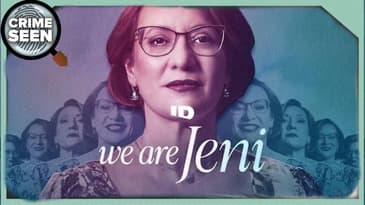
Crime Seen is the true crime review podcast that gets to the heart of how true crime stories are told. Join Mari Forth @maritalks2much.bsky.social and Sarah Carradine @sarahcarradine.bsky.social as they put true crime properties under the magnifying glass. In this episode they examine WE ARE JENI on Max. Joining them is Ellyn Marsh @ellynmarsh on Instagram
The documentary, and the discussion in part, will talk abut child sexual abuse. Here are some resources
In Australia call 1800 RESPECT (1800 737 732) or 1800respect.org.au for sexual, domestic and family violence support. There is also the National Redress Scheme on 1800 737 377, or at nationalredress.gov.au for information, support, and to make an application. If you have experienced institutional child sexual abuse in Australia, you can apply until the end of June 2027.
In the US find support at the 24/7 Childhelp National Child Abuse Hotline (1-800) 4-A-Child or (1-800) 422-4453 or go to childhelp.org
How many magnifying glasses out of 5 will they rate the docu-series? Listen to find out. Or jump to the ratings at about 42.30
Recommendations:
tv series: ORANGE IS THE NEW BLACK
film: SWAPPED (Nathan Greno, 2026)
tv series: TASKMASTER UK season 21
tv series: THIS IS A GARDENING SHOW
You can jump to the recommendations at about 43.47
Next time on Crime Seen: Nicole Horn @behindthesecret joins to discuss THE CRASH. Watch it on Netflix, and send in your comments and questions
Support the creators at buymeacoffee.com/CrimeSeenPod
Find Crime Seen merch at maricrafts2much.bigcartel.com/product/crime-seen-podcast-cup
Find Ellyn at:
I Think Not! podcast: https://www.ithinknotpod.com/
Shut The F*** Up Nick Lachey podcast: https://open.spotify.com/show/34C2Y9YZRqUbSWJEeANuTn
Find Mari at:
Recap Kickback: https://recapkickback.com/ & youtube.com/@recapkickback
Find Sarah at:
Something's Off: https://www.youtube.com/@SomethingsOffPod
Babes In The Conclave - The Traitors Hungary, The Traitors Denmark: https://www.youtube.com/@BabesintheConclave
Theme music by Will From America @willfromamerica.bsky.social
Logo by Tricky Rice @trickyrice.bsky.social
Subscribe to the feed at crimeseenpod.com to get your true crime on Tuesdays
You can follow the show @CrimeSeenPod on Bluesky, Instagram, Threads & Facebook, and @crime.seen on TikTok
Send us your feedback and recommendations for future episodes by email to CrimeSeenPod@gmail.com or by voice memo at speakpipe.com/CrimeSeenPod
Learn more about your ad choices. Visit megaphone.fm/adchoices
[00:00:24] Hello everyone, I'm Sarah Carradine, podcasting from unceded Gadigal land. I'm Mari Forth. And this is Crime Seen, the true crime review podcast, where we get to the heart of how true crime stories are told. Last week we watched The Cult of Nature Boy with Kamaria. Sarah, what did we watch this week? We watched We Are Jeni on Max. It's a two-part series directed by Akim Dev and Mariel Thomas.
[00:00:49] Akim directed The Children in the Pictures, if you remember that one. And returning for her second visit, if you're a member, you've already heard her on an exclusive bonus episode from I Think Not podcast, Broadway, and everywhere else. It's the delectable Ellen Marsh. Hello. Hello, delectable. I like it. I like to be compared to a chocolate-covered strawberry.
[00:01:17] You don't like chocolate-covered strawberries? I like chocolate. Me neither. I like strawberries. Please, do not combine them. Yeah, I agree. Mind blown. I thought that was a unifier. I agree. It's a diva. Wow. I can't do it. Wow. Okay, I've got to go sit in a corner and think about this. I really thought that was going to nail it. Okay. How about a creme brulee? Ooh. Oh, yes. Every time. Every time. Yes. I will not say no to a creme brulee. No, no.
[00:01:47] Nice and crispy on top. Really crispy on top. I had a big gala dinner the other night, because get me, you know, I'm in fashion now. And the food was execrable. It was dreadful. You can get better at a cafeteria. Stop. But the creme brulee was the best creme brulee I've ever had in my life. Worth it. It was worth it. Always. Like, how do you mess up a creme brulee? So, okay.
[00:02:14] You can't. But also, there are sort of moderate ones. This was delectable. And we're back. That's what we call a callback. Yeah, that's what you call a callback. So, Ellen, when you were with us screaming about The Bachelorette Season 22 in an exclusive, exclusive content for our members, you did tell us your true crime origin story. But for those who are just listening on the main feed, tell us how did you come to true crime? What do you get
[00:02:43] out of it? What's great about it for you? Well, first, I would like to say that I am deaf in one ear. So the screaming is highly unintentional, but also I'm Italian. So do with that information what you will. I don't remember what story I told last time, but I've always been a documentary person. I feel, I like to say I watched documentaries before it was cool. And I have always kind of
[00:03:11] been really nosy and always suspicious. I've always been suspicious of people. I was like a weird little kid who watched the news, even though your parents were like, don't watch the news, which it seems, that seems like Christmas compared to the news now. What do I love about true crime? Let's see. I do like the investigation. Once I am set on something,
[00:03:37] once I am hyper fixated on something, I want to know everything. I do have ADHD. Thank you, brain. But I also love understanding how people's brains work, which is kind of what we're talking about today because we only know the, you know, the nonsense and the chaos that's in our own brain. And I think that I just, I love getting to the bottom of it, even when it's really dark. Although
[00:04:06] when it does get very dark, I get very emotional and I love justice when it happens. I don't know. In my journey in the true crime space, I have met some of the most deeply feeling people that I think all of us just kind of want the same things. We want the bad guys to go away and the good guys to win at the end of the day.
[00:04:33] You know, I mean, we've cried on this podcast before. I usually edit it out, but we cried so much during Daughters, I couldn't edit around it. So our audience did hear us become very emotional. But I mean, have you seen Daughters? That's just our absolute pinnacle of documentaries. You gotta see it. It's so good on Netflix. Yeah, about inmates in a prison who are in a program where they get to do a father-daughter dance because of...
[00:05:00] Oh, I saw a video of that. I saw a video. I just got chills. Please, if any of my listeners are here, they know I'm a boo-hoo crybaby. Oh. When I tell you, it'll just be blurry. You'll just watch it blurry. It is one of those, for sure.
[00:05:27] All right, let's see if we cry today. In fact, listener, you'll never know, but we might. Before we get to the crime, the documentary and our discussion in part, we'll talk about child sexual abuse. If that's not for you today, you can hop off and we'll see you next time. Either way, we'd like to give you some resources, which of course we will link in the show notes.
[00:05:48] In Australia, you can call 1800 RESPECT. That's 1800 737 732 or 1800respect.org.au. That's for sexual, domestic and family violence support. Remember, there is also a national redress scheme on 1800 737 377 or at nationalredress.gov.au. That's for information, support,
[00:06:16] and to make an application if you have experienced institutional child sexual abuse in Australia. And you can apply there until the end of June 2027. And in the US, you can find support at the 24-7 Child Help National Child Abuse Line. That's 1-800-4-A-CHILD or 1-800-422-4453. Or you can go to childhelp.org.
[00:06:44] All right, let's get to the crime. By the time Dr. Jenny Haynes was four years old, her father was abusing her on a daily basis. The abuse continued for 14 years from 1974. She repeatedly told the adults around her and was not believed. In order to survive the horrific abuse, her brilliant brain created alters to other personalities to protect her and ensure her
[00:07:13] survival. And this is now known as Disassociative Identity Disorder or DID, we may say. In 2019, with the help of her psychiatrist and state and federal police, her father was extradited from the UK and returned to Australia. In a legal first, Jenny and six of her alters successfully testified against her father in court. He was sentenced to 45 years in prison.
[00:07:41] And we assume he'll die there because he was in his 70s when he went in. Ellen, I'll start with you. What are your overall thoughts on this docu-series? It's so interesting that you asked me to weigh in on this because I have so many questions about DID. And I was saying to Sarah before Mari got here that I've seen a bunch of videos. I'm very fascinated by
[00:08:07] it. Like I said, I'm fascinated by the brain and what the brain can do. And we used to refer to it as multiple personality disorder. And I don't know the history exactly as to why it changed. I think that adding the dissociative makes it a little more clinical and doesn't make it sound so, quote, crazy for lack of a better word. You know, if you think of that, it doesn't sound like something that
[00:08:35] actually happens in the brain. But as I watched this documentary, I was thinking to myself, we all have ways that we dissociate, ways that our mind plays tricks on us when something is traumatic, whether or not we just kind of forget it or bury it. So when I started it, I was thinking to myself,
[00:09:00] oh, I'm going to learn so much about this. This is so, you know, out of left field, thinking of someone having all these personalities. But listening to Jenny explain it, it almost sounded like a bigger version of what we all do with our trauma or our past or our things we or our memories that we don't want
[00:09:22] to deal with. I was, I mean, obviously, I'm sure we'll get into it. The story of this abuse, it almost seems unbelievable. It is nothing that our brain can process that kind of abuse and how this woman is here to so eloquently tell her story.
[00:09:49] I don't know. It was a lot. It was a lot in two short episodes, I felt. Yeah. Mari, how about you? What were your overall thoughts? I completely agree with a lot of that. Like, my mind can't process what we just watched almost like about this case. So like, I don't know, man, I was just like, I'm not a psychologist. I'm not a
[00:10:19] not understanding a lot of this in a sense. And I'm not a person that doesn't like that likes, that doesn't like to understand what's going on. I was like, okay. So I was like, is the altar talking when they put the name up? I was like, is the altar talking? Are her accents changing? It was, it was a little bit too much for me. I'm not gonna lie. And the animations and the productions
[00:10:46] also kind of took me out of it. I don't know. For me, I was just like, I don't, what is the tone here? I don't, I don't know. I think just for me, I was, I was so confused about the tone versus the seriousness of the issue versus the timeline was kind of muddled for me. I had to rewind a few times about the timelines and stuff. I was like, I don't know if I'm not paying attention
[00:11:13] or if I'm, I'm just very confused about like the timeline of a lot of things. Overall though, I thought sitting here and listening to Jenny was very fascinating. And I thought the more compelling parts to me was when she was like walking the police, like through the house and talking about that. It was parts, it was parts like that. That was like, oh my God. I think that's
[00:11:42] when I felt it the hardest. So I was just like, I don't know, man, this property. I was like, it was too much. I think I was just, I think I was just, it was too much for me. I was like, this is sensory overload. I don't like this. And if that's how I'm processing it after the fact,
[00:12:01] then I, I completely believe and understand in, you know, understand quote unquote, how Jenny can make these multiples, produce these multiples to comprehend what's going on. If that makes sense. I was like, oh yeah, like this is too much. Yes. I get it. You know? But yeah, it was just,
[00:12:29] it was just a lot. I was just like, I don't know. I'm, I, I don't like this. It was like, I don't like this, not this, but this, I don't like how this is making me feel. I don't like this. This is not fun. Yeah. Which is horrible to say when you're watching True Ground. That's going to be the poor quote for the episode. Not fun, says Mari. Yeah. Sarah, how about you? What did you think? I know you were really keen on watching this.
[00:12:57] I was, I was very keen on watching this. There's a lot of amazing Australian documentaries that we don't get to cover because one decision Mari and I made four years ago when we started was that because most of our audience is in America, that we wouldn't cover things that are not readily available to people in America, which does mean that there is a lot of international
[00:13:20] stuff from the UK and from, from here that isn't seen. We did cover the amazing, the ghost train fire, Mari, if you remember. And I was very happy when that came to America. And then the fact that this was available to Americans, I thought, great. I saw an image of Jenny before I even knew what it was all about. And I thought, oh, you're a trick. Who are you? And then when I found out what it was,
[00:13:45] what it was about, I thought this is such a fascinating topic. If you are my vintage, you will remember Sybil. Sybil was a book and then a movie starring Sally. You really like me fields, field? Field? Field. Sally Field. Sally Field. Yeah. Just one field. And that was incredibly sensational. Incredibly sensational. The argument was that she was making it up, she was acting,
[00:14:12] and that was so imprinted and has been so imprinted, I think, on the general thought that this is a nonsense diagnosis. So I was very interested in DID itself. We have Dr. George Blair West, is her psychiatrist. I think he takes us, he has a very steadying voice until he cries at the end.
[00:14:36] Talk about crying. He's manly dabbing his eyes with a hanky. So I was watching her quite closely when her alters were presenting. And I was thinking if I was acting an alter, because you know, you're from Broadway, Ellen, and I've worked in opera and theatre all my life. I've seen enough bad actors.
[00:14:59] The alter would be so different from Jenny. But when you see her alter arrive, there's such a subtle change. It might be a postural change. It might be a slight vocal change. It's so subtle. She is not an actor. And that's what convinced me. I thought, oh yeah, they really are. Now, the other thing that I didn't
[00:15:21] know, and I think we have absorbed in our general thinking, is that the alters don't know about each other. And that the main person kind of comes to wearing a different jacket in a city not their own, and doesn't know what happened. But that's not the case here. Right. They work together, and her pronouns are we, us, our. They don't understand how someone could be single in their brain.
[00:15:51] Don't we all kind of have alters, though? Aren't we all shape-shifting just a little bit all day? For example, I'm different around my Broadway friends than I am around my mom friends. I don't really have mom friends. I don't like any of those bitches. But the moms of the kids that go to my daughter's school, don't we all kind of
[00:16:16] change our way that we communicate? Obviously not as drastic as Jenny. But if you really kind of zoom out, we do have small protections, even if they're inadvertent. If I'm talking to a police officer, all of a sudden I'm like, uh-huh, I'm the most obedient person there's ever been because I'm terrified and I'm acting out of fear. So it was just something that you said just then that struck me.
[00:16:44] If you think of the alters as little emotional storage containers, and this is what her brain did to protect her, rather than leaving, her brain was like, we got you. We're going to divide and conquer. Everyone grab an emotion. Everyone grab what you're good at. It kind of made it make
[00:17:10] a little bit more sense because to your point, the symbol of it all, where you think of somebody as, I hate to use the word crazy, but you know what I mean. That's a word that's been in our vernacular our whole lives. Obviously it's not. It was very human, the way she just sort of slightly would change her posture and everything. It made me understand it just a little bit more.
[00:17:36] Yeah. And I mean, that was the thing, right? Like, not only Sybil, Primal Fear. Great movie. But it's that constant blasting of this isn't real, this isn't real, this isn't real. And it's what made me uncomfortable in the show. Again, this might be the horriblest thing that I could say, but I was
[00:18:02] literally more comfortable in the moments where she is like talking about what's happening to her, talking about wanting to tell her story so she can fight her father and to face him in the courtroom and all that stuff that we're used to dealing with when it comes to true crime. I was more comfortable in that space than when she's talking straight to camera and her alters are coming out. I hated that
[00:18:27] portion of this docuseries because I don't want to be put in that position where I'm sitting here like, do I believe her or not? Because I do. But I don't want to be sitting here and be like, oh, it's funny. She's talking about she hates the frock because now she's a 25 year old guy all of a sudden. You know what I'm saying? Like, does that make sense? I was just like, I don't. That was kind of the most obvious one. And I mean, Ellen, you've just made me think about code
[00:18:55] switching. And when you're queer, you might be, that's more heightened. Mari, do I need to explain code switching to you? No, you don't. We all do it. We don't even know when we're doing it. My daughter always says I have a phone voice. You know, if I'm talking to someone, oh, I can't even do it. I don't even know what I do. But she's like, oh, she's got her phone voice on. Yeah.
[00:19:21] Yeah. I think it's interesting when we see our friends do it, we're with them and they code switch for some reason or not, not with us, but with someone else. And you go, wow, who are you? It is like a new person. Yes. And thank you so much for that, Ellen, because that is so true. That is. And again, it's just more and more like my brain, my brain knows like I completely again,
[00:19:45] let me just make this clear before people take the small audio clip. I believe her. I truly do believe her. And that thought process of like, we unknowingly slip into roles for what situations you're in. Me, a lot, you know, as a black woman in America there, I said it like, you know, they're like, like there is so many big code switches as Sarah would say. And then there's like small,
[00:20:15] small ones. And Sarah, I remember being in a car full of podcasters when we're like in Atlanta and I have a work call and I have to do a work voice note. I'm like, y'all. Yeah. And I hang up and everybody's like, I was like, professor, I had to switch over to the professor real quick, you know? So it's true. It's like, we all do these things for survival.
[00:20:41] For a lot of us, thank God, it's not big survival, right? Exactly. The stakes are a lot lower. Exactly. Jenny, Jenny's stakes were so much higher that it was just like the, the split in her personality just had to be more evident because also think about it. If you're a little girl, you're going through horrific things and nobody's believing you. Yeah. I, please
[00:21:10] make some friends in your head so you don't feel like you're so alone. Like just the, the aloneness of it, if she didn't have her altars, I can just believe could be crushing and devastating. So yeah, I, I overall, that's what I liked. And I took away from this docuseries watching it. It was so hard. I was like, oh my God, my heart just breaks for this lady.
[00:21:34] I mean, there's a, there's an aspect to, of when sexual abuse or abuse of any kind happens in the home to you as a child, you don't know that it doesn't happen in every other house. You don't know that this is not normal. When you become aware and you speak out, well, often you're too scared to because you're told there'll be, things will be killed,
[00:22:00] people will be killed, pets will be killed, uh, and it'll be your fault. Uh, but if you do speak out and you're not believed that the devastation of that. So I think that's interesting, Murray, that you say that part of what the altars were for was to fight for her, but also part of them were just to keep her company. So let's just talk about, let's jump to the legal complaint, uh,
[00:22:25] leading up to the prosecution in 2019. She produced a huge document a hundred times more than a witness usually does. And what intrigued me there was she could pinpoint dates and times of events. And it's, it's quite common if you're abused as a child that you don't have memories prior to the common ages of prior to 13 or prior to nine. She, on the other hand, was as these capsules,
[00:22:55] as you say, Ellen, her altars held onto a piece of information each so that when she came to write it, she could go to a date and a time and an event and write it down. What did you think about that, Ellen, in terms of that memory of those things and how, after not being believed all her life, these, this federal police woman, uh, the state police officer and George, her, Dr. George,
[00:23:22] her psychiatrist actually believed her. Do you think that was part of the, that that gave her the ability to write this complaint? I feel like she's probably written that complaint a hundred times in her head. And, you know, it's sort of like, do you want me to tell you my Tony acceptance speech right now? I could say, you know, that type of thing. So I feel like this was in her and you know,
[00:23:48] when you get on a project, you know, if you were doing an essay or something and you're just like, wow, this is flowing out of me. I think the idea that someone finally looked this poor woman in the eyes after not being believed, after people saying she was dramatic or a liar or you're fake, and someone saying, we believe you, tell us about it. I think, of course, I don't,
[00:24:16] I don't want to put these emotions on her, but I feel that that just must have been such a sense of relief. Just someone saying, we believe you, tell us about it. Because it kind of was a giggle when he said, most people write about 9,000 words. She wrote 900,000 words. And also I have to give it,
[00:24:37] give it up for Paul, that down bitch police officer. He was phenomenal. And you know how I hate to compliment a man, but he was absolutely wonderful. Particularly a policeman. I mean, yeah, thank you. ACAB. So I feel like that was in her all along. And she has probably gone over this story so many
[00:25:02] times that I feel like that those 900,000 words probably could have been written two or three times. Yeah. Mari, what did you think about the video that we have of Inspector Paul taking Jenny back to the house, the room where it happened, the house where it happened? How did you find that video and the contents of it? Like I said, it was so compelling watching her and she has the stuffed puppet,
[00:25:30] was that sweep? Sweep, yeah. Sweep, but frightened her father. Yeah, amazing. Yeah. And just seeing her go through the house and what made me feel good about it afterwards, after it was done. And she was said, this helped. She said, you know, this will help put him away. When she felt some catharsis going through it, I was like, okay, good. Because like she said, she's going through the, through the house,
[00:25:59] talking about the different things that happened to her in these places. And she's, she's saying that she's revisiting it, but she's doing it so that she can, you know, put it in this complaint and get him. I was like, see, this is what, you know, this is what we, we connect with when we're doing these investigations. And this is what will stick with the jury too. It's stuff like this, because
[00:26:27] when you are presenting evidence, when you're presenting historical child sexual abuse type of evidence, I think what, what you're looking for, what, when a prosecuting jury is looking for is impact. And it's unfortunate that you have to semi re-traumatize the victim for impact, but it is the most compelling evidence you are going to get. It, that was so, I mean, I, kudos to
[00:26:55] her. Like she's such a brave person, a brave woman, a person who, who overcame so much. And when she said she did 18 years of schooling, I was like, bless her heart because you are just so intelligent. Yes, exactly. So yeah, that was, that was so impactful to me. And I think for me, Paul's actions were really astonishing. We've seen some
[00:27:25] terrible behavior from men, seen some terrible behavior from police officers just yesterday. But I just noticed a few things like he's quite a tall, big, he's not huge, but he's a tall, big man. He stood away from her. He never got near her. He opened a door and stood back. So she didn't have to push past him. And this is something, hello men, we, we sort of like you,
[00:27:52] but there are things that you don't understand, like how you, you are unaware of how close you are to us and how, I don't know. I just think of things like if there are a lot of people around and I have to walk through, I have the big bazongas. I put my arm across so that, so that they don't brush against anybody. That's for me, nobody's trying to do anything. I don't feel threatened, but it's like,
[00:28:18] there's a, there's not an ability for some people, okay, people, often men to judge how far away from you they should stand. And Paul, he's either figured it out or been told it or learned it. So that he stood away from her. He would let her, he would ask her whether he should go through the door first or she should go. So he understands that hypervigilance. When you have hypervigilance, it's quite hard to have people behind you. So he was offering her that he would go first or she could
[00:28:47] go first. He didn't rush to speak ever. He let her speak. He didn't pat her. He didn't comfort her. He didn't do any of those things, but he was just physically there. And I must say, I was very impressed. Yeah. I feel like the thing that he did more than that, and I do love physical affection. I love hugs and I love cuddles and I love things like that. I just think the fact that
[00:29:10] he believed her was probably all of the love that she had never felt before. The idea that she had told so many adults, because when you're a child, what are you told? Find an adult, find an adult, an adult will fix it. I'm always waiting for the adults to come. Joey and I joke about it all the time. We're like, when did the adults get here and tell us what to do? And the fact that adults
[00:29:34] are the people who failed her and her main altar is a little girl, is a four-year-old girl. So really when, when Jenny isn't Jenny and she's putting her emotions in someone else's hands, she's putting it in the hands of a child. And that tells you something that she doesn't trust adults. Her most trusted alter is a four-year-old. So the fact that he was potentially one of the first,
[00:30:02] or it was probably that first woman in Australia, but just saying, I believe you, let's go get the monster. I mean, that was probably other than winning the case, all she needed, you know? Yeah. And I mean, you notice when she comes out of the court, the courthouse just down the road from me, when she comes out and the cameras are all there, she switches because she uses the pronoun I.
[00:30:30] And I thought, oh, Jenny, you're so smart because she thinks people are going to think she's mad anyway. And she knows don't add to it, but refer to yourself as we. But when she's talking in the interviews, she refers to herself as we. Yeah. Let's get onto a few production topics. Mari, you mentioned the animation. There's several types of animation. There are the cutout two-dimensional paper dolls and the pop-up book opening.
[00:30:58] Then there's a sort of a 3D rendering of that. And then there's shadows with glowing eyes. For me, one of the three worked, but not the other two. It sounds like for you, none of them worked. Mark's trying not to be. She's trying. You're safe with us. That agony in your voice. Oh, yeah.
[00:31:25] The 3D renditions or animations of the altars to me was so hokey. Like, it was so hokey. I'm like, again, we are trying to get these people to understand about DID. Turning these into little... And they were creepy. They were creepy. Were they not creepy? Or is it just me?
[00:31:52] I really don't like, like, creepy little kid, little doll things. Like, that's an overall... Did you see the Lucy Letby documentary? Yes, we did. And they had the AI... I hope this is not where documentaries are going. We talk about that all the time. But we talked about Worst X and there's fantastic animation in there. So animation can work. You know, incredible.
[00:32:17] And I've said, I actually do like when documentaries incorporate animation. But this, to me, was... I don't know. I just didn't... The flip book... The flip book kind of stuff was... That wasn't too, too bad. I don't know. But they kept showing the same ones. Like, the cutout guy in the window. Her in the bed. Like, the flipping of the book. The shed. The house. The shed. The house.
[00:32:47] Like, they kept using the same ones over and over. I think I actually preferred the glowing eyes. Like, the kind of vastness, I guess. I don't know. The flop. Yes. Just compared to like... Oh, here's Symphony. Symphony. And I can't remember the other two. Sitting at a table. I couldn't. I couldn't do it. I just... I just thought it was unnecessary. Like, again, I'm... Is it just me or it's just the tone?
[00:33:17] And I'm like, I'm trying to believe this lady. Because I do. No. And it was Symphony and Muscles and the other one at the table. I just... I don't know. I just didn't... I didn't need it. I don't think I needed it. To be quite honest. Yeah. I liked the 2D. I liked the 2D in the flip book. That made sense to me. Particularly, she's clutching Sweep. This little Sweep puppet. If anyone knows the show from a million years ago called Sooty and Sweep.
[00:33:47] Which was a man with hand puppets. And some of them... I think... I can't remember which one doesn't talk. But I think it's Sweep. So that made it even more extraordinary. She still has the doll today. And we call these transference objects. I suppose the most famous transference object would be Linus' blanket. But people do have things like that. Children have them, need them. And it's perfectly healthy and wonderful if they have transference objects. It's part of learning how to self-soothe. And boy, did that little girl need to self-soothe.
[00:34:16] Oh, yeah. Just to Mari's point, I feel like it was pandering. They're trying to externalize an internal experience. And it's not anything that we can understand. And I feel like we just need to accept that we don't understand it. It is fundamentally invisible what Jenny is going through.
[00:34:42] So I feel like it was almost talking down to the audience rather than allowing Jenny to tell our story and letting the audience use their imagination. What does symphony look like? What does muscles look like? It's almost like a very TikTok generation thing. Like it has to be spelled out for you. And I feel we're trying to intellectualize something that we are never going to understand. The we being the people that don't struggle with DID.
[00:35:13] So it was a little bit talking down. I feel like I could have made up what symphony looked like in my own head from the way she described her. Well, also we met symphony. We talked to symphonies. Symphony was one of the talking heads. Right. You know, she's right there. So final thoughts, Mary, before we get to our ratings? Final thoughts. I think I did learn a lot. I learned a lot about DID here. Speaking to Jenny and hearing Jenny up close and personal was great to me. I did like it.
[00:35:43] Again, I think there were some production. We talked about the animation, some production things that took me out of it. But I'm also trying to sit here and think, was there a more straightforward way to tell the story? I don't know, to be quite honest. But I did also feel like I was missing something. Was the father, was he ever charged with sexually abusing anybody else? Yeah, he was in England.
[00:36:13] The first time. Yeah, he was charged in England with sexual assault, I think. Yeah, and he was doing time for that, right? He had done time. And the first time he was deported from Australia was because on the arrival card, which you fill in the arrival card with a pen and it said, have you ever been convicted of a crime? And he put no, but of course he had. So they sent him back.
[00:36:36] There was like, yeah, I felt because they kept referencing like, oh, he's one of the most horrific people in the world. So I was like, is there more that, or I guess they were just focusing on Ginny's story, but I don't know. I'm not saying I wanted more information of the perpetrator because I barely asked for that. But I don't know. I just felt like there was something that I wasn't, I wasn't getting.
[00:37:01] But I say all that to say, I thought it was, I thought it was a very intriguing docuseries to say the least. And how about you, Ellen? Final thoughts on the documentary? I think it just opens up the conversation of what does trauma do to the human mind? And how do we all deal with it?
[00:37:26] Trauma comes in so many shapes, colors, sizes from, obviously this is an extreme. But it's a great conversation starter because we all have survival mechanisms. Where did we get those? Where did we learn how to soothe? And I always tell my daughter that she's living in a very different time than I am because of the way we talk about mental health, the way we talk about therapy. My mom would whisper the word therapy growing up.
[00:37:55] She said therapy. And now we all talk about therapy. Does she also say cancer? Yeah, cancer. Exactly. So I think that it's a really important conversation because I think to a smaller, smaller, smaller, smaller degree, we all talk about our inner child. And we all have trauma. So I think that we all can have aspects of Jenny in us. I think it's fascinating.
[00:38:25] I did step away from the production of it. I wasn't super into all that AI stuff. But I do want to learn more about Jenny. I started looking up videos on Jenny and learning more about her. She is a warrior and a survivor. And I think it's also interesting that we were talking about how she went to school for 18 years.
[00:38:49] When your world is so ugly and chaotic, she turned to knowledge. I think that's a beautiful thing. It could have gone in such a different direction. She has how many degrees? Three or four degrees. And you can tell by the way she speaks. And I think that's a beautiful thing that her safe space was learning. I thought that was very inspiring.
[00:39:16] And what she went through is absolutely devastating. We haven't talked much about it. The documentary certainly does. And at the end of part one, they talk about the truth too big to be believed. It's almost like because his actions were so devastatingly, disgustingly abusive, it couldn't be believed.
[00:39:43] And that's one of the things that speaking out in the 1970s is very different from speaking out now. We do know a lot more. Although we still don't deal with it as well as we could. There's the question, where was the mother? That got me very angry. Yeah. So let's not. This podcast isn't long enough to go into that.
[00:40:06] I'm not a mother, but I have a mother and have had to work through that whole shit of certainly blame. So I liked this very much. I can forgive the 3D animation and the spooky animation because I actually liked the 2D animation, as I said. But the thing I most liked was talking to Jenny. Mm-hmm.
[00:40:33] Unusually with a talking head, it was like, okay, all this other stuff, but can we please get back to Jenny? Can we talk to Jenny a bit more? I want to hear from them. They are so... They know themselves so well. This is the extraordinary thing. For someone with 2,500 altars, they know themselves extremely well. They have a PhD in victimology. And they continue to be almost like a shining light.
[00:41:03] And you saw what she wore for... And we're going to talk about what people look like generally. But the point I want to make is she dressed to take up space. Her hair was dyed. That's a great observation. Long red. She was wearing a dress with a huge net petticoat underneath. She really took up space. And I thought, oh, that is so interesting. And I love that for her. We should all dress to take up space, by the way. Yeah. I love that. Yeah.
[00:41:30] So, Ellen, how many magnifying glasses out of five are you going to rate We Are Jenny? Are we rating the production or the documentary as a whole or the story? The documentary as a documentary rather than the story. A 3.5. Yeah. Mari, how about you? Yeah. I'm going to give it a 3 just for me. Because the production was kind of distracting for me when it comes to the story.
[00:41:58] Like, I feel like I didn't get as much of the story as I wanted to because I was so kind of turned off by how they presented it. But I recommend it. How about you, Sarah? How many magnifying glasses are you going to rate We Are Jenny? Well, $5 million for Jenny herself. Yeah. That goes with that. Exactly. Five, yeah. But I am going to do 3.5. It is a strong recommend for me because it's an area we don't know much about.
[00:42:26] Historic child abuse is extremely difficult to prosecute, let alone someone with DID. So despite giving it 3.5 where we rate other properties more highly, I am definitely recommending that people watch it. And we'd love to hear what you think about it if you want to send us a message or indeed a speak pilot. Ellen, what else do you have to recommend to our listeners? Let's see. I recommend, I just did a rewatch of Orange is the New Black. Ooh.
[00:42:57] And I fell off of it the first time. And I'm actually going to say it's even better now and more poignant now. And I was sad that it was over. I actually was like a little depressed that it was over. It was just a really fun thing to go back to because I don't get to watch TV that much. And I decided to give myself downtime recently, which is a new thing for me. You guys should try it. Downtime. I can tell you about it off mic. How do you pronounce that?
[00:43:27] Don't know her. Downtime? Downtime? So yeah, that's my recommend. I just want to talk to people about it. I just, whoever wants to talk to me about it. Well, let's, let's talk about it. Yeah. You're making me laugh because Brown is very in at the moment in case people are interested in fashion. And I was talking to people at the International Fashion House that I work at, these lovely young girls.
[00:43:54] And I said, oh, well, you know, in the eighties, it's the first time that we said something is the new black and it was Brown is the new black. And I said, yeah, we made that up in the eighties. We said it. We said Brown is the new black. Black. And we stopped wearing, but we didn't actually stop wearing black. But yes, that's where that is the new black comes from. Just in case you ever wondered. I did. I did wonder. You know, but it's great. It's that, that, that was my new obsession. I really just like to talk about things. I'll get a new hyper fixation next week. Just circle back. Circle back.
[00:44:26] And Mari, what do you have to recommend? I'm going to recommend a swap on Netflix. Me and my kids watched, watched it. It's a, like a new animated family movie on Netflix. It came out a few weeks ago. We finally got around to it and it's just so cute. You know, watch something nice after this. But it's a cute little animated movie about, you know, animals trying to get along basically type thing.
[00:44:56] And it was so fun to watch with the kids. And like kids movies these days are, they're good. They're not just. Yeah. There's whole lessons to be learned. I mean, Zootopia? Exactly. Come on. Have you, wait, Sarah, have you not seen Zootopia? No. It's prolific. It's so good. There are so many life lessons in that movie.
[00:45:26] Oh my gosh. So good. So deep. It is. And so Swapped features a really good cast to stars Michael B. Jordan, Juno Temple, Tracy Morgan, and lots of fabulous actors. So check it out. It's been like, it was like the number one movie on Netflix for a few weeks. So very fun, fun watch. Sarah, what about you? Do you have anything to recommend to our listeners? I do.
[00:45:53] I'm going to recommend Taskmaster UK season 21. So 21. Oh my God. So many, so many seasons. If you haven't watched it, you are so lucky because you've got 21 seasons to watch. Last season, Jason Manzoukas was the first American to be on the show. That worked very well. I was quite worried about Camille Nanjiani because as they say, he's very famous. He's very famous. But he works beautifully in the show.
[00:46:21] He has enough self-deprecation to be very funny and to fit in perfectly. So Taskmaster UK season 21. And also the new Zach Galifianakis show. This is a gardening show. Oh, is it good? I wanted to see that. So if you like Zach Galifianakis, you're going to love it. If you don't like Zach Galifianakis, don't watch it because, you know, but if you are Zach Galifianakis agnostic, do watch it.
[00:46:51] If you're worried about him being too much, if you're worried about him being how you've seen him in clips, he's not like that. He's himself. He's very genuine and authentic and talk about brilliant brains. His brain works in a different way, but he's genuinely interested in gardening. He's very curious. He wants to talk to people. He wants to find out how to strike an apple. He wants to talk to children about why they like apples or don't like apples. I'm just talking about apples. That's the first episode.
[00:47:18] So I really recommend this is a gardening show. I love it. I love Between Two Ferns. Oh, Between Two Ferns. It's just sensational. You either love that humor or you don't. It's just a yes or a no. At Crime Scene, we're eager to hear your feedback. And suggestions for future episodes. You can subscribe by going to CrimeScenePod.com or search Crime Scene. That's S-E-E-N. Don't get it twisted. Wherever you get your podcasts.
[00:47:47] You can follow Crime Scene everywhere at CrimeScenePod. Or email us at CrimeScenePod at gmail.com. You can support us at BuyMeACoffee.com slash CrimeScenePod. You can sling us a couple bucks or join our monthly membership. Members receive episodes early and ad-free as well as six full exclusive bonus episodes. One of them stars Ellen Marsh. I think I was just screaming the whole time about CrimeScenePod. You were basically screaming the whole time. Yeah. Yeah.
[00:48:17] Yeah. The editing software was turn down gain. Yes, please turn down gain. Yeah. Yes. As a new member perk, once a month members will be able to watch us taping our main feed show live with all the mistakes, retakes, and inappropriate banter that gets edited out. Wow. You wish you'd been watching this episode in that fashion. As Chappelle will be our guest for the first one, it will be very inappropriate. That's going to be on Friday, June 5th at 9 p.m. Eastern.
[00:48:47] Yes, and that is members only. The link will be in your emails because we have your emails because you are a member. Yes. You can also buy CrimeScene merch. If you go to mauricraftstomuch.bigcartel.com, you can officially go and buy your CrimeScene tumblers.
[00:49:10] You get an option of three different kinds, and hopefully you've seen our CrimeScene cups at a few of your favorite podcast hosts, past guests that we've sent them out to. So if you want to have one, a nice CrimeScene podcast, Tumblr, aka Cup, whichever you want to say it, you can, again, go to mauricraftstomuch.bigcartel.com. And what are the three different kinds, Mari?
[00:49:39] Well, we have glitter cups. We have shimmer cups. Shimmer. We have drip cups. Drip. So if you want to know what those look like, again, you can go on the website. There will be pictures there, and then you can pick between the three. Or if you want to support us for free, because that is also very important, please rate and review CrimeScene so that others can find us. Five stars only. Five stars.
[00:50:06] Rating and reviewing really does make a big difference. Like, we understand that everybody can't support us with money. We appreciate those who do. But if you can't do that, leaving a rating, leaving a review, sending it and sharing it to your friends, that truly does help us. So please stop what you're doing right now and leave us a rating. And if you want to complain about one of us, don't say the lady with the accent.
[00:50:37] You know who you are. Because we both have accents. So Yabu sucks. Wait, what? What accent? Yeah, exactly. Exactly. We always just throw another podcast under the bus. We're like, and if you have any less stars, go send them to Crime Writers on. Okay? We love them. I'm just kidding. Yes. Stop complaining about people interrupting each other. It's called Cooperative. I can't remember what it's called. I just call it ADHD.
[00:51:07] ADN. Okay. Me too. If I don't say it now, it's going to go whoop. It's called Cooperative Overlapping, and we love it. So, Ellen Marsh, what do you have going on, and where can the people find you? Oh, well, thank you so much. Thank you for having me. It's always a pleasure. And thank you for all your crime scene listeners, who I get to apparently talk very loud into their ears. But I am a co-host of I Think Not, which is a true crime comedy podcast.
[00:51:36] I host that with my best friend, Joey Taranto. You can find us on all platforms at I Think Not Pod. I also have a Love is Blind recap podcast with Tony Award winner Daisy Egan called Shut the Fuck Up, Nick Lachey. And that's my little reprieve from true crime. And you can find us wherever you get podcasts. And you can also find us on socials at Shut the F Up, but E-F-F. Shut the F up, Nick Lachey.
[00:52:06] And yeah, and even if you don't want to listen, you can just download our episodes. You don't even have to listen. We won't even know. But thank you so much for having me. I love meeting all creators and all of your people. We had some of your people come over. And so I love sharing the love. It's just a wonderful community. I love it here. Thank you. You're so welcome. And you're on the way to earning a cup yourself. Eight more appearances.
[00:52:36] You get the cup. That's a double punch card. Exactly. What about you, Mari? Where can the people find you? Because I know they want to. Yes, you can find me over on Recap Kickback. Me and Chappelle have... We've had a time. We've covered so much stuff from the Michael Jackson movie to a double dose of comedy.
[00:53:04] We covered Kevin Hart's Funny AF and the roast of Kevin Hart where we asked, are we too woke for roast? I want to talk about that roast for 67 hours as soon as we get off these microphones. And coming up, we will be reviewing the new movie Is God Is.
[00:53:25] So we are just having the time of our life in May because once June happens, our lives will be over because we will be doing double coverage of the Vampire Lestat and House of the Dragons season 3. So we are so excited to really get the fantasy ball rolling in June. But until then, it's Chappelle's show. He can talk about whatever he wants to.
[00:53:50] And if you're looking for more coverage over on Recap Kickback, he's finishing up Abbott Elementary coverage. They are going live every Sunday night to talk about the Flavor of Love universe. They are currently in the middle of Charm School season 1. Stop it! Yes. I'm so old. Chappelle's co-host on that, Chantelle Francis, never watched any of the VH1 Flavor of Love universe.
[00:54:20] She's Canadian and she completely missed that portion. So they're re-watching it together and he's getting her direct reactions of the show as they watched it. It's such a fun time. So if you go to RecapKickback.com, you can subscribe and get all of the offerings there. Better yet, you can go to YouTube.com slash at Recap Kickback and join our YouTube and watch me and Chappelle on YouTube. Watch him and Chantelle. Everything.
[00:54:50] Anything you're thinking that people might be talking about or you want to see what they're talking about, I'm guaranteeing you we're covering it over on Recap Kickback. So please go and subscribe wherever you get your podcasts. Sarah, what do you have going on and where can the people find you? Well, the people can find me at Sarah Carradine on Blue Sky and Instagram, I guess, if you want to go there. I don't post very much, so meh.
[00:55:15] You can read online what I think about fashion, beauty and hair at styleicons.com.au where I'm the online editor. Come over there and have a look at some beautiful pictures. In a world where I think, what am I doing? I think, well, I'm providing beauty and a moment for people to rest their eyes. It was Australian Fashion Week last week and I've been seeing some amazing runways,
[00:55:41] so you will read all about that at styleicons.com.au. On Babes in the Conclave, I am talking The Traitors, Turkey Yay with Annabelle Fiddler. And I sat in for Mel Barrett on her show with Rebecca Lavoie, Something's Off. Such a great show. You should check it out. Not just because I was on that. All of the things that we have just been talking about are in the show notes, so follow us everywhere.
[00:56:11] Murray, what are we watching next week? Next time on Crime Scene, we're covering The Crash with Nicole Horn. Watch it on Netflix and send us your comments and questions. Thanks to Ellen Marsh for joining us, Will from America for the theme music, and thank you to everyone who believed us. Until next time, case closed.