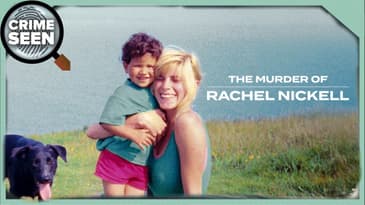
Crime Seen is the true crime review podcast that gets to the heart of how true crime stories are told. Join Mari Forth @maritalks2much.bsky.social and Sarah Carradine @sarahcarradine.bsky.social as they put true crime properties under the magnifying glass. This week Mari is away. Joining Sarah are Third Chair Sarah D Bunting @sarahdbunting.bsky.social and Rebecca Lavoie @reblavoie.bsky.social. In this episode they examine THE MURDER OF RACHEL NICKELL on Netflix
How many magnifying glasses out of 5 will they rate the documentary? Listen to find out. Or jump to the ratings at about 56.54
Mini review of the scripted version of the story THE WITNESS on Netflix begins at about 1.02.12
Link to Sarah D Bunting's review of MICHAEL JACKSON: THE VERDICT
Recommendations:
book: MAD MABEL (Sally Hepworth, 2026)
book: LONDON FALLING (Patrick Redden Keefe, 2026)
podcast: A LITTLE BIT CULTY
You can jump to the recommendations at about 1.06.45
Next time on Crime Seen: Victoria from Black Girls Talkin' TV joins the pod to discuss MATERNAL INSTINCT. Watch it on Netflix, and send in your comments and questions
Find Crime Seen merch at maricrafts2much.bigcartel.com/product/crime-seen-podcast-cup
Support the creators at buymeacoffee.com/crimeseenpod
Find Sarah D Bunting at:
Best Evidence: https://www.realityblurred.com/realitytv/tags/best-evidence/
Exhibit B Books: https://exhibitbbooks.com/
Crime Seen listener special: 15% discount at Exhibit B Books, Enter code XCS15 at checkout
Find Rebecca Lavoie at:
Crime Writers On; https://www.crimewriterson.com/
Something's Off: https://www.youtube.com/@SomethingsOffPod
Find Mari at:
Recap Kickback: https://recapkickback.com/ & youtube.com/@recapkickback
Find Sarah at:
Babes In The Conclave - The Traitors Hungary season 3: https://www.youtube.com/@BabesintheConclave
Theme music by Will From America @willfromamerica.bsky.social
Logo by Tricky Rice @trickyrice.bsky.social
Subscribe to the feed at crimeseenpod.com to get your true crime on Tuesdays
You can follow the show @CrimeSeenPod on Bluesky, Instagram, Threads & Facebook, and @crime.seen on TikTok
Send us your feedback and recommendations for future episodes by email to CrimeSeenPod@gmail.com or by voice memo at speakpipe.com/CrimeSeenPod
Learn more about your ad choices. Visit megaphone.fm/adchoices
[00:00:00] Kaffee in seiner besten Form mit der neuen CUBO ONE Kapselmaschine von Chibo. In jeder CUBO Kapsel steckt Spitzenkaffee aus besonderen Anbaugebieten für Espresso, Kaffeekremer oder Kaffeekrande auf Knopfdruck. Die neue CUBO ONE überzeugt mit Premium Design, kompakter Größe und kleinem Einstiegspreis ab 29 Euro. Dank innovativer Press Brew Technologie wird jede Tasse besonders aromatisch mitsamtiger Crema. Entdecke jetzt die CUBO Kapselmaschinen in deiner Chibo Fiale und auf Chibo.de
[00:00:31] Iconic Vibes zum besten Preis. WOW geht mit Euphoria in die dritte Staffel. Ein paar Jahre nach der Highschool wusste ich nicht, ob das Leben so war, wie ich es wollte. Streame ab dem 13. April parallel zum US-Start. Wöchentlich eine neue Folge. Das Problem ist, wenn du einen Pakt mit dem Teufel schließt, gibt es kein Zurück mehr. Freu dich außerdem auf weitere Highlights wie House of the Dragon und Wicked. Alles ab nur 2,98 Euro im Monat. Streaming war noch nie so WOW.
[00:01:00] Sehr gut, sehr gut, sehr gut. Sehr gut? Wieso Steuer ist sehr gut? Das sagen ganz viele. Cool, wer sagt das? Stiftung Warentest, Computerbild, Focus Money, Chip, Finanztipp, such dir was aus. Mega, aber das ist doch bestimmt kompliziert. Nö, einfach Foto von der Lohnsteuerbescheinigung machen und fertig. Klingt sehr gut. Ist sehr gut. Hol dir dein Geld zurück mit Wieso Steuer. Ein perfekter Frühlingstag. Sonne, Park, Picknick.
[00:01:28] Und so viele Polen. Shop Apotheke sagt Tschüss Allergie und Hallo Frühling. Hier findest du alles, um unbeschwert durch die Allergiezeit zu kommen. Als Neukunde sparst du sogar 10% ab 35 Euro Bestellwert. Mit dem Code NEU10. Du hast ein E-Rezept? Einfach Shop Apotheke App runterladen und direkt einlösen. Gutscheinbedingungen auf shop-apotheke.com slash Gutscheine. Der Fußball-Sommer ist da.
[00:01:55] Jetzt heißt es mitfiebern, mitjubeln und sogar mitspielen. Klick aufs Banner und werde mit REWE Bonus, dem Vorteilsprogramm der REWE App, selbst zum Matchwinner. Gewinne dein Elfmeter-Duell mit Bo, dem stärksten REWE-Torwart aller Zeiten. Und sicher dir damit wöchentlich deinen Fankoupon sowie die Chance auf attraktive Sachpreise. Also los, schnapp dir jetzt deinen Fan-Bonus in der REWE App. Nur bis zum 18.07.
[00:02:21] Hello everyone, I'm Sarah Carradine. I'm Sarah D. Bunting. And I'm Rebecca Lavoie.
[00:02:51] And this is Crime Seen. True Crime Review Podcast, where we get to the heart of how true crime stories are told, completely copied from Rebecca's other show, Crime Writers On. No, it's totally different. So Murray's in the wind today, you've already heard them. I'm joined by third chair Sarah D. Bunting. She's keeping up her 10% percentages. Sarah, how are you? I'm very well. Thank you. Yes.
[00:03:18] And the host, as I say, of Crime Writers On, returning for time number eight. It's Mark Blankenship. How are you, Rebecca? I could not be more excited to be here. The other podcast that you have is your one half of Something's Off with Mel Barrett, past and future guest here, talking about all sorts of things, mostly Karen Reed. What's the latest? Well, mostly Karen Reed because it won't go away. Yeah. But honestly... We're just trying to talk about other things. I actually... I don't mind because this...
[00:03:46] I find this chapter of the case to be... It's actually, in some ways, the most interesting because there's stuff that we have suspected that we knew. We knew we knew, but we couldn't see. And now we're finally starting to see it because there's four simultaneous lawsuits going on. Karen Reed is suing the Massachusetts State Police and the Canton Police Department. She's also suing in a separate suit some of the people who are inside the house, plus a couple of the big cops in their personal capacity.
[00:04:13] And then she's being sued by the O'Keefe family for wrongful death. And in a separate suit, she's being sued by some of the house defendants, along with Turtle Boy, for defamation. So there's four lawsuits. And then in addition to that, there are other cases, most prominently ones being defended by the wonderful Rosemary Scopiccio of Trial 4, in which Michael Proctor, the evil cop at the center of this case, was also the investigator.
[00:04:40] And through her work on those cases, we have now seen a bunch of Michael Proctor's communications from his personal phone come out. And boy, is he racist. She... Yes. What? Racist. Sexist. He loves sexual assault. He's like... Oh, but he's... He's racist with a capital R and a hard R. Like, he is... Oh, racist with a hard R. The new dump that came out today, there's a photo of a little black boy in a cage. He says he wants to join the Klan. Like, I'm not even...
[00:05:10] It's insane. It's absolutely insane. So there's that. And then there's also, like, some depositions that might be happening and the fighting over that. And it's kind of soapy, but also, you know, if you're as schooled on the case as I am, and I have my PhD twice, it's not a bad time to be interested in this. Yeah, I mean, I was listening to Something's Off. And while you were talking about something completely different, you saw the first dump.
[00:05:38] And it's stunning to hear Rebecca and Mel respond in real time. And I know that you both had a little question about how professional you were. I thought it was brilliant because, as I said privately to both of you, we got the full extent of the shock of it through your response. And I think you were both still very professional. And you kept saying, no matter how bad and horrible and disgusting you think these might be, you don't know.
[00:06:08] And I thought, I've heard a few things. I'm sure I wouldn't. They are beyond. And Sarah, if you care to sully your eyes. It's the worst thing. It's like you have to brace yourself. When you watch the, when looking at the first dump, it's like you, I opened it and I was like, oh, this is going to be bad. And then I was just like, it's like, it's like, you know how you're watching like, you know, like Quentin Tarantino, how he writes for racist white people.
[00:06:36] It's 12 times worse than that. Neat. Cool, cool, cool. Yeah, cool. Don't do this. You want to. I mean, one thing about it is like we need to keep people like this accountable. And part of the accountability is that we find out what they say to each other. And once you get past, you know, you can't get past it. Once you get, once you have seen the shocking words or heard the shocking words, after that, it's that further realization.
[00:07:05] It's like the aftershock of an earthquake. I'm sitting here in Christchurch, so I'm thinking about earthquakes, of realizing how comfortable they felt saying these things. Not just that they said them, but they said them in an arena where this was completely acceptable, completely acceptable. And they didn't just say it. They weren't just communicating with one other person that they'd sort of checked it was okay with. They were on group texts. Yeah, I am certain.
[00:07:33] I am absolutely certain that there are other cops. I mean, these texts go back to 2013, but some of them are also very recent. I'm very certain that there are other cops there. And it's like, everyone's talking about Proctor and this guy, good as these bad actors. I'm like, and they're both out, but I'm like, you know, who's not out the other cops whose names we don't know yet. And I'm like, everybody who knows about this, the Norfolk County DA's office, the state of Massachusetts certainly has seen it by now.
[00:07:58] Every single cop on these texts, their name needs to be public and they need to be fired immediately. Not when we find out, but because they've already found out. So it's just, it's gross. It's super gross. Yeah. Because Sean Good was suspended on full pay. Is that right? Until he was suspended under investigation with pay investigation until a couple of weeks ago when he was given notice that these texts were about to come out and then he was allowed to resign.
[00:08:29] Um, yeah, come on. Yeah. Yeah. You know, what always gets me about these, um, info dumps too sometimes is that there's that like, uh, depressed leftist response. It's like, and you're surprised. Like a lot of people reacted this way to, I mean, different, you know, deal and degree, but, uh, gold bar Bob Menendez. And it's like, well, it's Jersey. Are you surprised? And I'm like, I'm from Jersey. So no, that's not the fucking point.
[00:08:57] Like get a shovel and dig out these roots as many times as it takes. Like, it's not about being surprised. Unfortunately, no bigoted law enforcement is not going to blow my socks across the room, but you have to do something about it. There has to be a response, right? There has to be accountability. So I don't know, like, it's not about whether this, you know, old white broad is surprised
[00:09:26] by the intransigent grossness of cops. Yeah. It's like, it's like blue, green algae blooms. You have to clean it out. And when it comes back, you have to clean it out again. Yeah. Cough, cough. Yes. So I had a little update for any of you who heard me, me on something's off. I filled in for Mel Barrett. And I don't know what I said, because it was one in the morning. But I... You were awesome. You were awesome.
[00:09:56] Thank you. Yes, I was not fishing, but I realized it could have come upset. Thank you. But you like what you caught? Sure. I do very much. Yum, yum, yum. So I regaled Rebecca and the listeners with a story of five-year-old Kamenjaya little baby. And I'll just, there's a long, longer bit over there. So if you want to go over there and listen, you can get the full story. But in brief, Kamenjaya little baby was a five-year-old Aboriginal girl.
[00:10:24] And for those people who don't know, you don't say the name of deceased people in Aboriginal and Torres Strait Islander culture. So Kamenjaya stands for a name. So you'll see a lot of dead Aboriginal people called Kamenjaya. And if you're wondering why they all have the first, the same name, they don't. And then the second part, there's always an identifier. So she was a little baby. So 47-year-old Jefferson Lewis was charged with murdering her. It was huge. It was happening in the Northern Territory.
[00:10:54] And it may shock you to know that crimes against black people in this country are not necessarily treated with the severity that crimes against white people are. But it really shook everybody. There was a huge search for her because at first she was missing. And as the days go by, you think, yeah, well, they're not looking for a little girl anymore. They're looking for a body, unfortunately. And unfortunately, that was the case.
[00:11:19] Jefferson Lewis had to be rescued by police and ambulance services from being beaten severely by a group of people enacting cultural law. So there's that whole thing that's there. So it's opened such a huge wound. The wound was there. It's just taken the top off it. And also, as I explained to Rebecca and the listeners, that we have a history of removing
[00:11:46] Aboriginal children from their families, from their culture. It's like the scoop in Canada. And now it means that I think some child service workers are very reluctant to take Aboriginal children out of dangerous situations. So it's that as well. Now all our white guilt is actually hurting people. Now all our white guilt. So I wanted to give an update. At the time, I said that Lewis had been charged with murder and two undisclosed offences.
[00:12:15] He's been excused from his first court appearance. And he's coming back on July 30th. And the reason that it's so long is he has a legal aid lawyer who needs time to get across all the information, of course. And I looked into undisclosed offences because I hadn't last time when I talked about it. And I was thinking, well, he's actually, he hasn't been in court, but a judge, the charges have been in court. So how can they still be undisclosed?
[00:12:44] So there's a number of reasons to protect an ongoing investigation. It could be an undercover or it could be not to alert unarrested accomplices. Thank you, Wikipedia. It could be to safeguard the identities of children, victims of domestic or sexual violence and protected witnesses, national security, which it's, I suppose, not likely to be. And that withholding specific details could prevent severe media prejudice.
[00:13:08] So I'm not in any position to guess as to which category his undisclosed offences are in. I hope it's not unarrested accomplices, but we will see, I suppose, at some point. I think it's most likely to safeguard vulnerable people. So last week we watched The Nightmare Upstairs, what happened to Ty and Bryn and Michael Jackson,
[00:13:37] The Verdict with Chappelle. Sarah, I know you watched Michael Jackson, The Verdict. You wrote a review in Best Evidence on Reality Blood, which I'll link in the show notes. But did you want to give a brief overview on that yourself? Sure. I thought they did a pretty good job sort of, I don't know, taking up some space in the culture right now,
[00:14:03] given that the hagiography that is Michael was kind of, you know, that was approved by the estate. And the verdict, I think, was performatively scrupulous in its fairness, I think, was the phrase I used in my review,
[00:14:23] just so that the estate would not come and stand on their dicks about not having, like, a 360 selection of points of view about Jackson's guilt or innocence. And I thought that that served the material well, that they, I believe that the production was really going for, like, this is what it was like to be in the culture when this trial was happening.
[00:14:52] I do feel like maybe legal was like, you can't even really mention Leaving Neverland, because that was, I thought, quite powerful, nauseating document that has just been disappeared by the estate. And so I do wonder what was going on with that. And, you know, the verdict had the usual complement of problems. It's like, why wasn't this just a two-hour feature?
[00:15:21] Like, I know why, but, I mean, have some discipline medium of true crime. But, yeah, I thought it was, like, it's unpleasant to revisit this stuff. But I also think, like, we're constantly in this culture having to confront, like,
[00:15:42] you have to hold two ideas of a talented person who's also a monster and a predator in your head at one time and let them both be true and then make decisions as an adult about what you, how you want to treat with that person's art or, you know, athletic ability or not.
[00:16:08] Like, you know, this is like Kevin Spacey is the one for me that I'm just like, I hate having to give up L.A. Confidential. That's a huge Poppyfields movie, but I can't do it anymore. But I think the really telling moment in the verdict for me is when the prosecutor, Zonin, I think his name is,
[00:16:37] is talking about how they played Martin Bashir's entire documentary and in the courtroom everyone's head starts bobbing when the music of Michael Jackson comes on and that he is tapping his foot and his second chair is like, you maybe shouldn't probably do that. And he's like, but it's Billie Jean. I literally could control it. This is a banger. And just how we have had to deal with that as, as a culture.
[00:17:05] So I was favorably impressed with it. It didn't, I think it didn't try to do too much. It's just one of those like, you know, true crime in the 2020s. Like not everything has to be a four parter at 47 minutes each. Can we stop? Yeah. No, we can't. I thought it was too long. Is the answer. Yeah. I thought, I liked it more than Murray and Chappelle. Murray and Chappelle were excoriating in their reviews of it. And they have a full review over on Recap Kickback.
[00:17:35] Rebecca, why are we, why are we doing this now? Why, why Michael Jackson now? Do you, have you seen it? Did you have an opinion? I didn't see that. I didn't want to, frankly. I, the last Michael. Literally me neither. Yeah. The, the Michael Jackson, last Michael Jackson thing that we looked at, listened to, was Think Twice, the podcast by Leon Nafok. He had Jay Smooth as his co-host, which was excellent. It was absolutely excellent.
[00:18:02] It covered so much context and it really did a good job. See, to me it goes, I'm going to say something completely blasphemous. I think Michael Jackson was a great dancer. Do I think he is the king of pop, that he sort of deserves that? I actually don't. I mean, I'm not like a fan of, of Michael Jackson's songs. Yeah. Does he have like the depth and breadth of catalog of somebody that should be held up as this person that's unimpeachable forever?
[00:18:31] In my opinion, that is something that has been like propagandized through our culture. And I know it's, I'm going to get a lot of shit for it. It's a blasphemous thing to say, but I look at like the pantheon of great pop stars. And for me, like, I'd put Beyonce above Michael Jackson. Not going to lie. But the thing twice is wonderful because it gives all the context. It talks about his early life, his upbringing, the abuse at the hands of his dad.
[00:19:00] You really sort of get a sense of the whole person and how he could have been built to be the person that, you know, allegedly molested kids. Which the podcast lands on the side that there's just overwhelming evidence. And he did. I mean, Leon Nafok is a great journalist. He doesn't say that. He just is basically like hard to say he didn't when you actually look at all the evidence.
[00:19:24] And the thing about the Michael Jackson story that's so upsetting to me is that it's like a pre-Epstein story where a huge portion of the population would rather die on the hill of these children were lying. Mm-hmm.
[00:19:44] And, you know, if it's even if it's as Michael Jackson says and he is just sleeping comfortably with a bunch of children, that is also super messed up. Like, super messed up. Yeah. And so there's just all of these things. Like, the hard defenders of Michael Jackson, they don't deny that he did the things that he literally said he did. And the things he literally said he did are super messed up. Um, so yeah, it's hard for me to watch.
[00:20:14] And we're in this weird place now where we're expected to, like, reject someone like David Harbour for being, like, a crappy husband to, uh, you know, to his, to Lily Allen. And it's like a lot of people are crappy husbands who cheat on their spouses. And that's just very, very, very different from accusations of raping kids. It's very different. And so the subject gives me a lot of the ick.
[00:20:37] Um, not because it's Jackson's story itself, not because I can't handle, like, thinking about the trial and looking at the way that a lot of the evidence was mishandled and the prosecution was mishandled and witness stuff was mishandled. But because the public discourse around it gives me the ick in, like, a really big way. Yeah, I mean, I definitely, I definitely wouldn't have watched it. I was not sorry that I did. I did find it very interesting.
[00:21:04] I came from Michael Jackson agnostic on guilt to probably not guilty. I mean, he was certainly adjudicated not guilty, lest we forget. And Chappelle had a piece of tape, which was from the very famous, uh, he begged me to sleep in the bed. And apparently, and everybody says Jackson slept on the floor, but let's look, let's not relitigate it now. But I wondered, like, why, why do we keep going back to this well?
[00:21:33] And I find it very hard to not believe victims when they speak, very hard not to believe children when they speak. And if those children were coached, then they're still victims just of a different abuser. Yeah. Right. It's like, um, some of these parents, like, yeah, we're probably grifters. Yeah. Um, I'm sure Michael Jackson was constantly the target of extortion schemes.
[00:22:03] Part of that is just being super famous. Part of that is that you, uh, allegedly have behaved in a way that opens you up to these accusations. But it's like, there are a lot of sort of competing things that can be true. Like they aired the, you know, the senior Jackson's going on TV and being like, this is a setup and this is from a racist press. And I'm like, I mean, I, again, I think that's also true. Yeah, I agree.
[00:22:32] This is why it's so complicated. Jackson was a victim of a lot of things in this situation, in this trial. No, he, he did it. And the way that we can talk about trauma and the way that, uh, the trauma of sexual violence is received by, uh, victims and survivors to a jury to make them understand that it's not this linear cinematic thing.
[00:23:00] And I said in my review, like, you could say a lot about SVU the last 10 years. And I've said all of it and most of it's bad. Right. Rebecca does a whole show on it. Yeah. But they like that. They do a PSA, like basically in every episode.
[00:23:16] That's like the way that, you know, like you do, you, a victim do not have to apologize for these emotions, for feeling torn slash missing your abuser because it was somebody that you loved and cared about who you thought loved and cared about you and took advantage. Um, that you don't remember everything right away, like bless the SVU writers for just like shoe hoarding that in every week. Yeah.
[00:23:42] But 20 odd years ago, a prosecutor, I think even in a sex crimes division, just didn't have the tools to make a jury that was bobbing their heads to beat it. Understand like this is not like victims are victims and you have to just sort of believe them on the basis that they've come forward and that they're under oath. I don't know.
[00:24:10] I mean, it's complicated. I'm not sure the documentary itself was all that high in quality, but it was smart enough to sort of be like, this was a huge mess that we didn't have the tools for in 2005 and then just kind of stand back. So, you know, but I mean, it is, I, I needed to have a dip in some lie after watching it because it's just really, it is the ick. Yeah.
[00:24:40] It's, it's, it's so ick. I just want to say like one last thing about, I know you want to like probably talk about the thing we're here to talk about, but, um, it's Michael Jackson was likely abused too. And it's like, there is a like known pattern of people who were abused often become abusers. And it's like the same, it's, it's like you associate love with that. So to feel love, you do that. Like this is a known thing.
[00:25:10] Yeah. And I think it is completely possible. And one of the things that's kind of wrong right now with the way we talk about like child sexual abuse and sexual assault is that we are so conditioned to just be like, throw people away that we haven't actually looked at like the systemic issues around it enough. Right. And it's either they didn't do it or they should be executed for it.
[00:25:39] And there is like a spectrum, I think of consideration that we just are unwilling to take because talking about this crime is so the ick for everybody. But like, I would encourage people to also watch the recent documentary about to catch a predator. Yes. Yes. Because it also really speaks to this. It speaks to how, yeah, it's called predators.
[00:26:00] It speaks to how our cultural outrage and inability to talk about this in like a meaningful way just leads to more huge mistakes and just leads to like this polar binary look at this issue, which is not a binary issue, you know? So I don't know.
[00:26:20] That's one thing about the Michael Jackson conversation upsets me because, you know, there are so many people who are just completely unwilling to examine the extent to which he was a victim, as well as the extent to which he potentially victimized people because it is actually a spectrum. It's not a black and white story. Oh, my God. That was a pun. Yeah. Wow. Well, and yeah. That's a song. That's for my people who don't know. It is. A Michael Jackson song. Absolutely cannot avoid that. No.
[00:26:50] And then, you know, when you're talking about like the public face of a pop star and then it's like, oh, well, which face? Mm-hmm. Yeah. Of his are you talking about? Like, there's really, it's just a moebius of shudder. But Sarah, you said it was complex and you'd think with three 55-minute episodes, some of that complexity would have been dealt with. And that was one of my critiques of the documentary is it's long, but it's not layered. I would say. There you go. That's my review. Yeah. Long, but not layered.
[00:27:19] And if either of you, if any of the people listening have seen Worst X Ever, we do see some wonderful sex crimes policing from someone who sits down with an accused sexual assaulter. And it is one of the most shocking pieces, endlessly shocked. It's a very shocking piece of interrogation room tape.
[00:27:41] And we've seen a lot where the cop, and I repeat, he is a sex crimes cop, says to the man, look, I mean, look, really, I work for her because she's the victim here. But, you know, guy like, like, you know, maybe you're a great guy. You're a great guy. I mean, what are we saying here? I mean, did this happen? And I at first thought, oh, he's being like really smart and he's getting on the guy's side and he's saying, oh, we're all guys here together.
[00:28:11] And, oh, you know what broads are like. They just, you know, they make a big fuss afterwards and like trying to get back at you. I at first thought, oh, he's like really cleverly getting on the guy's side to get him to confess. He says, nope. He says, case closed. Do you want to take a polygraph? No. Okay, fine. Do you want to do you want to give some blood? No. Okay, fine. Case closed. Case closed. And that man went on to do a lot more horrendous things.
[00:28:38] And the woman who reported him was a wonderful interview. And she talks about how she feels guilty about the women who died because she was not able to. It's like, oh, my God, you've got nothing to apologize for. And that policeman got suspended after this all came out, after the deaths of the very unnecessary deaths. They're all unnecessary. There was an investigation and that cop got a three week suspension, but he served two weeks suspension.
[00:29:09] There you go. Sex crimes. Great. Problem solved. Yeah, problem solved. So thanks, Mariska, for educating us and potentially police. All right. Let's go to something a bit more cheerful. This week we watched The Murder of Rachel Nickell on Netflix. I also watched the scripted version, three parts, miniseries. It's called The Witness, also on Netflix, number one on Netflix at the moment.
[00:29:35] The documentary was directed by Lucy Bowden, and I had to dive back into her IMDb. Nothing, you know, it seems like this has come out of nowhere. She directed among, obviously not nowhere. She's worked very, very hard to get where she is. But there's no true crime in there. She directed, among other things, the series Britain's Closest Encounters, which was narrated by Anthony Head. Anthony, we miss you. Thank you so much for being all of our RIP. The figure slash librarians.
[00:30:05] God. Brutal. So let's talk about the crime, and then we'll talk about the documentary. And I'll just say a few things about The Witness once we've finished. Robert Knapper is an English serial rapist and serial killer. He has been convicted of two murders, one manslaughter, two rapes, and two attempted rapes.
[00:30:29] He was sentenced to indefinite detention in Broadmoor Prison Hospital in England in 2008 for the 1992 murder of Rachel Nickell. He had already been convicted of the double murder of Samantha Bissett and her four-year-old daughter Jasmine Bissett in 1993. So Rachel Nickell was murdered on Wimbledon Common. The killing was witnessed by her two-year-old son, Alex.
[00:30:55] Law enforcement fixated on Colin Stagg as the perpetrator and didn't look beyond him. Once his case was dismissed, Rachel Nickell's murder became a cold case. And in 2008, cold case investigators linked Robert Knapper's DNA to Rachel Nickell, and therefore he was sentenced. I don't know if you have that in America, but indefinite detention means what it says. I don't know if you have anything like that. They call it life without the possibility of parole. Okay. It's very common.
[00:31:26] Okay. Same thing. So, Rebecca, let's start with you. What did you think of this documentary? It's interesting. Well, I'm glad to hear that you went into her IMDb and looked at her other work because I'm not actually surprised to hear this person hasn't directed true crime before because it does not have many of the tropes and feels of a true crime documentary.
[00:31:52] One of the things we talked about this on our review on Crime Writers On is that it's quite like, lack of a better word, it's quite lovely. Like, it's very quiet. It kind of unfurls. It has this incredible, I don't want to call it art direction because basically what they usually do is just, like, rent a spot to put people down and interview them.
[00:32:15] But instead of, like, this bland millennial gray Airbnb that they always seem to pick over and over again, we have this, like, I mean, it might be his house. It's hard to imagine that it is. We have this gorgeous, moody, you know, French country villa looking kitchen with, like, all this stone and it's, like, all dark. And it really serves as, like, this gorgeous backdrop for this, like, beautiful man to tell this, like, incredibly tragic and weird story.
[00:32:43] I found it kind of mesmerizing in a way that I did not expect. I'm like, this is very straightforward. It is a murderer. It is a kid who's put under a lot of pressure to give evidence, which actually is very relevant to our discussion that we just had, sort of the idea that children of any age could be relied upon to give an accurate story. And it's about a dad and a son. And it just, I really like the way that it unfurled. I really like the mood of it.
[00:33:12] I like the pace of it. I like that it wasn't overly long. In fact, to me, it could have been, like, maybe 15 minutes longer. I had some questions, like, about their relationship and so forth. But yes, me too. I was really pleasantly surprised with this documentary. Sarah, how about you? I was struck by, I mean, they did some of the, like, usual visual tropes. Like, there were some reenactments. I didn't think they were poorly done. They seemed to have been done with care. I was struck by the way Andre, the dad, was framed.
[00:33:42] That they were quite close to him. And that there's this, like, in-between level of holding on an interviewee. That sometimes they just are like, well, we have things to do. And people are second screening this. And we got a smash cut to such and so. Or they just leave it on them. And they do that sort of, like, leaving the tails long thing. That's sort of a twin of that.
[00:34:11] It's like, we're going to shoot it from the side so you can see, like, all the reflectors and gear in the shot. Which, thank you. Please stop with that. And there was none of that here. But they just held on him for an amount of time. He has these startling gray eyes that, like, people just don't have that eye color normally. He has a wonderful speaking voice.
[00:34:37] And then when the son, now grown, comes in, like, for a second. Because he's also wearing a hat. And I was just like, ugh. And, I mean, there was something about it that was very unusual. And not confident exactly. But just had decided to tell the story this way from over the shoulder of this man.
[00:35:06] Who is, I think, the most soothing and not evocative. I mean, evocative, yes. But the best advocate that this child could have had. And is the viewer's best advocate in the story. And, like, you know, you just let that man talk.
[00:35:32] And Lucy Bowden knew what she had and who she had. And just let it be that. I mean, there is a lot of story here. But also it's, like, kind of dog bites man, like Rebecca was saying. And I did want, I wanted almost more of their relationship.
[00:35:53] I wanted either, like, go all the, push all the way on putting falsely accused Colin Stagg on camera with his 120 cigarettes. Or, like, don't do that. Like, I felt like that was a missed opportunity, I think.
[00:36:14] Like, I think that was not done quite correctly because it just made me want to see more from other people in the story. But, I mean, they sort of didn't, like, the law enforcement fucking borked the case for decades.
[00:36:35] So, I think you can decide to sort of go granular and be outraged and create outrage about that, which is a legitimate choice. But they stuck to this family. And they stuck to the ripple effects of this trauma, which just, like, will find ways to compound from directions that you don't see.
[00:37:03] And the more I thought about it, the more I thought, this is a somewhat unusual, like, a bunch of unusual decisions that really turned out quite well. Most choices I agreed with. And I was given the horrors recounted within and the truly outrageous, like, how do you find no DNA profiles with that much blood? Like, that's impossible. Not even hers. Yeah. Not even hers.
[00:37:32] And then everyone's like, oh, well, shrug emoji. Like, what the fuck? Test it again. What are you, a moron? Anyway, I think that it was wise to stay on the path that they stayed on. And, yeah. But, like, Rebecca, I wanted it to be a little longer. I had some more questions. But also, I wanted to spend time with these. I wanted to spend more time with these people. Right. With these men.
[00:37:58] I mean, we're actually about to watch the series, the scripted version, Sarah, which I know you've seen. And this is going to be the most superficial thing I'm going to say about this. I saw the trailer for it and I'm like, how could they possibly have cast people that were not as good looking as the real people? Like, these two men are like. Like, people have their teeth. Come on.
[00:38:20] They're two of the most, like, astonishingly magnetic looking people I have ever seen that were real people in real life speaking to a camera. So engaging. I think the missing scene for me, Sarah, was potentially, I don't know if seeing them together, but just getting that hint of sort of the trouble that unfolded after everything that happened and then hearing that everything is okay now.
[00:38:44] It's like a lesser documentary would have given us some B-roll of them walking together through a field or some shit. But like, that one, I didn't want that. But just sort of getting a moment of sort of just seeing what they look. But maybe there's just too much good looking to put in one room together. I don't know. That could be. They did actually have them walking in a field together. And you see, they did it so well, you didn't even know. I guess they did. I guess they did.
[00:39:11] At the end, they're walking along and then the, so I'm starting at the end now. But the, because Andre is so compelling and even though he's sitting down, you imagine him to be a tall man. And then as they're walking along, his son, Alex, puts his arm around him and you realize he's half a head tall. Oh, interestingly. And it's very moving. I found that, I don't know why, I found that very moving. And he says, Andre says at one point, you know, when he was a teenager, he was very angry with me and rightly so.
[00:39:41] I just thought, my God. But yes, perhaps that's missing, perhaps not. But I found it so compelling. There was a small amount, as you say, of reenactments which were perfectly fine. They were exactly right. So when we had the camera steady on the table that Andre's been speaking at and a man comes from the background towards the chair, I thought, well, for a start, we've already met him. So like, why are we doing this? And also don't do that.
[00:40:10] It's a terrible thing to have someone walking into shot. But of course, it was brilliant because it was, in fact, Alex. And, you know, you would say he was a mini me, except he's taller. And I think the other thing about talking to Andre, I feel like I talked to him. Maxi me. The other thing about talking to Andre, and I really feel like I did, was he is a man that has spent so much of his life having to, it's not about having to deal with it.
[00:40:36] It's having to think really deeply about really essential things about life. And he had to leave everything behind because of the attention on him. A photograph of his child was on the front page of papers. He knew he had to protect this child. And so it was also a story of a man in these extraordinary circumstances.
[00:41:01] I think I would have liked more beating up on the cops. I mean, I think we got that they made a really bad move. I was surprised that we had access to the cops who made the bad moves. And they didn't apologize exactly. But they also didn't justify what they had done. And we did get the tip top cop taking responsibility for what had happened on a piece of news footage. So I like that. So overall, I liked it very much.
[00:41:31] I watched The Witness first. Spoiler, I hated every minute of it. And I thought, God, now I've got to watch this bloody documentary. And it was such a revelation anyway, I think, as a piece, let alone as an antidote to The Witness. So let's dive in. Rebecca, why don't we jump around a little bit and go where you wanted to go, which is Colin Stagg. That guy. No, I'm just kidding. Poor Colin Stagg, right?
[00:41:57] I mean, this is a great example of our intolerance for weirdos, right? This is a guy who is in a different time, would just be going to the comic book shop and playing Magic the Gathering with his friends, right? Like, he just had a, you know, an interest. I mean, as Kevin said on our show, which I totally agree.
[00:42:21] It's like, you tell me, like the texting, like the dating situation, the correspondence, like you tell me you're into something, I'm going to tell you I'm into it too. Like, there's some of that going on. But also, you know, if he's into what he's into, who cares? But then going to his house and being like, there's a pentagram. There's some weird stuff. He definitely did it. And then, of course, you throw in the entrapment factor. Nothing like a good honey trap perpetrated by the cops. It reminded me a little bit of the Cannibal Cop documentary. I don't know if you guys have ever seen that.
[00:42:50] I was just going to say that. Yeah. Where it's like, let's tease out the very worst thing that we can get him to say as proof of whatever without any other evidence, without anything even really pointing to, yes, I'm a stabber. And that's got to be the guy. So I, you know, I definitely think he was wronged.
[00:43:15] But I was also, I'm always pleasantly surprised by, it seems like England is like the singular country where if there's an F up, like it gets fixed. Not all the time, but more so than in the United States where a judge or a prosecutor will actually be like, let's back off of this or let's release this person. And here in the U.S. that we would just all think he was guilty anyway because Nancy Grace would have been talking about him for two weeks. But, right? Where are the pentagrams? Yeah. Yeah. The poor guy.
[00:43:44] The absolute poor guy. That was a little too good. It was really, really good. Yeah. I'm actually doing such a strong doing Nancy Grace. So much tragedy in this. And Colin Stagg is like sort of seen as like this guy whose life was ruined. But he wasn't in it for very long. Which doesn't give you much of an impression of what his life has been like today. And he doesn't sort of present as somebody who's had a great time.
[00:44:13] So, yeah. Well, yeah. I mean, he's sitting on his bed watching television and the table that the television's on is touching his knees. Surrounded by butts. So he was surrounded by butts. He was in a bed set all those years ago. And it was Andre's real house then. They didn't put him in a weird space. I thought it was. The only reason I thought it wasn't was I thought he's been so careful to protect their identities that he might not. But it did look like a real a real place.
[00:44:40] Well, and he had a mug that like it looked like a mug that he would have. Right. I don't know. Did you guys see The Predator of Seville or Sevilla? No. Okay. I let you watch it for me. Yeah. So that's another documentary that is basically relies on the storytelling ability of person involved in the case. And basically this one I mean, there's several women who talk, but there's just one woman who's like great storyteller, compelling talker.
[00:45:09] And Kevin made the good point that like you want to center victims, but sometimes they're not great at telling their own story. And like she was really good at telling her own story. And she was in, I'm sorry to go so superficial. She was in like the most beautiful house I have ever seen on television. And I was like, that can't be real. But I looked it up and it really is her house. So now I'm sort of like in this weird space where I'm always looking for that. I'm always like, that seems. And very often what they do. It's a richness. They did this in the Murder in Glitter Ball City, which is a documentary that I love.
[00:45:38] Oh, God, that's so good. Yes. Mark Blankenship talked about that with us. Yeah. Where they very clearly just rented one giant house and it was just filmed in different rooms. It was very atmospheric and cool. But like I when those things are done well, as with this documentary that we're actually talking about, it it stands out to me because it's so frequently done poorly. And and it really is.
[00:46:02] It really is art direction for the documentary the same way that when I watch a scripted series on Peacock, the art direction is always so crappy. The houses always look so like a set and not like a real place versus something that you see on Apple TV or whatever. And that stuff matters. It even matters in documentary, even though it's unscripted. And even though we're supposed to be paying attention to the real people in the story. But it tells part of the story of the real people.
[00:46:32] And I certainly think putting Mr. Stagg in his in his den, as it were, tells us so much because it's like not only can we say he was wronged then, but this is also his life now in this tiny room. And I mean, I have a tiny room as well, but don't feel sorry for me. But it was I I was so taken aback that I saw him. I thought, Lucy, you've got some explaining to do. How did you get him to talk to you? I almost wanted more of him.
[00:47:00] But then I thought he said everything that there was to say. And the most the most kind of stabbing, I can't say stabbing. The most extraordinary thing for me was when he said, even after he was let go by the judge, but he was let go by the judge because of the police methods, not because he was not guilty. That he said when he was out in the street and his eyes would look at a woman, just she was in his eyeline and he'd have to look away and go, no, you can't look at her because someone will look at you and say you're stalking her. And I thought, yep, that's all you needed to say.
[00:47:30] Sarah, did you have thoughts about Colin? I did want to see a little more of him, but I think I mean, I think you're right that there wasn't that much more to say.
[00:47:42] I think the enduring impression that I got was, I mean, first of all, from like contemporary footage of him just like sprinting out of like custody or interrogation and just like knocking camera setups down. And then him talking about how at the time, like I think he was nearly 30. He'd never had a relationship with a woman, really never had a girlfriend.
[00:48:12] And that he was like, you know, so of course, that's what happened is that I would just say anything to her. And I feel like this is an unfortunate motif in like major case law enforcement where they're like, they find some lady cop and they're just like, okay, Lizzie James of this case.
[00:48:36] Try to try to try to honey trap him into telling you something and then it never holds up. And it puts the cop herself in enormous danger. Like this does not work. Stop doing it. Yeah. Yeah. Yeah, exactly. Well, let's talk about a more major part of it, which is that the two-year-old Alex is found by a passerby clinging to his mother's dead body.
[00:49:04] It is a horrible, horrible vision for us to think about, a terrible thing to go through. The police would like him to tell them because he saw the perpetrator. What did he look like? What was he wearing? What was said? And all of that. He isn't able to help them very much initially. They have sessions with a child psychologist who admits now that she didn't know what she was doing.
[00:49:29] And then a year later when they're in France and they haven't spoken about it particularly, he starts coming out with some statements which his father films. So Sarah, how did you find that whole thing? And are we as prurient as the press at the time with this idea of, oh, the child saw the murder and was found clinging to the body covered in blood? Hello, Dexter.
[00:49:53] I mean, every time he was being questioned, like I was just glad that Andre was there because he was just very natural and tried not to. I mean, he wasn't using any euphemisms and I think he just was very direct, which like I don't have children. I don't know how I would handle that situation, but I think that's the wise thing to do.
[00:50:19] But when the decision was taken to return to this like covered path in Wimbledon Common and try to sort of like retrace or hypnotize or whatever that I was just like, I was way back in my chair, like turned away from the screen. Like, I don't, I don't, I don't like this and I don't want Andre to have consented to it.
[00:50:45] And, um, and that part was extremely affecting, I think. And they included enough of it that it was like, there's a reason why this isn't gonna work. Um, but that was another, that was another area of this documentary that they could have really like dragged in a bunch of sort of expert talking heads about like, this is how you get, this is how you interrogate children.
[00:51:11] This is how you take witness statements from children younger than three or four. We don't really know what, how much of what they see is like reality. And how much is this like wonderful liminal space that children that age live in? And they didn't do that. And this is, this is something that I'm always going to respect a true crime documentary for that.
[00:51:35] It's like people who are watching this are people who watch true crime documentaries and we don't have to fucking do everything for them. So we're just not gonna, we're just gonna let people fill it in. And that actually, that decision sort of underlines the message that like memory for everybody is extremely unreliable.
[00:51:59] Like sometimes these identikit sketches look like the look like the eventual, um, suspect or perpetrator. But a lot of the time it's like, what? Like that one Ted Bundy sketch that you're like, that's one of the Van Patten kids. I don't, I don't get it.
[00:52:18] So yeah, I, I mean, that was difficult to watch, but it was also like Alex himself was such a like verbal charismatic, uh, sort of like snappy kid. Even at like two and a half or three years old or four years old that it was just like, you know, because you've been spending this time with Andre, you do feel like it's probably going to be okay. Like not great, but okay.
[00:52:47] But then once they all take off into the woods around Wimbledon Common, I was like, well, that's no, let's not do that. And I was right. Can I just say something that's like, I don't understand why it wasn't obvious to these stupid adults. Uh, a two year old is like 30 inches tall. A grown adult is between 60 and 75 inches tall.
[00:53:12] How on earth do they think a child would recognize and like be able to describe an adult? It's basically like me asking me what the second floor of a house looks like that I walked by. Right. So there's that. Yeah. She showed everybody. She showed. Well, there's the idea that he also probably had his eyes covered. He probably wasn't actively watching his mom get stabbed with fascination. Uh, you know, he survived, you know, probably to some extent.
[00:53:41] I think that that next poor young girl didn't because he didn't, this killer didn't want to leave another witness behind. Right. Because they were sort of publicizing that this witness existed in, in Alex's case. Um, and you know, the idea, I mean, he wasn't, even if he was like six or seven, I would be like incredulous about this, but he was a baby. He was like, like not even of potty training age for many, many kids.
[00:54:08] Like the idea that he would be able to say, and of course he said there was a white shirt. Most shirts are white. Like he's, but that's probably the picture he would draw. If he drew a man, he'd probably draw like a white shirt and like blue jeans or whatever. And I don't know. I found those scenes so difficult to watch. I, I, and I, I felt so much like you could see how Andre felt in those moments, but you could also see that he had been told it was fine and it would work.
[00:54:36] And he also just lost his partner who he loved. So I can't imagine being in a worse scenario, but these adults were, they're almost as stupid as that guy who had been trained for with a profiler for one day. And profilers are stupid enough, but like training for one with one day does not make you one of those stupid guys. It just makes you a stupider version of one of those stupid guys. Yeah.
[00:54:58] I mean, the one, the one thing that Alex did get right, they dismissed, which is that the guy was Batman because he had, as it turned out, he had the belt over the top of his shirt. So this was, this was his imagination. And what got me about the identikit, it actually does look like both men. Excuse me. Does it? It looks like every man. It looks like every man, basically. Every, every weird, it looks like Stephen, it looks like Stephen Miller. Oh.
[00:55:25] And the identikit they got from adult witnesses of other people that were on the common and Colin Stagg was on the common. So when they said, oh, it looks like him. All I thought was, yeah, Colin Stagg said he was on the common half an hour beforehand. So the people might be describing Colin and not Robert. So it just, it's interesting what you say, Rebecca, because I think Andre knew it was wrong. Like he knew it was wrong.
[00:55:50] And that's something he's had to deal with is, and he talks about the role of a protector and how you're supposed to protect your family and when you don't, what that, what that does to you. And I think that he may also be talking about knowing that the interrogation might be too strong a word, but the questioning over days and days and days of, of his son was not right. And it wasn't right. And what caught the correct person was science. Yeah. Science. Imagine that.
[00:56:19] Imagine actual science and not fake ass press science. Yeah. So science, it's hard to imagine, right? That like actual things that actually can prove things. I don't know. I mean, have I talked to both of you? I think I have in the past about profiling, right? And how much like. No, go. Yes, I think it is. Nothing worse than a profiler like Jim Clemente, who says he has, quote, saved lives. Show me. Show me the lives you've saved, Jim. Name them. With guessing what a guy might be like in an effort to do what?
[00:56:49] So that after he's caught, you can be like, oh, I got that 35%, right? Like that whole thing. I can't handle it. And I can't handle the way that it's sort of venerated by people as because the media around profilers has been such good propaganda around this like BS, non-scientific idea that we have interviewed 100 serial killers who had things in common. And therefore, all serial killers have things in common. You picked the ones to talk to. Well, the thing they had in common is they got caught. Exactly. Yeah.
[00:57:20] Exactly. Exactly. And they also all had victims that you cared about or most of them did. And they were prepared to talk to you as well. Exactly. That being said. That's a very self-selecting group. If Mindhunter ever comes back, I will be watching every minute of that shit. Oh, my God. That show was great. So good. So good. And also, by the way, did address the – I mean, what was it? Ed Kemper who said you've studied the ones that got caught, I think is what Ed Kemper said. Yeah. Yeah. Exactly. Sorry to quote this here. But I mean, I will watch –
[00:57:49] You just quoted the neck fucker. Just FYI. The neck fucker. I know. Exactly. I mean, I'll watch – lie to me and I don't believe that micro expressions are readable and I just don't believe in any of that. You know, watch the body language, for example, as we might know. So those of you who follow us, you know the watch the body language. There's so much going on in true crime at the moment. Is there more crime or are we just noticing it? I don't know. So let's get to our ratings, Sarah.
[00:58:16] How many magnifying glasses are you going to rate the murder of Rachel Nackel out of a possible five? I am going to go four. I mean, it's really more like four and a quarter, but I don't think we're doing quarters. Yeah, sure. Yeah, I mean, I think there were a lot of good choices. There were a lot of good – you know what? Let's just go four and a half. I think there were a lot of good choices made, a lot of unusual choices made. Choices that weren't made were great.
[00:58:46] But I think the decision to lead with Andre and to, like, frame him tightly in a way that's, like, not going to let you look away from the, you know, the blast radius of grief that, in the end, all true crime is trying to mediate and control for participants and for audience.
[00:59:11] Not to be all grand unifying theory about it, but sometimes someone shouldn't have a lot of experience in the true crime nonfiction space because then you don't do a bunch of tropey crap that nobody needs. And you can get to the heart, literally, of this, of the story. And the heart of the story is Andre and his love for and protecting of his son.
[00:59:40] Oh, four and a half. Rebecca, how many magnifying glasses are you going to give this documentary? I am also going with four and a half. I was thinking about this before we started. I was like, where am I going to land on this? This is definitely going to be among my top ten picks for the end of the year when we do our top ten list. It was surprising in its quietness. I really, really like that. It wasn't boring. Perfectly put. It was quiet in a very surprising way.
[01:00:08] And it didn't do the thing that I hate more than anything where, you know, you talk about the lingering camera. It didn't do the thing where it just waited and sat until he made an expression that would make us feel like that poor guy. Like it never did that. It didn't succumb to the temptation to get the money crying shot. It didn't succumb to the temptation to get to know to have the camera sit on him so long that ultimately he starts looking around like waiting to see what he should do next.
[01:00:36] They didn't do the thing where, you know, you see him sort of like squirming with the microphone and all that like dumb, completely unnecessary stuff. I think that the father son story here is so unbelievably moving. And this would be a five star documentary for me if I got a little bit more of that. I mean, it might be something that they chose to only talk about in very specific ways, in which case I get it.
[01:01:05] But when you have people talking about the worst thing that ever happened to them and you want to hear them talk about it more, it's a credit to both them and to the person who captured their story. And I just think there's a tremendous amount of restraint shown in making this. And I loved everything about that. What about you, Sarah? Well, I'm going to go 4.5. I was wondering why it wasn't a five.
[01:01:29] I don't know if I'm missing their relationship because I think even the facial hair of the son, which matches that of his father, and it's a very particular facial hair. It's not like a general scruff or anything like that. Tells you about their relationship, that he has that relationship with his father where he will mirror him in that. They sound very different, which is really interesting. Because Alex grew up in France. I first came across this documentary some months ago before it was the big thing.
[01:01:58] And, you know, because I'm so in with everything. And it was like a teaser trailer. And it was the original footage that Andre took of him sitting at the little chair with Alex and their drawing. The red table. Like a red children's table. And that tall man just folds into the child's chair.
[01:02:21] But when I saw just that with no other context, I thought, oh, it's going to be this very sensationalised child watches mother brutally slain. That is the story. But that's not what Lucy Bowden did. I'm very interested to see what she does next. I'm tempted to go back and watch Britain's Close Encounters. But I liked this very much. Much I liked spending time with the people that we spent time with.
[01:02:50] Less so the law enforcement. But they do give you background. The infuriating thing that we didn't talk about was that the police who had Robert Knapper offered him to the Rachel Nickell group to say, you might like to look at him. And the Rachel Nickell group said, nope, it's not him. We know we had the right person. It's not him. Oh, my God. Same as it ever was. But again, that was just touched in.
[01:03:17] It wasn't a documentary about being outraged about law enforcement because we're that anyway. It really was this relationship. And it really was talking to this one man who has an extraordinary story to tell in such a soft and compelling way. So, yeah, four and a half from all of us. Now, I have teased that I watched the scripted drama The Witness dropped on Netflix at the same time. It's a three-part miniseries directed by Alan Winkler. At least it wasn't Ryan Murphy.
[01:03:48] It was tedious, turgid, difficult to get through. That's what I wrote down. It was just so tedious. Tumescence? Ooh, no. No, the reverse. I know. I was just giving you a little bit more. You were trying to give another T. A little penile alliteration for you. Turbid? Turbid. Turnips. Turnipy. Yeah, exactly. Yes. I don't often do this, but I did go to Rotten Tomatoes and see that it's 56%. So my people are with me.
[01:04:18] I would say do not bother with it. There's no redeeming features about it. I'm sorry for all the people who were. I have to. Heaven's making me. Boo-hoo for you. You might not agree with me, but if I had seen the documentary first, I would have hated it even more. Great. Thanks. But I saw the scripted one first, and then the documentary was an absolute revelation. Absolute revelation.
[01:04:45] So I won't say any more because I do hate shitting on things, even though I do it with great enthusiasm from time to time. And you're good at it. That's what counts. Pick better projects. And I also don't. Here's the really big thing, now that I've watched both. While the documentary, the murder of Rachel McHale exists in the world, you don't need the witness. You don't need it no matter how good it is. It doesn't give you anything else.
[01:05:15] In fact, it diminishes the comparison. It's not me. All I could think about when I heard there was a scripted version, I'm like, won't this just be an SVU episode? Right? Because there are so many SVU episodes. It's like, if the hook for the story is that the witness was a two-year-old boy, what else could you possibly do with it? Unless the only creative thing you could do was have the murder take place before the action and, like, barely, and just the audience knows the murder happened.
[01:05:44] And then you start when he's, like, five. And then, like, that would be the only thing you could do that would be different. Like, tell the story of Jesus between the ages of baby and 26, please. But, like, you know, it's like that's the only thing different you could do with that story. But, like, when I heard there was a scripted version, I'm like, I'll just watch one of the many SVU episodes. Well, Margaret Atwood, who I just absolutely revere, and she talks about story and she says, story is story, but where do you get in?
[01:06:14] Let's do Red Riding Hood. It starts like this. It was dark inside the wolf. Oh, my God. Brilliant. So the witness does nothing so exciting. And you have to look forward, Rebecca, to his troubled teenage years. Damn it. And they're not as good looking as the real life Andre and Alex, so I can't even. I'm sorry they're not. I saw it. I saw the trailer. I'm like, huge problem. In the whole world of actors, actors are usually pretty good looking people.
[01:06:43] But these men are very special. Like, their looks are. And I know I just sound like an oaf, like a singularly, like, superficial oaf. They have extremely soulful faces. Mm-hmm. And, like, there's. It's the way they're lit and shot as well, if I might say so. Of course. Of course. And, you know. You've got to have the material. Look at the material. People who aren't white are actually very hard to light. Like, people who are not, like, white, white. They are.
[01:07:07] And they just have an incredibly engaging and soulful, but they also both have a gaze. It makes you want to jump into it like a pool. And I don't mean that in a sexual way. You know what I mean? Like, you just, you want to, like, just be closer to them. And so, you know, I know that's hard to cast, but they just, it looks like they just cast some mediocre dudes to play these two, so. The thing about that gaze, too, now that you say it, I mean, I noticed it, but I'm thinking
[01:07:33] is if you have had to be scrupulously honest all of your life, or certainly for Andre from the moment that his partner and the mother of his child was killed, and for Alex, really, since the time he was two, if you have had to be scrupulously honest, there's a certain clarity that comes with that. Like, you believed every word that they said, and there never seemed to be an attempt to mould the narrative to make themselves look better. So they certainly didn't do that.
[01:08:03] So, yeah, these actors are just not good enough. Rebecca, what do you have to recommend to our listeners today? Well, I have a book that you probably know about by an Australian author who I really like because I love cheese. I love cheese, but I love smart cheese, and this fits very strongly in that category. It's the latest Sally Hepworth novel, Mad Mabel. No, I don't. I should order it immediately. It's so fun.
[01:08:32] You know Sally Hepworth? Do you know who Sally Hepworth is? She's Australian. But I love cheese as well. I love cheese very much. Yeah, she's Australian. She writes, like, domestic suspense books, but usually there's a fun twist. And this one is about a woman who is now, like, an old lady living in a neighborhood, like, a little city neighborhood, and she's got this cute little, like, it sounds like a little alley with all these, like, weird eccentric neighbors. And one of her elder neighbors dies.
[01:09:02] This is not a spoiler alert. It happens right at the beginning of the book. And what happens is, because she discovered his body, the police have to ask her questions, and it's revealed that she's actually the woman who, as a child, was the youngest ever murder defendant in Australian history. And so the book takes place in two timelines, the modern timeline, where she's actually telling her story biographically to a couple of documentarians who end up coming in and saying, like, you know, you've been hiding using a fake name forever. Do you want to tell your story?
[01:09:31] And it also takes place in the timeline where she's a teenage girl. And it is, I really loved it. I loved it. I'm like, this is a very cinematic book. It's also very sweet. It has all those elements of, like, books about older people where you're like, you know, without getting into the campy, like, Thursday murder club sort of space. It does do that thing. It was a very ill-judged project. That movie was horrible. I loved the first book, but the movie was horrible. The books are great. The books are really fun.
[01:10:02] But, like, without getting super into that space, it does sort of, like, bring, like, a dignity to an older person that I like. And there's a twist that in my estimation was very obvious from the beginning, but it didn't matter because I was sort of looking for it. You know how, like, you know, at the end of The Sixth Sense, when you find out what the big twist is and then you kind of in your mind can go back and, like, try to think of all the moments that may have glued you in. And this is, like, I guessed it right away.
[01:10:30] So I was actually looking for the moments along the way. And the book, the author did a really good job. Sally Hattler did actually a really good job making me wonder if I was wrong. So, yeah, I thought it was really fun, really lovely. And I would really recommend this book, Mad Mabel. And, of course, I usually do audio. So I always recommend the audio version of all these books. Oh, yeah. I've just ordered it from the library. It's like the second time you read Nagatha Christie and you go, oh, my God, you were telling me the answer all the way along. That's why my all-time favorite true crime podcast, Suspect Season 1, the reason it's
[01:11:00] my all-time favorite true crime podcast is because the first episode, without you knowing it, tells you everything you need to know for the entire series. It's kind of extraordinary. Yeah. Wonderful. Sarah, what do you have to recommend today? I am also listening to a book that I'm liking a lot. It's London Falling by Patrick Radden Keefe. It's read by the author. I am really liking it. There is always that danger.
[01:11:30] Like, I remember this article about Zach Brettler, his fall or push to his death and the sort of cases, multiple cases that that sort of opened up for his parents, for his brother. Into organized crime in London, about oligarchy, about Jewish diaspora.
[01:11:58] And I remember thinking, like, look, I'll read anything by this guy, because if he could get the troubles to be manageable for me, I trust him. But this one, I was really like, I'm not sure how much else there is to say about a late adolescent boy who got in over his head. But as usual, like, he just sort of carries you right along.
[01:12:27] And then you're sort of like in the you're like, all of a sudden you're in the 70s with one of these with a guy called Indian Dave and his like, you know, mediocre grift BS where he basically like decides he's gonna be a mid-level gangster. So then he just is like, okay. But it's all interesting. It's all texture.
[01:12:52] It all contributes to the story in the quote present day. And it's, you know, it's history, it's sociology, but it's also crime. And he has a real gift for, like, sometimes authors can't read their stuff themselves and shouldn't. And it's like, look, if Jacques Roy has a few hours, just let him do it. He's always fucking brilliant.
[01:13:18] But Raddenkief is really good at reading this material. It's not actually all that crimey at book length. But it's Patrick Raddenkief. He's one of our, he's one of our best. And I recommend it. And I only got it on audio because the wait for it at the Brooklyn Public Library in text was seriously like five years. I was like, guys, just get some more copies. Yes. It's Brooklyn.
[01:13:47] But yeah, so that one popped up and I was like, all right, I'll give this a spin. And I really am loving listening to it and didn't, like I was in the car today running errands listening to it and like did not want to get out of the car because it was, it was so interesting. So that is my recommendation. London Falling by Patrick Raddenkief. Fantastic. And we have a listener recommendation today from Cindy. Didn't know there were any Cindy's anymore. Congratulations on your marvelous name. Hey, Mari and Sarah.
[01:14:17] I'm not sure if you've listened to the podcast a little bit culty or not, but it's done by a couple that escaped NXIVM, Sarah and Nippy from The Vow. And the last episode featured Christine Marie from Trust Me, The False Prophet. And listeners may remember Mari and I spoke about that a few weeks ago. We really liked it. It's the first of a two part interview. The first part focuses on Christine's background. And the second part will be more on her experience with the FLDS group. The documentary is on.
[01:14:47] Interestingly, Christine knew Ranieri when he was first starting out! I think you would enjoy the episode and highly recommend it from your avid listener, Cindy. Thank you, Cindy. I shall put that on my very long list of podcasts that I am to listen to. I usually get the foursome at Crime Riders on to listen to all the podcasts for me and break them down, but I might actually just listen to that one myself. Do you know a little bit culty, Rebecca?
[01:15:13] I just looked it up and the people in it are Nippy Ames and Sarah Edmondson, who were at the center of escaping NXIVM. And they were at the center of the documentary about Keith Ranieri and NXIVM. And they were all, I believe she was also the main voice in the podcast from the CBC, which was like the first NXIVM story that really broke. She's like, she's fascinating. She's acting. They're both like actors and they got pulled in.
[01:15:42] And, you know, they're on the weird cusp of like kind of not feeling too bad for them because they came out okay and they're like really cute and clearly they're going to be fine. That being said, because they're very dynamic people, they do a very good job unraveling the story. And it's like to find out, you know, to me NXIVM is such a fascinating story because
[01:16:06] it's like one of the best examples besides Wild Wild Country of like my favorite trope about cults, which is that it's always like some dude, but the real power is like the woman who's second in command. So NXIVM is like, it's that Nancy Salzman, which is why part two of the NXIVM thing where she is an interview subject and is sort of like telling all was so fascinating to me. So do you know the podcast, Sarah? A little bit culty. I don't.
[01:16:35] I've heard of it, but I have not. I have not interacted with it. I but this just reminded me that I sort of miss the Leah Remini show. I loved that show. And I miss her like being in the car with Mike Rinder and swearing and seeing what she was doing. I know. And seeing what she was doing with her manicure that week and just that she was like inches
[01:17:01] away from erupting in a volcano of swears, which relatable. She was the very best person to out all that stuff. She was like, look at all these books they made me buy. So all we need is Elizabeth Moss next and we'll have like the perfect. Oh yeah. Come on, Elizabeth. Get out of that cult girl. We'll make a soft landing for you. We're all here. We will. Waiting to catch you. Call us. You fall. Truly. Call us. Yeah. Yeah.
[01:17:30] So at Crime Scene, we're going to hear your feedback as well and your suggestions for future episodes like Cindy. Follow us everywhere at Crime Scene Pod. You can support us at buymeacoffee.com slash crime scene pod. Swing us a couple of bucks or be like Nian Sizzim Situ and join our monthly membership. Thanks Nian Sizzim Situ, if that is your real name, for joining. Welcome.
[01:17:57] Members receive episodes early, cough, cough and ad free, as well as other exclusive bonus content. Supporters at every level had access to watch us record last week's episode live. And we had a lot of fun. It took us half an hour to hit record because we were having so much talking to the chat and they heard all the swearing and all the mistakes and threw in lots and lots of questions. So please, if you would like to support us with a single donation or as a membership, we are going to do that monthly from now on.
[01:18:26] So you can join us live and actually see what we look like. We also have merch. Go to Murray Crafts Too Much. That's two like the number two at bigcartel.com. Links to the store will be in the show notes and you can buy the mugs. Rebecca, what have you got going on and where can the people find you? Of course, I'll always plug my beloved flagship podcast, Crime Writers On, but we are so close to 10,000 subscribers on our YouTube channel. Something's off.
[01:18:55] I think we can get, I mean, I look at people who are not nearly as great as we are and they have like 50, 100,000. But if we were to pass that 10,000 mark, like in the next couple of weeks, I'd be so excited. We're only a couple hundred away. If you like seeing two women gossip and talk about like true crime stuff, and especially if you're interested in the Karen Reed case, I think you'll really like it because a lot of our content right now revolves around that. And we also do gossip about other creators in a way where we are kind of above it, but we're still doing it. So anyway, check out Something's Off on YouTube.
[01:19:25] And Sarah, what about you? Where can the people find you? Quick side plug. I just did Toby Ball's deep dive with Mel Barrett. Yeah, they did. Recently, it was a really fun discussion. From Something's Off. Mel is super lucky. I love her so much. Mel's the best. Felt super lucky to do it. Almost as lucky as I feel to be here as your third chair. Crime Scene listeners, you get a special code at Exhibit B Books, which is my all true crime. Secondhand Bookstore. It's open all night.
[01:19:55] Exhibitbbooks.com and the code XCS15 at checkout gets you 15% off. I'm actually sold out of London Falling right now, but I've got a bunch of other, for some reason we're having like a run on mafia and corrupt cop stuff. Hmm. But yeah, whatever you need, if you're not seeing it on the shelves, I can help you find it.
[01:20:20] Once again, ExhibitB Books.com and your special code is XCS15 at checkout. Wonderful. That'll be in the show notes as always. You can follow me if you'd like to do that on Blue Sky at Sarah Carradine. I'm also covering The Traitor's Hungary season three with Annabelle Fiddler over on Babes in the Conclave. No, you don't have to watch it to enjoy it. I know many of our Crime Scene listeners don't watch the documentaries, but just listen to us.
[01:20:46] Even more so with The Traitor's Hungary if your Hungarian is not up to scratch. Listen to us talk over there. Absolute nonsense. And I too will be on Toby Ballsdeep Dive Book Club. You've got to say it right. Talking about the wonderful Australian author Anna Funda. Stasieland. But that's in a while and I'll let you know when that is up. Next time on Crime Scene, Murray will be back and we'll be covering Maternal Instinct. Cannot wait for that.
[01:21:16] Watch it on Netflix and send us your comments and questions. Thanks to Rebecca Lavoie and Sarah D. Bunting for joining me. Oh, thanks for having me. I'm so always so happy to be on the show. And thanks for having us. Always a pleasure, Rebecca. It seems Sarah. It's wonderful to see you. You too. We all just love each other. Until next time. It's very gross. Until next time. Case closed.