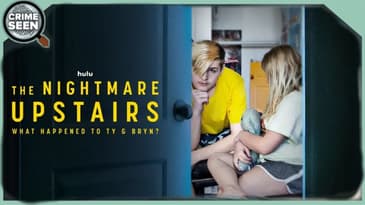
Crime Seen is the true crime review podcast that gets to the heart of how true crime stories are told. Join Mari Forth @maritalks2much.bsky.social and Sarah Carradine @sarahcarradine.bsky.social as they put true crime properties under the magnifying glass. In this episode they examine THE NIGHTMARE UPSTAIRS: WHAT HAPPENED TO TY AND BRYN on Netflix. Joining them is Chappell @chappellskickback.bsky
How many magnifying glasses out of 5 will they rate the docu-series? Listen to find out. Or jump to the ratings at about 54.18
The documentary, and this discussion in part, will talk abut child sexual abuse. Here are some resources
In Australia call 1800 RESPECT (1800 737 732) or go to 1800respect.org.au for sexual, domestic and family violence support. There is also the National Redress Scheme on 1800 737 377, or at nationalredress.gov.au for information, support, and to make an application. If you have experienced institutional child sexual abuse in Australia, you can apply until the end of June 2027
In the US find support at the 24/7 Childhelp National Child Abuse Hotline (1-800) 4-A-Child or (1-800) 422-4453 or go to childhelp.org
Mini review of MICHAEL JACKSON: THE VERDICT begins at about 50.10
Full review of the docu-series at Recap Kickback. Link:
https://www.youtube.com/watch?v=HtOyp-n26Dg
Recommendations:
documentary: SEEKING MAVIS BEACON (Jazmin Jones, 2024)
panel show: GUY MONTGOMERY'S GUY MONT SPELLING BEE
panel show: TASKMASTER AUSTRALIA season 5
documentary: NAVALNY (Daniel Roher, 2022)
podcast: HOW TO SPLIT A TOASTER
You can jump to the recommendations at about 1.18.43
Next time on Crime Seen: Mari is on a trip, so Sarah D Bunting @sarahdbunting.bsky.social & Rebecca Lavoie @reblavoie.bsky.social join Sarah to discuss THE MURDER OF RACHEL NICKELL. Watch it on Netflix, and send in your comments and questions
Find Crime Seen merch at maricrafts2much.bigcartel.com/product/crime-seen-podcast-cup
Support the creators at buymeacoffee.com/crimeseenpod
Find Chappell at:
Recap Kickback: https://www.youtube.com/@RecapKickback
Find Mari at:
Recap Kickback: https://recapkickback.com/ & youtube.com/@recapkickback
Find Sarah at:
Babes In The Conclave - The Traitors Hungary season 3: https://www.youtube.com/@BabesintheConclave
Theme music by Will From America @willfromamerica.bsky.social
Logo by Tricky Rice @trickyrice.bsky.social
Subscribe to the feed at crimeseenpod.com to get your true crime on Tuesdays
You can follow the show @CrimeSeenPod on Bluesky, Instagram, Threads & Facebook, and @crime.seen on TikTok
Send us your feedback and recommendations for future episodes by email to CrimeSeenPod@gmail.com or by voice memo at speakpipe.com/CrimeSeenPod
Learn more about your ad choices. Visit megaphone.fm/adchoices
[00:00:00] Kaffee in seiner besten Form mit der neuen Cubo One Kapselmaschine von Chibo. In jeder Cubo Kapsel steckt Spitzenkaffee aus besonderen Anbaugebieten – für Espresso, Kaffeecrema oder Kaffeegrande auf Knopfdruck. Die neue Cubo One überzeugt mit Premium Design, kompakter Größe und kleinem Einstiegspreis ab 29 Euro. Dank innovativer Press Brew Technologie wird jede Tasse besonders aromatisch mitsamtiger Crema. Entdecke jetzt die Cubo Kapselmaschinen in deiner Chibo Fiale und auf chibo.de.
[00:00:30] Ein perfekter Frühlingstag. Sonne, Park, Picknick und so viele Pollen. Shop Apotheke sagt Tschüss Allergie und Hallo Frühling. Hier findest du alles um unbeschwert durch die Allergiezeit zu kommen. Als Neukunde sparst du sogar 10% ab 35 Euro Bestellwert mit dem Code NEU10. Du hast ein E-Rezept? Einfach Shop Apotheke App runterladen und direkt einlösen. Gutscheinbedingungen auf shop-apotheke.com.
[00:01:23] I'm Sarah Carradine and I'm podcasting from unceded Gadigal land. I'm Mari Forth. And this is Crime Seen, the True Crime Review podcast where we get to the heart of how true crime stories are told. We have so much to get to today. First of all, welcome chat. Yes, we have the chat here. All our supporters on Buy Me A Coffee are here. They're getting to see our beautiful faces.
[00:01:51] So some true crime news question mark was sort of a bit of a follow-up. Netflix has launched a new format they're calling InstaDocs. So that's 30 minute reports on very current news and they've started with Alec Murdoch, unconvicted. So that's covering the overturning of Murdoch's double murder conviction due to clerk of the court Becky Hill's interactions with the jury. I must say, Marie, I was sceptical when I
[00:02:18] first heard about these, but I watched it and I thought it was really good. They expect you to be familiar with the case. They don't spend any time backtracking, which is great. It's really good, straightforward telling of current events, really good talking heads, including Egg Lady, Jura 785. So I was very happy to hear from her. She's got a rather heartbreaking story. If you remember Egg Lady from the trial, what it most resembles is an extended news article.
[00:02:45] So I really recommend this one and probably recommend more to come if you're interested in the updates. Okay. So that's really good to know because I didn't want to watch it because I'm like, I'm sick and tired of the Murdochs. I like, I don't, I'm like, I'm done. I've had it up to here with that. But the fact that you're saying that they don't do a lot of backtracking and it is just like kind of the current stuff, I will definitely watch it now. Yeah, that's for sure.
[00:03:10] Yeah. So more detail. They talked to a Jura who was, who remained on the jury. They talked to Egg Lady, who of course was removed from the jury, which was allegedly part of Becky Hill's bad acts. So yeah, but I agree. Can we not, can they just put him away forever and done? Yeah. That whole family.
[00:03:36] Last week we watched My Killer Father, The Green Hollow Murders with Katie from A Date With Dateline. That was Paramount Plus' last chance. I'm done. I'm done. It's over. That's cancelled. And we also heard from friends of the pod about their responses to the crash. Thank you to everybody who submitted a speak pipe about the crash. That was so fun listening to everybody's perspectives. That was amazing. Thank you. Yeah. So you had sent me a list of homework, other properties about the case and I watched one of
[00:04:04] them and that's enough. Now I'm done. I mean, it's all over, you know, Instagram and everywhere. You can hear far too much about it without even trying, but I did watch Killer Cases, season four, episode 12. It's called Murder on Wheels and it was made in December, broadcast in December, 2023. It's quite straightforward again, but it's, it's pretty well done.
[00:04:28] And we do hear from the mothers of the murdered boys, Dominic's mother, Christine Russo and Davion's mother, Jamie Flanagan, who we had not heard from in the crash. And the episode was very Davion centred. So I found that heartening and interesting. So watch it if you'd like to know a bit more about him. If you want to know even more, our friends over on the podcast Crime Writers On did an episode on the crash. They have theories as to what happened, which I found quite compelling. Many of you
[00:04:57] already listened to Crime Writers On, but if you don't, you could start there. And recent guest Ellen Marsh and Joey Taranto discussed it on their podcast, I Think Not, which is another of our favorites. Are you sick of the crash yet, Marie? Oh, I'm done. Yeah, it's over. Like, it was so good. It was really cool. I saw somebody online say, like, it is so fascinating when all of like, true crime fandom comes and we're all talking about the
[00:05:25] same thing. Like that sense of like, we're all fascinated, like mass fascination. That was fun. But now it's like, okay, like we're, we're overdoing it. I don't need to hear the tick tock from the girl who she was in a cell with for 20 minutes. Like it's, it's now I'm like, okay, I'm good. I'm good now. Yeah. Yeah. Indeed. In fact, that episode is in our top 10 most downloaded
[00:05:52] of all time. Wow. So quickly. So quickly. Yeah. So a lot of people very interested. Plus, we have more listeners now than we did at the beginning. Oh, that's true. Yeah. Good. Sarah, what did we watch this week? This week, we watched The Nightmare Upstairs, What Happened to Ty and Bryn on Disney in Australia and Hulu in the US. It was directed by Henry Roosevelt, who directed RomCon,
[00:06:17] who the is Jason Porter from last year. We did a mini review of that in our Astro World episode with Chappelle. Henry also directed Take Care of Maya, which we covered in 2023 with Jason Reed. And his co-director here is Caitlin Keating, who produced Take Care of Maya. The chat has been staring at our guest for the last 34 minutes. Everyone say hello to our friend
[00:06:44] and number one guest of all time, according to downloads, Chappelle, returning for his 14th time. 14. 14. Okay. Wow. You know, I told you before we started, it was 14 and you didn't believe me, Sarah. And then Mari was like, believe me, Sarah. And then that look, we've... Yeah, that's how I remember it, right? The gaslighting. Wow. Gaslightery. What you failed to realize is I was recording at the time. So...
[00:07:14] Well, look, I'm very happy to be here, but I'm also happy to be here for this very special crime scene episode. You know, live is a great milestone for a podcast. I'm very excited that y'all are doing this. Yes. And, you know, hopefully we'll do more. Let us know. Listeners, supporters are buying me a coffee. Let us know if you want more of these so you can get more access to these and to us. Yeah. So before we get to the crime, the documentary and our discussion in part,
[00:07:43] we'll deal with child sexual abuse, as will our mini episode a little bit later on in the show. If that's not for you today, you can hop off and we'll see you next time. Either way, we'd like to give you some resources, which we will link in the show notes. In Australia, you can call 1800RESPECT. That's 1800 737 732 or 1800respect.org.au. That's for sexual, domestic and family violence support.
[00:08:12] There's also the National Redress Scheme on 1800 737 377 or at nationalredress.gov.au. And that's for information support and to make an application. If you have experienced institutional child sexual abuse in Australia, you can apply until the end of June 2027. And in the US, you can find support at the 24-7 Child Help National Child Abuse Hotline.
[00:08:40] That's 1-800-4-A-CHILD or 1-800-422-4453 or go to childhelp.org. Okay, let's get to the crime. I mean, there are crimes, but what are they? That's to discuss, right? Ty and Brinley Larson accused their father, Brent, called BJ, but I will not be calling him that, of sexual abuse.
[00:09:08] Although DFCS, that's the Department of Family and Child Services in the US, found the accusations had merit, the family court disagreed and tried to compel the children to visit their father. Brent countersued their mother, Jessica, claiming parental alienation. The court ordered that the children be sent to a reunification camp with no contact with their mother for 90 days. I've never heard of such a thing.
[00:09:35] I'm horrified, despite all the troubled teen industry documentaries we've covered. In response, Ty barricaded himself and Brent in his room for 54 days, living on ramen noodles and muesli bars. After seven years of legal battles, Brent gave up his parental rights and the children were adopted by their mother's second husband, the man they had grown up with. Whoosh. Whoosh. Chappelle, let's start with you.
[00:10:03] What are your overall thoughts on this two-part docuseries? It's interesting because I remember when Sarah and Mari told me that we were going to talk about this. I was like, oh, okay. And Sarah sent me the trailer. I believe that's when I first watched it. And my mouth was on the floor. What the hell is this? I'd never heard of this phenomenon of people barricading themselves in the house and going live on two times. Where was I when this was happening, right? And so I went into this very confused. I did not know what to expect. And then I watched it.
[00:10:33] And I have a lot of questions. I have a lot of questions. And I don't think that the documentary goes out of his way to answer any. I don't really even know if that goal was to answer any questions. So Sarah, overall, I would say I'm very confused by what I watched. I feel a lot. I have a lot of feelings, you know, but I really can't place what they are because the documentary just kind of left me hanging. Yeah, definitely agree on all the questions. Mari, how about you? What did you think overall?
[00:11:04] Yeah, it's kind of funny because I think for me and Chappelle and for you, because we all watch the same thing. This has been a week of like documentaries that have just been missing the mark on their point of view. So the nightmare upstairs was really interesting in a way of like, I'm like, who are we trying to blame here?
[00:11:30] And the fact that the case itself is asking that question and then the documentary is also asking the question. It just leaves everybody with so many questions. I think even at the end of it, I was kind of like, I don't think I like anybody in this situation except for Ty and Bryn. You know what I'm saying? Like it was one of those things where it's just like, it just shows you how unjust the justice system is.
[00:11:59] It talks about child autonomy or lack thereof, especially when it comes to the legal system. We have repressed memory stuff in here. I was just like, oh my God, this is a lot. And I was like, we picked a doozy for a live episode. I was like, oh, look at all these landmines. Let's walk through them.
[00:12:29] Where's the hatchet wielding hitchhiker when you need him? Exactly. Although that had some ambiguity as well. Now come to think about it. A little bit. A little bit. But yeah, this, Mari makes a really good point. I just feel like when I went into this, I thought like, oh, I'm gonna hear about this, this story about what happens when, you know, like what's the question? Like almost like what Sarah said. What's the question here? What's the crime? When we start, I'm thinking, okay, we have a, you know, a sexual abuse crime. Okay, bet. Let's, let's get to the bottom of it.
[00:12:58] By the end of it, it doesn't seem like anybody is punished for a crime. It feels like a thing happened. And then now everybody's just living in a space where one side says one thing. The other side says another thing. And it's, we're looking at who would you believe? But the documentary is just kind of giving us the information and try it. And it feels like in a soft way, blaming the system. And so, and I'm like, okay, that's fine. But I feel like if you're going to blame the system, blame the system. Say the system does not protect kids. Yeah.
[00:13:28] Yeah. Say it. Say the system does not protect children in these ways, but it doesn't do that. It almost like tries to make it like, well, like, like the system is stuck, stuck between a rock and a hard place. It just, to me, it doesn't take a stance. And not to say that it doesn't like, it's not being biased toward anything. It just like ends. And then I'm thinking, okay, well, thanks for the story time. But it didn't make, I didn't learn anything of substance. You know, I just kind of witnessed something. I don't know. To me, it feels like it's hollow in a way, Sarah.
[00:13:57] Look, I think hollow, another word I was thinking of is thin. It, it didn't take a point of view and it, listen, if I want no point of view and just repetition of facts, I'll watch the news. It's not the news. It's a documentary made by, I mean, take care of Maya. Now I'd have to rethink what I thought of it. We thought at the time that it was very good, but again, there was some ambiguity there. So I don't mind living in ambiguity.
[00:14:24] But the documentary didn't admit it or grasp it or show it in any way. And I felt like, look, for a start, The Nightmare Upstairs. The Nightmare wasn't upstairs. The Nightmare Upstairs is such a bad title. And I first objected to what happened to Ty and Brinley because that's like what happened to these children who have disappeared and we don't know where they are. But then I quite liked it as a title. What happened to them? Let's find out.
[00:14:54] So I thought yet again, Murray, we're here where there's like five different documentaries and they didn't pick one. Yeah. Let's sit upstairs with them for 54 days. And let's investigate the people who interacted with them. Let's investigate. You know, they had glimpses of the social media. Let's dive down into that social media. Let's see why were people drawn to this story. Let's see the slow decline of these children or the slow uplift of these children.
[00:15:21] And they said at one point, oh, we argued because, you know, siblings argue. You were on Twitch the entire time. Why aren't I seeing the argument? Not that I want to see an argument, but it felt like this could have been the documentary could have been those 54 days. And like thoughts and prayers, which was brilliant. Let us ask the question about the failures of the system. But it half-assed about, half-assed and half-asked about the failures of the system.
[00:15:51] Okay, make that documentary. Make a documentary about the failures of the system. No, they didn't do that either. Make a documentary about parental alienation camps and carrying children. I mean, we've seen that before with the troubled teen ones. I didn't realize. Hell, can't. And maybe I missed it, that it was parental alienation as well. But I mean, not that necessarily there needs to be another one of those, but make that documentary. So I said five. That's only three, but that's enough to go on with. Yeah.
[00:16:21] And that's exactly what I was going to say. I thought we were going to get more in-depth about the whole barricade situation. And they really just was like, they barricaded themselves in. Da-da-da-da-da. This happened. Ten minutes later, it's done. I was like, what? Like, I was, I, and the title of the second episode is 54 Days, you know, and we, I don't, we didn't get a lot of that. I think also Katie makes a very good point in the chat. They made J.P.
[00:16:49] Lily seem kind of sinister, but never really explored it or gave any history on him or his practice. Thank you. I Googled, I was trying to Google like J.P. Lily to see if there were any other cases similar to it. I agree. I was like, I wanted to know more about him because his participation in this case, I thought made it very murky. So J.P. Lily was a therapist who specialized in child sexual abuse.
[00:17:15] He also co-founded a Bikers Against Child Abuse Foundation where basically a whole bunch of bikers would come up to like, go to like the kids who have experienced abuse, go to their house, go to like, it empowers the kid, right? It basically empowers the kid. Like I did when I was looking up my side goobs, it started because there was a kid who was abused and he was afraid to go outside.
[00:17:44] And so J.P. and 40 Bikers came to his house, like showed up for him and said, you know, we've got your back. If something happens, they then left. And for the first time that that child was able to leave their house. So it's like supposed to be an empowerment situation for the child. And I think they kind of touched on that in this documentary, but there was just some stuff there that I felt was, wasn't completely fleshed out.
[00:18:13] And of all the things to only be two parts, exactly. Like any other time we're like, 54 days. Yeah. Yeah. 54 days. And you, they did 54 days and 20 minutes, probably. I think from the moment they go and barricade themselves, you know, like it's in a yada yada. So, so quickly that I just don't know what the documentary is supposed to be teaching us. You know, it's like you told us about the thing that happened, but what are we supposed to take away? What is, what is the goal?
[00:18:42] When you started this, when you pitched this, it was, oh, we got to tell the story about this. I'm like, okay, how does it end? And you're like, it just kind of ends. There's no ending. There's, there's, there's no resolution. There's no, like nobody goes, nobody gets justice. Nobody gets punished. Nobody gets away with something in particular. They just kind of run out of time. You know, like that's it. They just eventually everybody ages out and they're like, all right, well I give up, you know, like that, that's it. But we never get like this, this story almost was like, it didn't need a documentary.
[00:19:11] If you weren't going to talk about the 54 days, like that's like Sarah said, that is what I want to see. What, tell me what the kid goes through on live. You know, what are the comments they're getting? What type of resolve it takes to, to maintain this? And then maybe the ending of the story is then thus he was empowered to then go and emancipate himself. The first chance he got, you know, or something like that. Like at least have an ending. I feel like this story didn't have an ending. It just kind of fizzles away. I was fully expecting y'all to tell me there was a third part coming. Like I just, I just knew there was.
[00:19:41] Cause I was like, well, there has to be something where are we going to blame the dad? Are we going to blame the mom? Are we going to blame JP Lilly? Are we going to blame the evil social worker lady? Like, can we, can we, can we blame Michelle Jones? But even then I thought, but even then I thought Michelle Jones sounds like she just doing her job. Like, it's not like we, she never did anything. She was just telling a story and I was like, nah, you guilty. She recommended that the child be taken away from her mother for 90 days at one of these dreadful camps. So I'm sorry.
[00:20:10] But the judge, you know, the chat earlier, well, that's the other thing too. They never explained to us why the courts felt so strongly that these kids needed to be with their parents. I come from neighborhoods full of broken homes and I ain't never seen nobody fighting that hard for somebody to get, uh, to get, to see their child like that. Like if, especially if the kid has now taken to the point where they want to barricade themselves in like the courts being like, nah, you gotta go stay with your daddy. Your daddy shouldn't even want you to stay with him.
[00:20:39] If you're going to act like this, I would be like, y'all good. Y'all got it. Obviously I'm not wanting to hear. Let me move on. Of course I do go for it. So basically what was implied again, this documentary didn't really hammer this in the Larson family is a very powerful family in Utah. We get a quick mention at the beginning of the documentary, which on my first watch, I didn't even catch. I didn't. Oh, it was the first thing I heard Mari. Yeah.
[00:21:07] I, I, I knew they were religious, but respectfully when you hear LDS, you know, some shenanigans is about to come in a documentary. I said, y'all should have started with that. You should have led with that. They did lead with it. Exactly. You know what I'm saying? So. And never went back to it. Never went back to it. So Brent Larson's family, they are direct descendants of one of the founders of the LDS church. Cult. Yeah. Cult. Okay. Wait, whatever.
[00:21:37] You want to call it. Cut. Cut. Cut. Cut. Cut. And so, um, his family, like Jolene, we see Jolene Larson here, Brent's mother and, and the father, we have pictures of them. Basically, they were so powerful in that, that space, in that city, that it's that control aspect.
[00:22:01] We learned through, I mean, we're, we're going all over the place, but basically in the documentary, we are led to believe that Brent does have some coercive controlling tendencies and issues and, uh, can use, weaponize that as, as abusive. Probably because he comes from a family that controls a good portion of, of Utah, all this, whatever. So basically the courts, the courts are acting in his best, best interest because his family
[00:22:30] is the one with power, uh, her family, we, we, we get up top. She came from a bad background. We do know she herself was exposed to child sexual abuse, which is one of the reasons people like him choose people like her. They had only known each other for two months before they got married. And then of course the, the controlling nature of Brent starts to come out as they get married. And so basically what the documentary doesn't hint on is the reason why the judges and
[00:23:00] the, the social workers and everybody was like, oh, these, they need to be with their family is because his family had the money. His family had the power. His family were the ones who they pursued it. You know what I'm saying? Because they pushed so hard and they use the judicial system as their, their weapons to try and force, force their hand in the situation. And it's just so unfortunate. Um, that there's your fourth documentary.
[00:23:26] There's Sarah, like we don't, we don't, they don't touch on that either. Like the power dynamics. Well, may I, that's, that's the documentary. That is the story. I, maybe it's because Netflix is like, please don't bring us another LDS documentary. Like, God, we didn't see it all. Like Katie and Mildred in the chat. They say the same thing we say. And like, the moment you hear LDS, you know, it's some shenanigans, but that's a way more compelling story than what we got. If you tell us, and it's not that they even have to change the story.
[00:23:56] Just don't leave that part out. The fact that he's, uh, this community is siding with them because there's a lot of power in that religious community in what you talk like, because of that, these kids have to go to these measures to protect themselves. And this is what the mom struggles with because of that. And at the end, the dad is still unable to admit that this was a problem that, you know,
[00:24:22] and, and all that kind of stuff, but it doesn't matter because they never had the power to, to stand up for themselves, whether it be the mom or the two kids. That's the documentary. That's every other Netflix documentary dealing with the LDS community, but it's still the documentary. And I feel like that's what y'all wanted to tell us so bad. Why y'all didn't say it? What was the point of leaving that out? Yeah. I mean, his second wife, Sandy says that he was controlling.
[00:24:48] I have no trouble believing that Murray, somebody who does have trouble believing it is Jolene Larson. This is Brent's mother. She never thinks divorce is the answer. She says, and she also says, I saw BJ really trying to make it work. What, what kind of maternal, I love mothers want to protect their children. Some mothers don't want to, or don't manage to leave that aside.
[00:25:13] What was your initial response to Jolene and did it change as you saw her through the documentary? No, it didn't change. I disliked her from the moment she was there. It's that, it's that privilege, right? When you grow up with, with privilege, power, prestige, money, because let's, let's be clear. That's another thing. The reason why this fight went on so long is because they had the money to do it. You know, at the end of the documentary, they say they still have legal bills to play, yada, yada, yada.
[00:25:41] I'm sure they do, but they still had the money and the access to do that. She's here talking for Brent. It's just kind of interesting because to me, Brent is just the proxy for this. Jolene and Brent's father end up raising Ty and Bryn for about two and a half years. Like they watched the kids while their mother works. And they had a really close relationship with those kids.
[00:26:07] And basically what I felt like Chappelle, let me know if you know this. Basically Brent and did all of this, went to, went to court just so he could drop his kids off at his mom's house. Like that's what it was. That's what it was getting. It's like, if they know that if Brent loses custody, then they lose custody. And unfortunately they went the powerhouse route of trying to force that connection.
[00:26:34] When I truly believe that if they had probably just backed off at the very least, I think the grandparents could have maintained visitation rights. But it's that whole, like not, not wanting Brent's name smeared, having to defend against the allegations, not wanting his rights taken away so they couldn't get their rights taken away.
[00:26:57] I do, I do kind of feel like, uh, like a proxy war, uh, really because Chappelle, I don't think Brent cared about having custody of those kids either. I think he more cared about his reputation being called into question than actually, um, the, the custody matter itself. My issue with the documentary is that, yes. And that's a very interesting story. Why didn't they tell that story?
[00:27:25] You know, like who, who, who is behind this? Are they trying to, to, are they trying to seem like impartial or something like that? Cause it really does just like the story you just told is way more compelling. Uh, if it is a, a, a issue of wealth or power or whatever, that's allowing him to do this, then yeah, talk about it. His, his mom, she had crawled right up under my skin. But towards the end, she really got to me because they both get to the point where they're
[00:27:53] telling this story about Solomon and the baby. Right. And the story of Solomon and how, okay, we got these two women fighting for a kid. Well, one of the women is okay with cutting the kid in half. And the other woman is like, no, don't cut the kid in half. That's, that's the woman who the child really belongs to. So both sides are saying this story at the end of the documentary. And I'm like, but that is a gross representation of what Brent is doing because Brent was fine with you cutting the baby in half for the longest. He didn't stop until, until 2024.
[00:28:24] This man, he's like, all right, I'm not going to, I can tell I'm not wanted. Sir, they locked themselves in a bathroom for 50 days. They locked themselves in a clock in a bedroom for 50 days and dug a hole in the wall to use the restroom. That, that, that teenage boy spent all that time with a child because, and I know how annoying kids are on live on TikTok. Right. Oh my God. So for you to get to the end and be like, huh, you know, it's just like the Bible says
[00:28:53] like, no, because if it was up to Brent, I would have cut the baby in half. You'd have cut both the kids in half and half. I said the same thing when he's, when he said, I'm giving up parental rights. I was like, after six years, after seven years, at this point, the damage is done. I mean, that, that is such a, that topic of men, some women, you know, mostly men who use the children, not because they want them, but because they want to punish their, their wife is, is well known.
[00:29:23] And the worst extent and version of that, of course, is killing the children. So he didn't do that, but he certainly, he, they clearly didn't want to come and see him. How about you back off? Let them come to you. Let them come to you. So, cause right. So can we, so I, I kind of teed up Brent a little bit. But so the, the first part of part one of the documentary, I think really gives you an
[00:29:50] insight into his character, even though again, it's kind of like blink and you missed it. And I don't even think the mom realized how I was like, girl, you are not helping his case the whole, like, oh, they, you know, they meet, they know each other for two months. They go get married in Vegas. And Jolene being like, oh yeah. Saying like Jess grew up, like she had a rough childhood. Like just very judgmental in her story to tell Jolene. Yeah. And she was like, but what could we do?
[00:30:19] Brent was taken with her and he, he wanted to help her. And he, he, he's, he's very helping, you know, and we get just a story about the controlling then once him and Jess break up, he meets Sandy and we get his second wife, Sandy. And Jolene says, Sandy was everything she want. Brett wanted her to be. And I was like, do you hear yourself again? Like, but she, she said that she said she's everything that Brent wanted her to be, comma.
[00:30:48] But she also was staying in an apartment with a friend with two young daughters and needed help. And she said he wanted to help her again. And I'm like, do you not understand? Like coercive controlling abusers, people who, who abuse through coercive control, which is normally emotional and mental abuse. This is their MO. This is it.
[00:31:13] You find the lowliest of lows because Jess was, you know, rough, rough life. Like didn't come from a good stable family. He has a great stable family. His family is the, you know, they're wealthy. They're well known. And you take that, that lower person, you control them through marriage. And then you do whatever you want to, to them because nobody's going to believe them over you. Like that is the number one thing.
[00:31:41] So saying that he targets women that are often in dire need. I'm like, lady, that is, that is sign number one of a manipulative controlling abuser. Then we hear from both Jess and later Sandy about financial abuse, about how in the house, they're walking on eggshells. And like, I'm pretty sure we'll get into the allegations, but I'm like, how do y'all not see that?
[00:32:06] Just this portion, just this mental and emotional portion should have been enough for his, his custody to be in question. I was like, it's all stereotypical. It could be, you know, we're not psychiatrists or anything here, but narcissism, you know what I'm saying? It feels like that type of, of route, you know, that's overused nowadays, but everything that they were describing.
[00:32:31] And the fact that the second wife, I was like, the second wife got out when she can, like the fact that they had her like first on film saying he's like, oh no, he's fine. I've never seen that. And then the moment she was like, okay, I can actually get out of this. She was like, no, he told me to say that. The fact that he had cameras in his house, that whole, that whole like recording everything people think like, oh, you're recording. He's recording everything. He's trying to keep himself safe.
[00:33:00] No, that's another form of manipulation and abuse. Like that is another form. It's, it's, it's, it's such a red flag. The fact that Sandy was trying to pack up the house and leave with him being out of it. And for them, the cameras to have kicked in and they run to, to go and stop her. This is all red flags for how he is. He is not what Jolene makes him out to be.
[00:33:25] So Jolene being here, I appreciate her being here in a sense of like, she is the voice for that side, but I do wish they kind of pushed back on her. I felt like they valid, validated a lot of her thoughts. And I was like, but then I guess they just let her talk. I mean, I guess they just let her talk and let her kind of hang herself, but it's just like, I think they just let her talk. So, uh, dig herself a hole. So it was just, it was just too much for me.
[00:33:52] I was just like, I don't, I don't like any of these people. But we've seen before wonderful documentaries where somebody like, for example, like Jolene makes these very firm statements of what she thinks are fact. The documentarian doesn't push back on them, but they have an immediate rebuttal talking head with something else, whether it be an expert or the other side of the story. Uh, and there's a way of cutting those things together and make such a making it a dialogue
[00:34:22] for the audience. Jolene is, is, as she's under the thumb of somebody, the church. Well, but they did that. They did that cutting the dialogue, but they were doing it with Jess. They had Jess ping ponging between Michelle, the therapist and between Jolene when Michelle, the therapist is talking about parental alienation. And don't let me get out of here without explaining how parental alienation is not been proven or
[00:34:51] it's not a fact, but like, that's what they did there. And that's why halfway through the documentary, I'm like, wait, are y'all on Jolene and Brent's side? Yeah. Yeah. Very disturbing. Yeah. The back and forth between on one side saying this, but, uh, Michelle, the evil social worker to me, that was the most unlikable that she, she came off was that moment because you heard Jessica talking about this. And then the, I think you even get the, um, the producer or somebody asking her the questions
[00:35:20] like, so why would, why would you force a kid to be with a parent that they don't want to be with? And she's like, because kids can't make their own decisions. They don't know what they want. They don't know what they, they don't know what's best for them. I said, see, that's where she lost me right there in that moment. Cause it came off very robotic because kids are people. They do have, they do have things that they can, they are not mature enough to make decisions about, but they still have needs and wants and desires in the world. And they should be acknowledged.
[00:35:47] And the way she talked about it was like, this, this child is miserable because I am the parent. I know best and they will be miserable if I want them to be. And I thought, well, damn, that made her look so unlikable next to Jess who they were cutting between in that moment. So I think I thought at that moment, they took a firm stance against, uh, at least the evil social worker. I mean, the evil social worker was very evil. She compared it to, well, they don't want to, they don't want to brush their teeth and they don't want to go to school. It's like, no, it's completely different.
[00:36:17] You know, if a child says to you, they don't like someone either find out why or protect them from that person. It may just be that they smell or, you know, that they hug them unwarranted or they pinch their arm or, or they pinch their cheek or they, they do things that are not wanted physically. Things that used to be completely standard, like being tickled and stuff. I hated being tickled as a child, but you couldn't complain about it. Now I hope children can say, don't do that. My body, no one touches me without permission.
[00:36:46] Speaking about being touched without permission, Chappelle, how do you feel that the documentary handled the sexual abuse allegations? I don't need chapter and verse. I don't need to know the details. I don't need Bryn to be led through it and re-traumatized. But I found this one of the worst, tipping the scale a little bit, but for me, this was one of the worst depictions. Fluffy cotton wool depictions of it.
[00:37:12] And I just didn't know what he was being accused of other than this sort of huge overarching, oh, sexual abuse. Did you, did you, did you know what they were getting at? I'm torn because there were moments where it got really graphic, right? Like, so it starts off with like, oh, she put on lotion in a, in a sexual way or like, you know, in a graphic way. And then we got, you know, without repeating all of it, we got, you know, like things that he was actually accused of doing, but they never made, they never really make a, like
[00:37:40] almost like an accusation of him or like, they never label him as anything is what I'm, is what I'm getting at. These always like, oh yeah, he was accused of this. He was accused of this. Um, they don't really ever like admit that he's never found guilty of anything. Uh, which is also wild considering, you know, you have these kids' testimonies. You do have, like, you don't have a lot of refutable evidence except he just saying it didn't happen. Like it's his word versus their word essentially. But you would think in a case where it's his word versus their word, they would at least
[00:38:08] separate the two of them and they keep going back and giving him custody. So it does soften the idea that, well, maybe he may, if he did that and the judges know it and a jury knows it, then why would they then demand that he have some type of like connection to the family? So I feel like they were almost, um, they were softening the, the idea that he was abusive, that he was a sexual abuser by being like, no, the courts wanted them with him. Uh, you know, the courts, the courts were going to send the cops to drag them out of
[00:38:37] the home, take them to camp and then reprogram them to be okay with a potentially somebody who abused them. And so for that, I didn't know what they were trying to tell us about him because you're telling us the court is on his side. You're based. Like, I mean, Jess says directly the court had his back. Like what does the, why is the court so invested in his success in this situation? I'm in Texas. The court is going with the mom 75% of the time in Texas immediately.
[00:39:05] Like before you go out to prove that the mom didn't did something to you crazy before the Texas is going to take you away from your mother. This is, I guess this is Utah. I don't know if that's a standard across Utah, but for them to so easily be like, nope, sorry, we don't believe them. And we don't believe you. And we believe that also, even though we don't believe them, we think he's safe too. We think he's safe for him. And that's the part that really, that really didn't sit right with me, Sarah. It wasn't that it was that he was accused of doing things that were so graphic that you
[00:39:33] would think that anybody accused of that would be allowed to be around children. Yeah. So can I, can I enlighten this Sarah? Cause again, kind of had to infer from the documentary plus a little bit of research. So what happened was there's, there's, it's kind of like two different branches of dealing with this case. So when Brynn comes in and we get the whole, she's putting on stuff inappropriately and her mom's like, wait, what's going on here?
[00:39:59] Her mom then follows proper protocol because the first thing you're supposed to do is get a protective order. And she does. And we see the text message exchange. We see all of that. Then she calls the DCFS, right? DCFS comes in and they investigate. The DCFS sat with Brynn and they talked to Brynn and, uh, they found that there was credible claims of child sexual abuse. And I think they also found credible claims of emotional abuse as well.
[00:40:29] So DCFS actually found credible claims of abuse and said so in their report. They are the reporting bodies of like child welfare. With that, the mom then files for full custody, right? And, and this now is to the courts. She files full custody. Well, in Utah, Utah is a state where, uh, we, we set it up top. Brent then files a countersuit and claims parental alienation.
[00:41:00] Parental alienation is not in the DSM-5. It's not a, like a certifiable, like, uh, they call it parent parental alienation syndrome where, uh, the countersuit the, the, the spouse, oftentimes it's the father. Uh, they say, no, I didn't do anything to my kids. My ex is purposefully implanting memories or, or purposely point, uh, poisoning their, my kids against me.
[00:41:28] There has not been enough studies to prove that this is a thing at all. However, unfortunately it is a legal thing. It's not a mental thing proven, but currently it's a legal thing. And it's often again used in cases like this where the opposing parent wants to use it, wants to basically defend themselves against the abuse charges. Now, because of this, we are now in court.
[00:41:54] The court has the DCF claims and they have the father's claim, a counterclaim. Because the father counterclaims, now the court can be like, oh, well, we want to go with his claim instead of hers. And this court wanted to go with his claim instead of hers, even though she had a steady lifestyle. She was married to Aaron a year after, um, the divorce with Brent, uh, steady income, two income, like perfect family. Right.
[00:42:24] Brent at this point had a, a, did have a second wife, had second children, but throughout the court case, his second marriage falls apart. You know what I'm saying? And it comes back to again, money and power. And Brent's family had the money and power. And because of this legal situation, being able to claim parental alienation and the counter suit, the judge could be like, well, there's not enough.
[00:42:51] Uh, they, they said there wasn't enough evidence to prosecute him, which we know that often happens in child abuse cases because often it's only the child and the abuser in the room. So it's really hard to convict. And so because they couldn't prosecute him, they, they couldn't get conviction charges on them. They can then use that in the counter family court case saying like, I wasn't prosecuted. So I want my visitation and because his family wanted him to actually fight for the visitation
[00:43:20] and because he wanted to clear his name and because the court wanted to side with him. That's how we get into the, into this early mess. And it's all stupid. It truly is all very stupid. And the fact that they didn't really dig down deep onto this law, they, I did like at the end where they showed Ty testifying about it, but this whole thing is very, very dumb.
[00:43:47] And then on top of it, when we get JP Lilly coming in, where now Ty is uncovering his memories of child sexual abuse, that these claims are even more unsubstantiated. I think if they had just gone with, with Brynn's claims, I think that to me, that's enough because that decident thing, that was nonsense. You do not put fingers digitally inside of kids. And they found that as a credible claim.
[00:44:16] That right there in and of itself should have been enough. But when you introduce Ty's testimony and then Ty's testimony is very graphic. It's easier to believe one parent is lying and, and manipulating their kids. Then the other parent is doing disgusting things to the kids. They'd rather it be the lie than the disgusting thing. So multiple layers of things happening here at once. I've done. Let me get off my soapbox.
[00:44:44] Listen, you should have been on the documentary. I just, I saw the same thing that you saw, but you just explained it so perfectly. Cause I was thinking what, where are the, where is the suit? Where's the countersuit? Was he ever charged? Yeah. Now that's clear. It was obviously the claim in the family court, which he countersued with the parental alienation. I'm done with this documentary. How about you guys? Yeah. Yeah. Yeah.
[00:45:13] I think we, yeah, this was tough. This was a tough watch. Yeah. Mari, I just want to thank you for doing all the side googing and making this difficult stuff and complex stuff clearer for me and for the audience and for the chat. So thank you for that. No problem. I will also say like Jess, I, I, I felt, I feel bad for Jess because she also too did not come off very well in this documentary. No, she didn't.
[00:45:40] The whole, but she was on TikTok. Why was she on TikTok in a TikTok shop? She's a mom in Utah, y'all. That is what they do over there. Have y'all heard of MomTalk? Have y'all heard of Secret Lives of Mormon Wives? Like that's, unfortunately, that's what she, she does. So I wasn't. She also, she also went on TikTok because she needed to know what was happening upstairs with her children. She needed to be on the stream to find. It's a gateway drug. You know, you get on TikTok, you start scrolling.
[00:46:09] Next thing you know, you're on BrickTok, you're on WitchTok, you're on BookTok. You know, you didn't even know all the toks. What about TikTok? Yeah. TikTok. So, Chappelle, how many magnifying glasses are you going to rate? What? The nightmare upstairs. What happened to Ty and Bryn out of a possible five? I'm going to give this a one and a half because I came away from it with so many questions. I don't know anything. I learned this story and I don't know, I don't know why.
[00:46:36] Like, I've learned more in the conversations I've had with you two today than I did in the documentary. We're supposed to come in and talk about the documentary and all the stuff that it taught us. And instead, we came here and tried to think about all the things that were left out. Mari and I had a conversation about a documentary like this recently that I'm sure we'll touch on in just a few. And so, yeah, I don't like that. I don't like walking away from the documentary and feeling like I got too much homework. I should be, I should want to go, I should be eager to go enhance what I learned in the
[00:47:02] documentary with more information as opposed to going to figure out the stuff that the documentary hit for me. Uh, I like to walk away from documentary excited to be like, oh yeah, I got to go hear more instead of, oh wait, now what happened? Now, how do I get to that? Now, what did, where did this happen? I'm confused about this. And so one and a half is all I can give it. Exactly. Mari, how about you? How many magnifying glasses are you going to rate this docu-series? Ooh, I'm kind of on the fence because I'm kind of with Chappelle.
[00:47:30] I'm like, I'm actually going between a one and a half and a two because the only reason given it an extra half is because I had never heard of this case. So I did think it was very compelling, um, to hear about the case in general. Two parts, horrible. Like two, like, well, two parts, horrible in a sense. Like if we have so much questions, why not expand? But two parts in like, at least it was two parts. I was able to watch it twice.
[00:47:58] I, again, I could not take my eyes off of it, but I was because I was so thoroughly confused. So I don't know. I think I'll, do I recommend it? I don't know. I'll give it a, I'll give it a, I'll give it a two though. I'll stick at a two because it wasn't, I wasn't, again, I'm not completely offended by it, but, um, it, it, it failed in a lot of areas. It really did. Sarah, how about you?
[00:48:28] How many magnifying glasses are you going to give it? Well, first of all, I'll say that, uh, Katie in the chat agrees with you. She says two from me. The story is compelling, but this didn't do enough to tell it. And Mildred in the chat says two from me. You're all very generous. I'm giving it a half. Maybe I'll give it a one. No, I'll give it a half. The problem is, of course, I feel so much for Ty and Brinley. Yeah.
[00:48:53] So my rating of the documentary is nothing to do with the people in it, even the bad people, because, you know, we can watch documentaries about bad people. I thought it was confusing. I thought it was, it didn't tell the story. It didn't tell any story of the four or five that we've identified. I am, I literally do want to go back and watch Take Care of Maya because in my mind, that was really good.
[00:49:20] And now I'm thinking, how can the person who made that make this? Even though it's a rating and not a ranking, I'm, I've shocked the chat. I'm trying to come up from a half, but I just don't think I can. And definitely do not recommend it. Don't watch it. Here's the interesting thing about the documentary. Two kids barricaded themselves in a, in a bedroom for 54 days. And we didn't really even find out like the process of that. We love process here on crime scene.
[00:49:46] We didn't really find out about the process of that other than that he cut a hole in the wall to get through to the bathroom. But anyway, that's enough about that. One half for me, not one and a half, one half. And we have a mini review today. The docuseries, Michael Jackson, The Verdict premiered on Netflix with three episodes and is currently number one trending on Netflix. We would love to hear Sarah's quick thoughts real quick.
[00:50:14] And then me and Chappelle went in a even deeper dive over on Recap Kickback. So we'll give our thoughts here. But if you really want our, our true, true deep dive, make sure you go to recapkickback.com and subscribe there. Even better, go to youtube.com slash at recap kickback to see our deep dive where we had the wonderful AJ Norris. What is it? JD. JD. He graduated.
[00:50:44] AJ Norris. He graduated from law school. Congratulations, kid. He helped us. Yeah. He helped us with that. So Sarah, spotlights on you. Yes. What did you think of Michael Jackson, The Verdict? Well, I am looking forward very much to hearing you two talk about it. I, I came at it with enormous reluctance.
[00:51:11] I would not have watched it if we weren't watching it for this. So Michael Jackson and I are about the same age. Well, I'm older than him now because he's no longer with us. But so I came up with the Jackson 5 and then all of that. It wasn't, I wasn't into pop. I was into punk. First of all, I was a punk and then, you know, the eurythmics and dance music and stuff. Anyway, not to make it about me. We'll talk about it. But he has been a constant in my life.
[00:51:40] He had been a constant in my life, but not an attachment that I know other people have to him. So again, I followed what was happening in the news, but I didn't grip onto it. I didn't deep dive. I just found out what had happened from time to time.
[00:52:03] So I'm really glad I saw this because I had things that I thought had happened in my mind that I realised were just social response. And it, I think it's good as a spotlight on what we do with our celebrities and how we're actually quite primitive. So what we do is we raise people up.
[00:52:29] So you raise up the king, the king for a day, and then you chase them through the forest and kill them as a sacrifice. And I don't think that's overstating it. Several times in the documentary, we hear news reporters saying the self-proclaimed king of pop. He was not the self-proclaimed king of pop. We all said he was. Even I, who could not say that I was a fan. I liked his music very much. Even I knew he was the king of pop.
[00:52:57] So I thought that was interesting. But to make my broader point, and then I'll come in, it's a double thing of this elevation of celebrity and then the desire for them to be perfect in a way that is never, that you can't say what it is. You can't say the rules that they're supposed to follow, but they will always break them. Our celebrities will always break them. Princess Diana never liked her. You know, she has her detractors.
[00:53:27] She was not perfect to them either, even though she's the people's princess. And I say her particularly for obvious reasons. Add to that the ethereal being that he was. Supremely talented. Arrested at five years old, shall we say? Could be. I'm not going to psychoanalyse him and I don't want to. But there's an element of otherworldliness about him.
[00:53:53] There always was, because you think, how can he be so talented? How can he be so extraordinary? That elevation of him and his very talent, meaning that he was closeted from the world, meaning that he, and I thought this was a really good point, he couldn't relate to new adults because he didn't know what they wanted from him. How would any of us have approached him in a normal, authentic way?
[00:54:24] It's just not possible. So that because of that, and perhaps because of his very nature, he preferred the company of children. Nothing wrong with that. So that makes, all of that makes sense. And what I liked about this documentary is without going into overt, sociological, folkloric, limbic brain things,
[00:54:48] I understood that and I thought it, I feel like I've thought it before, but I thought it in a very particular way. And to get away from the woo-woo folkloric side of it, I certainly think we see that with our celebrities. So that's that. That's the container. I thought this was great. I had a lot of questions. I don't know what I think about a lot of it.
[00:55:14] I almost want to watch it again because watching it and taking notes for this is a very different experience from watching it. I feel like the three episodes were justified, question mark. I'd be prepared to, I wouldn't be prepared to argue my case for that, but I didn't find it onerous, even though they were very long. I was very surprised. Oh God. Three 55 minute episodes.
[00:55:41] My down on the, on the documentary would be they tried to put everything in. And I think again, as we, yes, they appeared to try to put everything in. Chappelle, get the clip. Get the clip. Get the clip. And, and I thought it was, it was overstuffed in a way. And, and weirdly in the same way that I'm critiquing the nightmare upstairs, there wasn't necessarily a point of view.
[00:56:12] And I don't quite know what the documentary was trying to say, but I'm not sorry. I watched it. I thought it was good. I recommend it. I'll give it a three. Okay. Chappelle's going to show you a clip here. Chappelle, let me know. And you can put share. We can talk to the chat until the chat. What was your thoughts of Michael Jackson? The verdict. Definitely go to recap kickback. Cause we.
[00:56:40] I can't wait to find out how, why I'm wrong. I have, I have a clip, Sarah. And I guess, uh, the reason it's relevant is because it's one of the reasons why, uh, to spoil my rating over there. I gave it a 1.5. And the reason being is that early on in the documentary, they say something that really stuck in my craw.
[00:57:05] And, um, Mario and I actually had two different experiences watching this, uh, because she, something else that something else they did stuck in hers. But this particular thing really stuck in mine. And it was, they were talking about the, the Martin Bashir interview. Uh, you know, the interview, the documentary that really popped off the Michael Jackson kind of like investigation. Uh, Sarah, I don't know if you remember, but it's when, um, uh, Martin Bashir goes to his, uh, you know, to Neverland Ranch. And he's like going on the roller coasters with him and all that kind of stuff.
[00:57:35] And then he's going to hit you with the, you know, I got to ask him about the, the abuse allegations. Right. And then we get the clip of Gavin sitting on the, on the, on the couch next to Michael or sitting next to Michael and talking about how Michael said, you know, if you love me, you'll sleep in the bed. If you love me, you'll sleep in the bed. Right. And they show that clip multiple times. But Sarah, I watched this documentary in the real time. Like I, so I remember, and I remember thinking, well, that sounds like coercion. That sounds really bad.
[00:58:03] Why, why didn't I hold that against him more? So I went and found the documentary and I just want to play the clip for you. Uh, this is the documentary from the original documentary, not the Netflix version. So here we go. The whole premises. There was one night I stood in and he, I asked him if I could stay in the bedroom. Hey, let me stay in the bedroom. And I was like, Michael, you can sleep on the bed. And he was like, no, no, no, you sleep on the bed. Sleep on the bed. We're like, no, no, no, no, you sleep on, you sleep on the bed.
[00:58:31] And then he finally said, okay, if you love me, you'll sleep on the bed. I was like, oh man. And so I finally slept on the bed. But it was fun that night. I slept on the floor. Was it a sleeping bag? Boom. So Michael says, I slept on the floor. And I said, yeah, that makes sense. Because otherwise, why would I be defending this?
[00:58:56] And so then at that point, I'm thinking, what else are they not showing us? And so through talking about it with Mari and AJ, there were so many questions. I think even you said it. You have so many questions. And I thought they've clearly manipulated a lot of this footage in these moments and these sources, or, you know, are being used in certain ways that took color the way we look at the documentary. Because that little clip, they show it at least two times.
[00:59:23] And I thought they really want us to know that Michael Jackson coerced this kid into sleeping in the bed. And the courts did nothing about it, basically. You know, bad lawyering is the reason why this happened. You know, crazy witnesses, all the circus that this was. But then I started to look closer at the stuff that they did not show. And I was like, actually, I don't really think they made an unbiased opinion here. I think they really were very clear that this was, you know, to make Michael Jackson look a certain way. But what did you think about it now that you've seen that clip, at least?
[00:59:51] What could you comment about what I just showed you? One. One. I have to say that Murray sent me an episode of the podcast, Michael Jackson, the case for innocence. And the interesting thing I found there, which really ties into what you're saying, is these women were saying, he used the term share my bed to mean you are company, you sleep in my bed. So I am sharing my bed with you, not being in the bed at the same time.
[01:00:19] Yeah, that situation right there, that the day that Gavin sleeps in his bed, that specific event, which was the only time up until the Martin Bashir documentary that Gavin had stayed at Neverland. Gavin had stayed in the bed with Michael Jackson's two kids, his brother. And then Michael was on the floor and Michael's assistant, Frank Cascio, was also on the floor.
[01:00:46] But that was the clip that enraged so many people that they started calling and they started trying to get the investigation or like, who's this kid? What's going on? And then Chappelle, me, Chappelle and AJ last night, I was, I think I ended the podcast like, hey guys, do we know what the timeline was for the allegations of abuse that the Arvizo family said?
[01:01:12] And then we were all like, no, we don't know what the abuse timeline was because what everybody was thinking was, oh, he had to have been abusing him during or before the Martin Bashir documentary. In truth, again, Gavin and his family had only been to Michael's house one time before the Bashir documentary. Michael actually cut contact with them for a few months.
[01:01:38] And then when the documentary came back, Martin Bashir wanted to talk to a child that Michael had helped and they picked Gavin. Gavin goes on the Martin Bashir documentary. It's a firestorm. So then the Arvizo family end up staying with Michael Jackson for five weeks from February to March of 2002, I believe it is. And it is between those five weeks that they say that the abuse occurs.
[01:02:05] But, you know, a lot of stuff, Arvizo family, whatever. But the fact that in this documentary, they never, they never give us the concrete timeline. There are things that Diane Diamond. I'm Diane Diamond. But Diane Diamond is a red top. She's an ambulance chaser.
[01:02:29] Sarah, Sarah, 90% of that three part documentary was in Diane Diamond's own voice. And she has a very checkered history with Michael Jackson. Chappelle. Oh, yeah. He sued her for slander for a hundred million dollars. I believe her company. And this is prior to this court case happening. So this is based off of her actions in the previous allegations. In 93. And so, yeah.
[01:02:57] So she very much has an ax to grind and is acting like it the entire time. I was talking to Mari about it. I was like, am I just biased? Am I coming in here looking for ways to poke a hole in this thing? But it was just that I walked away having so many questions about the abuse and the things that were said, you know, because I'm thinking, well, obviously, if nothing, if nothing else happened. Right. Let's say Michael Jackson is guilty of all these things. Right. He just got away with it because of bad lawyering. Right. Then I'm like, then what?
[01:03:25] Why did the court ignore so many things that were so blatantly criminal? Right. They allude to Michael Jackson being identified naked. You know, the kid could describe his genitalia. So I said, well, that should be pretty damning evidence. But in reality, that is actually not what happened. The kid could not describe his genitalia because there was a question of his circumcism that the kid got wrong. And, you know, it's bad enough you're asking a child to remember this.
[01:03:52] But to use that in this documentary as like the smoking gun, as one of the smoking guns and then to never address it. It was. Do you think the verdict, this one, this one we're talking about now, do you think it thinks Michael Jackson was guilty? I think so. And I think so because of the way they give the feedback. Like Mari's saying, we get a lot of Diane Diamond. Right. And she is one of the biggest ops here. We get a lot of the prosecution.
[01:04:21] Obviously, we get some of the defense. But like when it comes down to like even, for instance, the defense of it all. For the first two parts of the documentary, we were really laying a foundation for Michael Jackson is, you know, has done these things. And then we finally get the defense on the stand during part three. And we find out we bring in the boys. And Mari, how many days was it that these people that the defense did his thing? It was.
[01:04:46] The defense, the defense presented 50 plus witnesses over a two week span. Yeah. 50 witnesses. They yada yada, the 50 witnesses so quick. And I was like, what did they say? Eight total minutes spent on the defense. In this docu-series. Eight total minutes. I absolutely can see where you're coming from, particularly with the heavy reliance on Diane Diamond.
[01:05:11] But when I tell you that, I sort of didn't really have an opinion as to whether he was guilty or not. If anything, frankly, I probably thought, but I came away from this documentary thinking that he wasn't. So it's really interesting that you're saying that it was weighted towards his guilt. Yeah. Yeah. All things are valid.
[01:05:34] But I was like, oh, yeah, because I remember, Mari, you and I had a conversation about six months ago when we were talking about doing something for our members. Art we like by artists we don't. Yes. And you had an impassioned, I know it's hard to believe, but an impassioned rant just to me personally about Michael Jackson. And I thought, oh, that's really interesting. I know where you stand. But I suppose that was on my mind. But I have to tell you this three parts swayed me.
[01:06:04] Not that I was sort of anywhere. I was like, I actually don't want to have a decision. If I did have a decision, I would be swayed towards innocence, both by your rant and by this documentary, which you both find distasteful. So that's fascinating. So that's the thing. As we kind of talk about on Recap Kickback, it's like when you say Michael Jackson, the verdict, we came into this wanting to know like we all know he was declared not guilty.
[01:06:31] So I wanted to know what was presented to make the jury come up with the not guilty. This is what we talked about Recap Kickback. We were like, well, what happened in that trial for them to reach that conclusion? And unfortunately, this documentary did not give us any of that. It felt like it felt like it did not. First off, Diane Diamond reading from her hand notes from the trial. You have access to the transcripts.
[01:07:00] Read me the transcripts, the actual transcripts from the trial. Letting Tom, Tom, whatever his name is, I don't care. The defense guy, he's the one who's explaining stuff when he's not even the main chair. The main guy had passed away at this point. We barely get anybody from the defense. So Brian Oxman is the Jackson's attorney. He's kind of the attorney who's supposed to be talking on the defensive side.
[01:07:27] Brian Oxman was also a third chair for the defense. He made a big mistake in the trial and was found falling asleep during the trial, so much so that he was fired halfway through the trial. You mean in America you fire people who fall asleep on the job? Yes. So Brian Oxman wasn't even the full trial attorney. The full trial attorney, as we all know, was Tom. Is it Mesereau?
[01:07:57] I can't say his name. Tom Mesereau. Tom Mesereau, Sarah, is alive and well. He decided not to participate in this documentary because he was like, what is the point of this? It's adjudicated. What are they trying to get at? I must say I sort of agree with him in a way. If they weren't going to bring forward new information, it is adjudicated. Yeah. Yeah. Yeah. And I think that's what we landed on the most. I think that's the thing. AJ said it. Of course he did because he's AJ, but he said it beautifully.
[01:08:26] He's like, what do you gain from making this documentary at this point? Right? Because you are now. Now, let's say the documentary is saying Michael Jackson is guilty and got away with this heinous crime and now he's dead. Okay. Now you are re-delivering this documentary at the expense of the victims. You are saying that all these victims that we have now, you know, that they're victims by all accounts. Cool. But now we're going to make them, we're going to put this on display. And what does it do?
[01:08:54] Does it, does it somehow like paint the way we look at Michael Jackson? Absolutely. But does it do anything for the victims? I don't think it focuses enough on that. These are children and these are children that are being asked to testify. You know, we just talked about a children involved in abusive thing and we don't see them on the stand, you know, testifying. Right. We see these kids, they're put in front of the jury there. This is a circus. This entire, uh, this entire trial is a circus.
[01:09:23] People showing up in pajamas and all kinds of stuff. Right. And they do this with kids. And now 20 years later, you're like, okay, now let's delve it up. But why, what is the point? And to me, and to me, the purpose is, you know, like you're dropping this at a very specific time. Um, maybe it is like, you feel like this is some retribution for Michael Jackson's fame. Like, well, you should know what type of person this person is from our point of view. That's fine. But tell me that these were the victims telling their stories and I'm with you.
[01:09:50] But it doesn't, this is not the victims telling the story. This is not Gavin telling the story. We don't get adult Gavin speaking about his issues with this. We get the people's decision that was made in a courtroom that was sealed. You know, we are basing this off of information that we don't even have footage of at the expense of these kids. And so that's why I gave it a 1.5. And AJ gave it a 1. Interesting. And Mari, what did you give it? Uh, I, I, I'm pretty sure I got, I gave it a 1.
[01:10:18] I think, uh, if I remember correctly. We, yeah, we, we, and, and Chappelle said it best on that episode too. He, he walked away with questions that easily had answers in the documentary. Just chose not to, to display it. Mm-hmm. That's what I'm finding out afterwards. For instance, I asked about the child porn. So when, okay. So Sarah, in the, in the, in the documentary, do you remember the scene where they show him kind of thumbing through that, the, uh, they throw, show one of the guys thumbing through
[01:10:48] the pages of that, uh, magazine and circling. Oh, these are the, the porn type of things that Michael would order for me or whatever. So I said, Mari, they have, they, they have the proof, right? They found this, this, this bag of stuff in his home and they circled it. And I was like, Mari, why didn't this work? And Mari can explain to you. But this was a question that I was asking as a person watching at home. Cause you're telling me that like, we have the evidence, we have the stuff. It's just not working.
[01:11:18] But it wasn't, to me, I didn't, I thought it wasn't child porn. I thought people are allowed to have porn as long as the porn's made with consenting adult humans. Yes. And it, I don't know that it, what was it? Children? It wasn't. It was nudists and girls and women. Which I wonder if Sarah, you could kind of enlighten us. Cause this is what I was telling Chappelle. It was, it was art house nudist books, right? Back in the, and I was telling Chappelle how we talked about, remember we talked about Brooke Shields and how when she was a child,
[01:11:47] she also posed for these, these nudist books back in the seventies, eighties and nineties, where it was like art house, the human body. I explained it as basically the body issue of sports illustrated, right? But just full nude. And, and these were books that would feature young boys, young girls, whole families, and nudist stuff.
[01:12:11] And we know now with our, maybe our 2026 lens that this was material for pedophiles to kind of skirt the obscenity laws of pornography. But the biggest thing about that whole situation was they didn't find that in his house. They found that in an associate's house. Well, they didn't even find it. It was in an associate's house who then pass it to the guy who was the videographer,
[01:12:36] who then took his own video of it to be like, Oh, this is what it was. Look at this. And the reason why they couldn't use it is because that chain of custody is all fucked up. Right there. Like, yeah. I mean, no, there's no chain of custody. Those books were, were very big. They were seen to be artistic, soft, soft porn, if anything. And when they were, when they were looking at the magazines where you could order videos, why not?
[01:13:04] I mean, everybody watches porn for God's sake, as long as it's concerning adult humans. And as far as the book that they had the circle thing in, that was looked like it was a naturist book, you know, a nudist book. Hardly, hardly pornography. It might just be something very nice to look at. It might arouse you, but hardly, hardly proof of anything, I don't think. Yeah. So Katie in the chat says, I'm a big Paris Jackson fan and it's hard for this.
[01:13:34] And it's hard for his children too. So that's exactly right, Katie. Yes. Exactly. Who wins? I don't know why now. Nobody. I don't know what new stuff was there. A lot of it was new to me because I hadn't followed it, A, B and C, but I don't think there was new stuff. And as, as we've all noted, the timing is not good. It's unfortunate. Yeah. It's just one of those things where I was just like, yeah, the point I'd rather just, I wanted,
[01:14:02] I was really hoping we were going to get direct evidence. I wanted to hear the direct evidence presented in front of the jury. And unfortunately, I don't, we didn't get that. We got summarizations of what happened in the court. And I am interested that, Sarah, that you came away from it thinking like, oh, this, this looked bad on them because they really didn't even get into how really bad the prosecution really fucked up. Since, since, since there's kind of worse stuff, but I came from agnostic towards more than
[01:14:31] not guilty towards innocent. So it's interesting that you found. And when I think about it, there was a heavy weight on the prosecution side because we had Dr. Katz talking about children and their posture and all of that. But has he met a child actor? I don't know. Yeah. So yeah. All right. So I'm saying, yes, watch it. You two are saying, no, don't watch it. Do with it as you will. I think I don't. So that was the thing. I gave it a two originally.
[01:15:01] And then after AJ did his like spew, I was like, I'll bump it down to a 1.5. Like I said, AJ and Mari both gave it ones. I think it is entertaining. I will say that, you know, like as a person who came in. Oh, the furthest thing from entertaining. I found it quite distressing to watch. I have to confess. Really? Yeah. I was entertained. Really distressing. Because that poor man. Yeah. Well, once I identified, okay, this is what we're doing. I hate that. It was tough. It was tough.
[01:15:29] I identified what we were doing and I said, well, okay, this is what we're doing. Look at like, it was kind of like you said, like almost like the profile of a celebrity kind of gone wrong, you know? And, you know, Sarah, you've been in these pop culture streets for a while. You understand like the child star, right? That grows up and it happens to so many of them. And so we really did get to see the portrait of what Michael Jackson is going through. And I thought that part was very interesting. I even thought some of the elements of the case were very interesting because I didn't know
[01:15:56] how cartoonish the court part of this got, right? Like the Debbie Rose switch up was incredible. The black lady who took off work to come and pass out in the street because, you know, to support Michael Jackson because you got to have your stands there. I thought all that stuff was very fun in a vacuum. But like in the, under the lens of, I guess, this is a child abuse case, essentially. I did not enjoy that. Yeah. Yeah.
[01:16:25] It was just very interesting to see the time capsule of what was happening around that trial and how a lot of the media, I think the kind of problem with the trial was the media had presented him as so guilty. Like he, he was smeared in the media so much about being guilty that when you bring what little evidence that they had to trial, people are sitting here like, wait, I thought you told me there was all this evidence and the abundance of evidence and he's guilty and it's
[01:16:54] all thin. And it kind of like backfires in their, in their, their face essentially. But yeah. Yeah. One of the things was I, I hadn't particularly seen video of inside of, of the ranch or anything like that. When I understood the size of the staff, I thought there's no way that they're all keeping their mouths shut. No way. Yeah. That was one of my things. Oh, my favorite, my favorite part of the documentary is when they go to, when they bring up the
[01:17:23] idea that, okay, these people might've been paid off. Um, you know, these witnesses, the staff might've been paid off and Diane goes, it was the nineties. It was the nineties. We were taking the money in the nineties. Okay. I was like, but I'm like Diane now knowing that that doesn't, that doesn't, you wouldn't think that there's nothing suspicious of somebody getting paid thousands of dollars to say a specific thing. You don't think that there's anything. And she's like, it was the nineties. Come on.
[01:17:53] It was the nineties. Wow. I love that. I love that because I'm like, yes, Diane, but also could, could the money not be to say a certain thing? It's like, yeah, but I mean, it was the nineties, you know, shut up and pay that $100 million. Oh my God. Like her, the company, everybody got sued. He took them down and that was again, prior to this. And now, yeah.
[01:18:19] And now it would have to be like, like he's dead and now she's doing it again. Right. But it's like, now she could come out and do it, you know? So beef is forever, forever, forever. Yeah. But yeah. Yeah. I, again, I, I don't mind you watching it. I just want you to realize that a lot was not portrayed in it. And, um, again, we'll, we'll link this podcast in the show notes.
[01:18:45] I just, I just liked this podcast because they're reading directly from the court transcript. And that's really all I want. I want to hear what happened in that courtroom. That's all I wanted to know for 20 years because, um, the, the, you know, the judge orders, there's no cameras in the courtroom and I, and we said it on recap kickback. I think that ends up doing it a disservice historically because now we just have to rely
[01:19:12] on court transcripts or other people's and people don't read and other people's interpretations of it and, and all of that. When, if it was televised, like OJ, we could, you know, we could have seen it, seen it, you know, but it's fine. Yeah, it is just a lot. I was just like, man, come on, come on now. Did, did we need this again? Did, did we need this? No. All right.
[01:19:42] So let's get to our recommendation. Sarah, what do you recommend? We have a listener recommendation from Heather. She's recommending Seeking Mavis Beacon. And she says creators are new at making documentaries, but this is a must see. Uh, so I'm now talking in my voice. So this is a documentary from 2024 directed by Jasmine Jones, and it investigates the disappearance and reexamines the legacy of one of the most influential black women in technology. So I haven't seen it.
[01:20:12] It's now on my list, my ever growing list. Shepel Murray, have you seen it? Seeking Mavis Beacon. No, I haven't seen it, but I remember when it dropped and I, I know I just didn't watch it because I didn't have any, I never used the, the, the, um, software that she was known for, like the typing software. So I, but I'll add it to my, my, not TBR, but TBW. TBW.
[01:20:39] As far as for me, we, we still need like content, everybody. So I'm going to recommend some more comedians on panel shows. I'm watching the third season of Guy Montgomery's Guy Mont Spelling Bee, which if you haven't seen it is exactly what it sounds like for comedians spell words. It's absolutely brilliant. You can see that on the ABC and iView and also Taskmaster Australia season five has dropped and friend of the pod, Sean Bryan sent me a note. I love it.
[01:21:08] The cast is stacked, but the banter and spirit of this cast, the way they make fun of each other and unite against the Toms. If you don't know who those are in Australia, the Taskmaster and the Taskmaster's assistant are both called Tom. So the assistant is the lesser Tom. The callback jokes, it feels like an all timer. The tasks in Australia also have a simplicity that the UK has gone away from. It lets the cast shine in their differences. So thank you. I absolutely second that.
[01:21:37] Taskmaster Australia season five. What about you, Mari? We have another listener recommendation from Sarah Pat 16, who writes, love the podcast. Curious if you've seen slash covered Navalny documentary from a few years ago. It's amongst the best I've seen. So that's the documentary from 2022 directed by Daniel Rohir. It is about Alexei Navalny, the Russian opposition leader, anti-corruption activist and political
[01:22:05] prisoner who was murdered with dart frog poison in a Siberian penal colony in 2024 at the age of 47. Okay. So I, that's interesting. Yeah. That's, that's not too bad. I might check that out too. You should definitely watch that. Cause I remember it winning an Academy award. So, uh, I think you're going to like that one. Yeah. I'm pretty sure it won like best documentary or something like that. So. Interesting. Okay. Great.
[01:22:34] I've never seen it, but I've heard about it. You know, if I've heard about it, it must've been good because I'll be tapped into the Russian docs. For me, one of the things I'd like to recommend for just a little bit more on this tie in Brynn situation, it's basically like a lawyer's point of view of the tie in Brynn, uh, barricade while it was going on.
[01:22:56] Uh, it's a podcast called how to split a toaster, a divorce podcast about saving your marriage. It was really interesting. I just, I was just like, okay, I need more information on tie in Brynn. Let me go to podcast, typed it in. And it was one of the first things that show, show up. It's a, just a quick 30 minute podcast and it's a lawyer and, um, the host is the host and his lawyer.
[01:23:22] They, they, their whole podcast is about different divorce scenarios, like what to do in divorces, like from a legal standpoint. And they just happened to talk about this tie in Brynn situation back in 2023 while it was still happening. So during the barricade with what information that they had at the time, uh, they talk about the, the lawyer breaks it down from a law and a legal perspective, how he would have represented
[01:23:49] both parents and what, what we could do about parent alienation counterclaims and the abuse and all of that. So it was very, very interesting if you want, like, it's, it's not, it's like, it's not necessarily entertaining. It's just very informative and interesting. Um, in a sense, like it's literally a lawyer breaking down statute. He reads statute at one point. So I found it very fascinating because I like that type of stuff.
[01:24:17] And I, I really wanted to hear that, that version of this, uh, subject matter. So that's what I would recommend. And at crime scene, we're eager to hear your feedback and suggestions for future episodes. You can subscribe by going to crime scene pod.com or search crime scene. That's S E E N wherever you get your podcasts. You can follow crime scene everywhere at crime scene pod or email us at crime scene pod at gmail.com.
[01:24:44] You can support us at buy me a coffee.com slash crime scene pod. Sling us a couple bucks or join our monthly membership members receive episodes early and ad free as well as other exclusive bonus content. You can be like Kia kitty nine and become an annual member. Thanks Kia kitty. Thanks supporters. Supporters at all levels are watching us record this episode live. So they are seeing the behind the scenes. I didn't swear that much.
[01:25:14] Coming up for members, friend of the pod, Grace Leader and I will be breaking down Dez, the scripted drama about Scottish serial killer, Dennis Nilsson. And that stars David Tennant. It's on Stan in Australia, BritBox in Canada and AMC in the US. It's super good. We'll also cover the documentary about him called memories of a murderer. The Nilsson tapes. Our discussion will be landing for members very soon. You can also support us by buying our merch. Yes, we have. Yes, we have crime scene tumblers available.
[01:25:43] You get surprised every time I do. I do. I do. Yes, we have crime scene tumblers available at my shop. You can go to Mari Crafts too much. That's too like the number two at big cartel dot com. While you're there, look at my other book theme tumblers. If you don't find your favorite book, I'll make something just for you. The link will be in the show notes. So please go and support crime scene. Get a tumbler. It's so fun. It is. Chappelle's showing it to the chat.
[01:26:13] Oh, yeah. Yeah, he is. Yeah, to the chat. Yeah. You can support us for free. Be like Oz Person and leave us a five star review. They wrote, go to content. After several years of listening, this is still my go to podcast. Insightful, interesting, thoughtful, diverse conversations and opinions. Relevant content. Oh, thank you, Oz Person. I love that. Yes. Thank you. Ratings and reviews help others find us five stars only. Five stars. Your support makes a big difference.
[01:26:44] Chappelle, what do you have going on and where can the people find you? People can find me with our shared co-host, Mari Forth, over on Recap Kickback. YouTube.com slash at Recap Kickback, where we talk about whatever we want to talk about. And that includes this upcoming season of the Vampire Lestat, aka Interview with the Vampire, season three. Mari is a vampire expert. And so I am so blessed that she is going to be talking to me about this show because I love it so much.
[01:27:14] And also, House of the Dragon is coming back. And what do you know? We have a dragon expert. Her name is Mari. And she's going to be walking me through that, too. A lot of heavy lifting, but no one's shocked that Mari's able to handle all of that and more over on Recap Kickback. So subscribe to the podcast, YouTube.com slash at Recap Kickback or Recap Kickback dot com slash subscribe. Other than that, we're just talking about the flavor of love, Cinematic Universe. Me and Chantel have been diving into old VH1 reality shows, and it's been a doozy.
[01:27:42] And so check me out and follow on all social media platforms at Recap Kickback. Mari, how about you? Where can people find you? On Recap Kickback? Using all of those plugs. Stole your plugs. Yes. You can also find me on Blue Sky at Mari Talks Too Much. That's two like the number two. I'm over there basically talking about Love Island right now. That's a thing. I'm over there talking about my cups. But that's, you know, that's it. We're chilling, crime scene. What about you, Sarah?
[01:28:11] Where can the people find you? People can find me on Blue Sky at Sarah Carradine and elsewhere on the internet except The Bad Place. Annabelle Fiddler and I are covering The Traitor's Hungry Season 3 on Babes in the Conclave. That was voted by the Babes in the Conclave fandom as one for us to watch. We're watching the non-English speaking seasons that people recommend, and that came highly recommended. So join us there. You do not have to watch the show to enjoy the podcast.
[01:28:39] Next time on Crime Scene, I'm leaving you with the keys. Third chair Sarah D. Bunting, as well as Rebecca Lavoie from Crime Writers On will be joining Sarah to cover The Murder of Rachel Nickell. Watch it on Netflix and send in your comments and questions. Thanks to Chappelle for joining us. Will from America for the theme music. And to all our members, supporters, listeners, true crime likers, and our fellow podcasters. You understand us. You get us.
[01:29:08] Until next time. Case closed.
[01:29:55] Case closed. Case closed. Almost everything automatically. Plötzlich feel I so relaxed. Hol dir dein Geld zurück. Tiefenentspannt mit WISO-Steuer.