
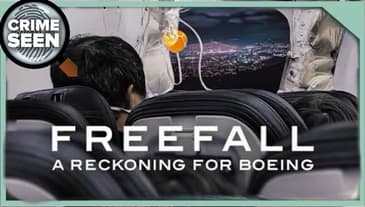
Crime Seen is the true crime review podcast that gets to the heart of how true crime stories are told. Join Mari Forth @maritalks2much.bsky.social and Sarah Carradine @sarahcarradine.bsky.social as they put true crime properties under the magnifying glass. In this episode they examine Freefall: A Reckoning For Boeing on Netflix. Joining them is Tony Cox youtube.com/@GentsMakingSense
How many magnifying glasses out of 5 will they rate the documentary? Listen to find out. Or jump to the ratings at about 39.25
Crime Seen live show Thursday August 27 at 1pm at RHAPCon
Live panel discussion Thursday August 27 3pm, hosted by Matt Scott & Mari Forth
Recommendations:
reality tv:
Project Runway season 22
Drag Race Down Under v The World
The Traitors Australia season 3
Big Brother US season 28
Drag Race Canada All Stars season 1
The Amazing Race Canada season 12
Locked Upp
Love Is Blind UK season 3
The Double Lives of Suburban Wives
You can jump to the recommendations at about 42.49
Next time on Crime Seen: Mary-Payne Gilbert @pinkshadepod.bsky.social joins the pod to discuss the first 2 episodes of Monsters of God. Watch it on HBO and send in your comments and questions.
Find Crime Seen merch at maricrafts2much.bigcartel.com/product/crime-seen-podcast-cup
Support the creators at buymeacoffee.com/crimeseenpod
Find Mary-Payne at:
Pink Shade Podcast: https://pinkshadepodcast.com/
Find Mari at:
Recap Kickback: https://recapkickback.com/ & youtube.com/@recapkickback
Big Brother recaps: https://robhasawebsite.com/shows/big-brother-podcast-rhap/
Find Sarah at:
Something's Off podcast: https://www.youtube.com/@SomethingsOffPod
These Are Their Stories…: https://www.lawandorderpodcast.com/
Babes In The Conclave - The Traitors Denmark Civilian season 3: https://www.youtube.com/@BabesintheConclave
Theme music by Will From America @willfromamerica.bsky.social
Logo by Tricky Rice @trickyrice.bsky.social
Subscribe to the feed at crimeseenpod.com to get your true crime on Tuesdays
You can follow the show @CrimeSeenPod on Bluesky, Instagram, Threads & Facebook, and @crime.seen on TikTok
Send us your feedback and recommendations for future episodes by email to CrimeSeenPod@gmail.com or by voice memo at speakpipe.com/CrimeSeenPod
Learn more about your ad choices. Visit megaphone.fm/adchoices
[00:00:00] Wo gibt's eigentlich die weißen Rosen aus Athen? Und wo regnet's für mich nochmal rote Rosen? Natürlich im Europa-Rosarium Sangerhausen, mit der größten Rosensammlung der Welt. Viele tausend Rosenarten warten auf Sie, mit prachtvollen Blüten und herrlichem Duft. www.rosarium.de
[00:00:19] I'm Mari Forth. I'm Sarah Carradine, podcasting from unceded Gadigal land.
[00:00:50] And this is Crime Seen, the true crime review podcast where we get to the heart of how true crime stories are told. As most listeners know, we're going to be in Milwaukee at RehapCon August 26th, 27th and 28th. We're recording an episode live on Thursday the 27th at 1pm. Woohoo! We're also playing the newlywed game and the Traitors, so all of that is to come. We'd love to see you there. Please don't hesitate to come up and say hello.
[00:01:18] We'd love to say hello back to you and you can tell us your true crime origin story. Last week we watched Big Chicken, a fast food conspiracy with Asia Welch. Erica Kirby emailed us to say, enjoyed the last podcast as usual. Many thanks. I'd love to hear an in-depth discussion on the death penalty as well as victim impact statements. We can ask Mel and Rebecca from Something's Off to do a members bonus episode on victim impact statements if folks would be interested in that.
[00:01:48] Yeah, that would be very interesting. Let us know if you'd like to hear that. Yeah. And we had a message from Gale Force Living. Great name. Love it. If you're ever in Canada, you've got to go to Mary Brown's for the best chicken, Sammy. Yes, please. I love the sound of that. Mm-hmm. So we have most of our listeners in the US and then equal second is Canada and Australia. So who knows? You might see us there one day. Eh? Mm-hmm. Mm-hmm.
[00:02:17] And Mary, what did we watch this week? This week, we watched Free Fall, a reckoning for Boeing on Netflix. It was produced and directed by Rory Kennedy. She previously directed Downfall, the case against Boeing, as well as Queen of Chess and one of this podcast top 10 documentaries of all time, The Volcano, Rescue from Makari.
[00:02:37] And of course, we can't mention airplanes without our guest. He first joined us to discuss surviving Black Hawk Down. And last time for hashtag Sky King, panic in the sky, it's listener favorite, my dad, Tony Cox. Dad, welcome back. Tony. Hello. How y'all doing? Thanks for having me back. I look forward to this episode and try to add whatever I can.
[00:03:02] Yeah. Yes, of course. And we're not playing. Listeners really respond well to your episode. So it's all in the family. That's good to know. Okay. So to the crime. For any listeners who watched Downfall, the case against Boeing, Free Fall is the follow up to that first documentary.
[00:03:24] And it's basically an extension of the first documentary where we get more about Boeing's responses to the incidents that ended up with two planes crashing, killing 346 people. We discussed their 2021 deal with the government that if they were able to maintain a clean record for a probationary period of three years, then no criminal charges would be levied against the company.
[00:03:53] Literally right before the three years was up, another incidents happened where a door plug fell off of the Boeing airplane, which sparked another national hearing. This documentary follows activists, victims, family members who tried to bring justice and accountability to the people of Boeing and an update on the case today.
[00:04:20] First and foremost, I want to ask Dad, what were your overall thoughts of Free Fall? And I can't remember, did you watch the original documentary, Downfall? No, I didn't. But I kind of wish I did and I would have some kind of background on what's going on. But the program brought me up to speed pretty quick.
[00:04:44] When I looked at it, it showed it talked about previous accidents and everything, went through it in pretty good detail. I think it was a well put together documentary, although it was kind of short. It was well put together. I like the fact that they did bring me up to speed and then they got you to the current time.
[00:05:08] And you could see that the internal problems they had with quality assurance was the big deal, was a big reason why Boeing was and probably still are having problems with production. Because if you don't take quality assurance seriously, you're going to have these problems.
[00:05:30] So I like that it broke that down and let them know that probably the culture of the company and how they treated top management and how they treat the lower level workers was a big deal in this program. So that's my overall view. Good. Thank you. Sorry you didn't watch the first one. I just automatically thought we had previously talked about it.
[00:05:57] But the good thing is we can get your perspective as somebody who might just be like you, who stumbles and watches free fall without watching a downfall first. Sarah, your initial thoughts and my first question is, do you think it is required viewing to watch both downfall and free fall here? I mean, it's hard to say because I have watched both. But my suspicion would be you can just come in on free fall.
[00:06:26] I think it covers what it wants to cover super well. I'm thinking about the simplicity in a strange – it's a strange word to use because some things are quite complex. But the documentary itself is quite simple in what it's showing. And one of the most simple things it says is, you know, maybe you also have a toxic work environment. Maybe you are also being bullied by exclusion.
[00:06:51] Maybe you are also being punished by bringing up HR violations and so on. But people don't die because of it in your workplace. And in this workplace, they do. So I think that was very sobering. I think the beard action in these quality controllers was magnificent. So 10 out of 10 for the beards. I liked speaking to who we spoke to.
[00:07:17] I like that it starts technical with the quality managers and the quality engineers. And then it moves more to the social justice with the families of the people who died in the aeroplanes. And their attempt to bring justice before this three years ticks over. And it is an extraordinary day before the deadline that the door blows off.
[00:07:46] And in that accident, no one died. But of course, people were severely affected by it, I think. So I really liked this episode. I really liked this director. I think she's super interesting. What about you, Mari? What did you think? Yeah, all of the above. So I originally brought Downfall, the case against Boeing here to crime scene, gave like a mini review about it during my recommendation section.
[00:08:14] And I found that documentary to be very soul crushing, to be quite honest. Downfall goes into the crashes of Lion Air flight 610 and Ethiopian Airlines flight 302. Both of them happening within five months of each other. This is the aforementioned crashes that took the lives of 346 people.
[00:08:38] And so if you, for our listeners who haven't watched Downfall, that documentary is literally about those two accidents. Like a good majority is about those two accidents. And it takes you like step by step what happened through those two accidents. You get to hear the black box. It's really just, it really is soul crushing.
[00:09:02] They go into, it's basically the investigations of those two flights. And then you're hearing the victim's family speak out, all of that. And then in the end of Downfall, it goes into the culture of Boeing and how it changes. And I think at the time of that first documentary, they were, I think, just in their probationary period.
[00:09:31] So there wasn't really an update. So I think Downfall is required viewing if you really want to understand how we got here and what kind of really sparked the loss of Boeing's reputation. Because those two crashes really were that.
[00:09:49] And it is actually fascinating in a sense of how a stupid money saving decision just completely tanked two flights. It's just awful. So with Freefall here, they, because I guess just like I was saying, they're like, what if somebody who didn't watch Downfall watches this? They talk about both of those air disasters.
[00:10:19] I think enough for you to get the gist. We talk to the victim's families basically throughout through archival footage and through some of the talking heads. But mainly Freefall, this one we're talking about today, is all about the culture of Boeing.
[00:10:40] It mainly just focuses on the culture before those incidences and after those incidences and throughout that probationary period. And then it goes into detail about the incident where the door plug flies off.
[00:10:59] And the vehicle to go through all of this is through the deposition of John Barnett, a.k.a. Swampy. He was a general manager with Boeing from 1985 to 2017. And he is basically the first recognized whistleblower for Boeing.
[00:11:20] And the way that they used his deposition audio to really bring us through like the culture of Boeing, him talking about how he would see all these safety regulations and them not following code and how he would constantly bring it up. And they would constantly try to silence him. Having his deposition kind of guide us through this was just it was so, so, so fascinating.
[00:11:50] So before I get too deep into it, I did like it. However, Sarah knows this stuff is really hard for me to watch. I am simultaneously fascinated and completely anxiety ridden about documentaries that have to do with airplanes, especially since I have to get on one in a week. So as I'm watching it, I'm like, this was dumb of me.
[00:12:19] I shouldn't have done this to myself, but we're going to push through. So I want to talk about the talking heads we have here because I think they really push this forward, which because, you know, this is not murders, murders per se. So it's a lot of technical aspects. So you have to have engaging talking heads. Sarah, who would you say stuck out to you the most here?
[00:12:49] Well, in talking about the culture of Boeing, I think Sam Mohawk, he was a quality manager. He's still working there. He cries manfully during this when he's talking about John. But he talks about being a young boy who looked up at airplanes and you see him when they're walking outside and he just automatically looks up and he laughs at himself. He says, I still look up at airplanes. And that he always thought he'd work at Boeing.
[00:13:14] And there was this idea of this amazing company, which by the time he joined 2011, I mean, already the cracks, literal cracks are showing. But I felt that he, his warmth and his passion really told me what was going on. They were all, I mean, all the whistleblowers that we hear from are amazing. And spoiler alert for anyone that doesn't know, John Barnett ended his life because of the pressure from Boeing.
[00:13:44] And so that's why we have him in archival footage giving his deposition. And at that time, as Murray says, he was the first. And after his death, more people came forward. I was particularly interested in the rundown of the HR side after the crashes. They had, we have new transparency. We have new portals where you can file an ethics concern. You can file a safety concern.
[00:14:11] And of course, those portals just go into a black hole and nothing is done. Yeah, exactly. Dad, what did you think about the whistleblower aspect of all of this? And like the quote unquote government oversight piece? Well, it's hard for me to listen to and look at at times because I can only speak to it from my vantage point of military person, private sector.
[00:14:40] Because we did as an Air Force, we deal with airplanes and we got to, we call them QA people. They're in every organization in the military. If you got an F-15, A-10, these are military jets. If you got whatever your jet is, they're quality assurance people that work in that area. And these people are people that have been working in the field for a long time and know what to look for.
[00:15:07] When a QA person in a military installation say stop production or they see something wrong, it's stopped. No question asked. There's no HR to overrule them. There's nothing else to overrule them. Because we're in a position of life and death. You got men, women flying planes, $18, $20 million planes, and you don't have room for error.
[00:15:34] So that's the discipline of the military side. I found going from military work to the private sector. And Boeing is a private sector with shareholders and CEOs that's making triple digit million dollars, $200 million, and all this other stuff. That difference between the military and private sector. Military, we don't have to turn a profit. So we can look at, we can slow down production.
[00:16:04] We don't build our own planes, but we have to maintain those planes. And maintaining those planes is just as important as building those planes. Because when you build them and you sign them off to the maintainers, because Boeing got maintainers too in the different airlines. Those maintainers should be a second level of QA. When they get a plane, they have to sign off and say that plane is sound.
[00:16:32] So not only do I see Boeing as being responsible, but the airlines that they sell these jets to have to be responsible also. Because it's just like buying a house. You got to have the final walkthrough before you can get the house. So I'm trying to figure out who did the final walkthrough on these jets and everything. So that's the way I looked at it when they start talking about quality assurance. The difference between private sector and public sector.
[00:17:02] The big difference is money. Capitalistic society, you got to pay the shareholders. You got to pay the CEOs. And I just thought it was really horrible. I thought it was horrible on Boeing's part. I thought it was horrible on the airlines' part for accepting jets that they may have known were not up to standards.
[00:17:26] And if they didn't know it, what was their quality assurance people doing on the back end? You know, when we talk about dollars and cents, it gets really murky then. So, yeah. Yeah. Because when you have, they go into the history of Boeing a little bit here. And they really, they really spell out the dollars and cents and the decisions that were made based on that.
[00:17:54] So everybody should know that, you know, Boeing, Seattle itself is like the aviation hub. Boeing is not the only aviation headquartered there in Seattle, I believe. So Seattle and that area, the Pacific Northwest are known for having years and years, decades of experience in aviation. Originally having a culture of safety first.
[00:18:19] And once we start to see all these new CEOs that are coming through, more and more, the safety aspect goes down and the profit aspect goes up. And one of the decisions that they make to cut costs, one of many, is they decide to open a second line. They're trying to make a new airplane called the 787 Dreamliner. So they decide to move it out of Seattle to Charleston, South Carolina.
[00:18:50] And again, it's all money. They move it out of Seattle because they don't have to deal with a strong union there. They move it to South Carolina where there is no unions. Yes, may I quote Nikki Haley. We don't need unions in South Carolina. And everyone goes, yay! It's like, well, who's this we you're talking about? What does the we refer to, Nikki Haley? Exactly.
[00:19:13] And so because they moved the second line production to Charleston, South Carolina, there's not an aviation culture there. One of the promises that they make when moving the new factory there is that they would hire locals, which is on the surface looks, oh, that's great. That's jobs to the local economy.
[00:19:33] Well, the local economy doesn't have decades upon decades and decades of learned experience on how to create these massive, you know, jets that need safety protocols. And we got one of the engineers here, one of the whistleblowers telling us that he was helping with hiring. And at one point they were just hiring anybody straight out of high school, people who can hold a screwdriver.
[00:19:56] And he was just saying immediately that the quality coming out of that factory was immediately more subpar. There's aviation in Charleston. And I think if they weren't trying to shortchange their workers so much, they could have gotten good aviation workers, avionics, maintainers out of the military there.
[00:20:23] But you're going to have to pay those people for their experience. And from what I saw, it looked like they were trying to keep the overhead so low that they probably wasn't paying enough to get those military, ex-military people there. And if you don't do that, if you don't have qualified workers, you're going to get that kind of results, I believe.
[00:20:47] The Dreamliner was slated to cost $10 billion to develop. And the CEO says, make it $5 billion. The CEOs, this parade of stale, pale males that we see running this company don't have aviation expertise. They can be the CEO of any company. It's click and collect.
[00:21:13] Yet they can go into any company, according to them, and business, business. They can go into any company and run it. They don't have to actually understand the nature of what that company does. So if your people tell you it's going to cost $10 billion to develop this Dreamliner, you just say, make it $5 billion. No instruction as to how to do it.
[00:21:37] So I was horrified to see all the places in the world, including Australia, that were making parts of this jet. And the phrase click together was used. So all the stuff's going to arrive in South Carolina. Like Legos. Exactly like Legos. They are going to click together this plane. I also am getting on an airplane. I will have already been on it by the time you hear this, unless you remember it and you're getting it early.
[00:22:08] So you'll know whether I'm alive or not. So the timing of this isn't so good. Wo gibt's eigentlich die weißen Rosen aus Athen? Und wo regnet's für mich nochmal rote Rosen? Natürlich im Europa-Rosarium Sangerhausen, mit der größten Rosensammlung der Welt. Viele tausend Rosenarten warten auf Sie, mit prachtvollen Blüten und herrlichem Duft. www.rosarium.de
[00:22:33] If the company and therefore the shareholders are trying to save money, why are we giving CEOs $60 million when they leave in disgrace for having done it wrong? Let alone their remuneration. They're trying to save money to give to the CEO, Sarah. That is the piece that you're missing. Because at the end, we do get that Boeing has not been a profitable company since 2018. So your cost cutting is nada.
[00:23:03] I wonder how much Nikki Haley got. She probably got a nice handbag. Oh, yeah. Well, I think what they're doing is they're banking on these CEOs and their cost cutting experience. You can go to a headhunter and get a CEO that's known for cost cutting and profit margins. You can go get one. No experience in aviation at all.
[00:23:28] But if they're smart, they're going to lean on the people with aviation experience. And instead of blurring out $5 billion instead of $10 billion, they'll go to these experts and say, how can we build this airplane cheaper without minimizing safety? That's the question he's going to have to ask his experts. And if he did that before he blurred out $5 billion, he might would have got a better jet. He might would have.
[00:23:57] For a cheaper amount, I don't think he could have built a $10 billion jet for $5 billion. He probably could have did it for $8 billion, but not $5 billion. Yeah. Yeah. And it seems every time their experts, their engineers, their quality assurance inspectors spoke up, they did the exact opposite. They told them to shut up. They moved them around. They put them under corrective actions. They essentially bullied them into being quiet. They did it.
[00:24:26] And again, I think it's the union kind of thing here. They can't get rid of like a John Barnett. I mean, you can't just get rid of them. So you're moving him around, moving him around. Then you're saying he's failing to do this, failing to do this, failing to do this. Now he's under corrective action. You have 30 days to stop doing all these 12 things or I can fire you. So that's another thing about union jobs.
[00:24:55] It's harder to get rid of union workers. And so you just see this all come to a head when after the crashes of Lion Air and Ethiopian Air, Boeing does get investigated.
[00:25:10] The ruling is that, again, they have it's essentially a three year probationary period where they're saying if you address these certain things and you maintain a level of safety, then we won't press criminal charges against you, which is bull crap.
[00:25:25] Because we have so we have talking heads like Nisha Conley Ryan, whose husband Mick Ryan was a victim of one of I believe it was the Ethiopian air crash. And this is where, again, if you didn't previously watch Downfall, you get more. I like that they they never stop making the victims the center, even at points where I'm like, all right.
[00:25:54] I remember seeing all of this already in Downfall or seeing different shots of this. I think they did a really good job of still sticking in there and reminding us this is who we're doing it for. The 346 people who can't talk. So Nisha is talking about how she is. She is like one of the one of the many victim families who are on Capitol Hill. They want justice. They want accountability. They hate this three year probationary period crap. They they want Boeing held accountable.
[00:26:24] In the meantime, during that three year accountability, like Sarah said, they open these portals. Some of the whistleblowers say for a little bit, we, you know, we kind of we kind of address things. But after it was because they were grounded. The seven I believe the 737 Max's were grounded for a while. And they said once they got back into the air, it seemed to go on to business as usual. So they're still in the probationary period.
[00:26:53] But the 737 Max's were able to fly. And again, then we get Alaska Airlines. I legit remember like what I was doing when I saw this. I was like, oh my God, there the plane is missing. Like the plane is missing door. This was one of the biggest.
[00:27:15] And it had happened right after or right around the time they kind of talk about in the beginning where one of the jet engines blows up to the Alaska Airlines flight 1282 takes off. It's going and then all of a sudden loud bang. We have video for everybody should remember this video footage because it was all over the place of somebody just recording as there's a hole in the plane and they're still flying.
[00:27:44] And it just made me it reminded me of seeing that footage everywhere. And then, you know, at the time footage is everywhere. We know nobody dies. So we're like, oh, cool. We're like, oh, good. Nobody died. How crazy was that? But in this documentary, they're interviewing people who are on the airplane, like archivally or whatever.
[00:28:07] And I'm actually feeling the fear that these people felt as they're in that plane. In the worst thing, which I was like was so brilliant storytelling documentary wise during the, oh, we're getting better portion. One of the engineers has said, hey, we tested the oxygen mask and about 15% of these things ain't working. And they're like, oh, really? You sure? That's fine. And then flashback to Alaska Airlines.
[00:28:37] They're flying without a door. So the cabin's completely depressurized. They have to put oxygen mask on. Oh, some of them aren't working. So the people are talking about how they're like about to black out. They're seeing stars because they have their oxygen mask on. The oxygen mask aren't working. And it was, again, everything here is horrifying, y'all. But it was a brilliant callback in the documentary to place where they place things there.
[00:29:05] Dad, what did you think seeing that inner footage of the airplane flying with a hole in it? Well, it's scary because you know what can happen and everything. I'm glad you brought up about the oxygen mask not working and everything. Once again, that's another example of a lack of attention to detail.
[00:29:32] The culture really, for a better word, pissed me off because these people have other people's lives in their hands. Every day, every day, every time that plane go up in the air, if something's not working and you got somebody on the line that knows it's not working, I'm trying to figure out how they sleep. Now, if those people on the line are trying to do their jobs and managers won't allow them to do their job,
[00:30:02] I just don't understand how you're not going to be, they're not going to be more whistleblowers. I just don't understand it. I don't know how you can sleep without saying these planes are not safe. And I don't know why y'all didn't get together. And maybe there would have been strength in numbers. You can't fire everybody. Do the CEO really get fired then?
[00:30:29] But I just don't know how there was not strength in numbers when it comes to something as important as airline safety. And those masks that fall out of there are some of the simplest things that can be fixed or worked on. How about, Sarah, seeing some of the text messages and the calls that people were sending while they are flying with a hole in the side of the airplane? Yeah.
[00:30:58] Just the simplest thing, which is, I'm scared. I love you. Oh, it goes right through you. So I think that the fact that people could film from the inside of the plane and that nobody died and that they could report their fear, their terror. This woman traveling with three children and they were looking at her and she said, I couldn't tell them it was going to be okay. I couldn't say to them it was going to be okay. I thought you could have lied, lady.
[00:31:25] And then when they go below the clouds and they can breathe, she says, now I can tell them it's okay. It's such a thing as radical honesty. But nonetheless, you understood what she meant, that she's there not just thinking about herself, but these three children that she can't protect because she has put all of their lives into the hands of this supposedly good company, strong company, American company. With all that, you know, it's long history.
[00:31:53] And again, as you said, I like the way the culture was continually being brought up. And the interesting thing about the whistleblowers, I always think about whistleblowers as somebody, you know, deep throat. You go to the journalist, you go outside the organization. But it was, I think, Merle Myers, one of the quality managers, who talked about, I didn't want to go outside. I was whistleblowing within the company. Right. I was writing to this person. I was using this portal. I was going via ethics. I was going via management.
[00:32:21] I wrote to the deputy CEO, you know, not deputy CEO, whoever the left hand is, the right hand is. And I thought, oh, that's a very interesting expansion of my understanding of whistleblower. But I think, Tony, you're right. It's like if they don't know where each of them is blowing the whistle, they can't find each other. And it's in management's interests to make sure they don't find each other. Yeah.
[00:32:46] And so I believe we have a whistleblower act that outlines what a whistleblower is. And it, again, goes to show you that the whistleblowers were trying to do everything correctly. They were trying to work it out internally. They were trying to get the house, you know, clean from within. And it just goes to show you that it's just not the lack of attention to detail. It's the, it's the not just willful ignorance, what they say, culpable deniability.
[00:33:15] It's intentionally putting people in harm's way. My understanding, a lot of the, the, the quality managers, quality assurance people were union workers, right? Yes. Okay. So, uh, I, I worked in a union one time when I first got out of the military and union workers have what they call a shop steward.
[00:33:40] Now, this is a person that's in their shop and around the building that you can go to. You don't have to go through whistleblowers. You can go to and, and, and air out all your grievances. And that shop steward is supposed to go to management and say, this is what, what our problems are right now. Uh, you don't have to be a whistleblower to go to the shop steward. And as many people as they want to can go to the shop steward.
[00:34:07] Matter of fact, they encourage many people to go to the shop steward because when you got more people, once again, you got a better case that the shop steward can take to the management. Now that shop steward don't have that much power, but he can influence some things by going to the head union leader. And then the head union leader can come in with the, uh, uh, managers and make a difference.
[00:34:36] I've never blown a whistle because we usually take care of our prop. Like I said, the private sector and, uh, military is two different things. We, we don't tolerate a lot of craziness and we normally get rid of, uh, uh, our, although our supervisors are powerful people, they can be brought down. They can be brought down because we got other avenues to go to.
[00:35:06] And we don't have to worry about the money per se because we are contracted. And we don't have, we don't have to worry about shareholders. We really don't. I love that. Can you imagine the military being run for profit? Oh no, that's, that's such an awful thought. It's close to it right now with the people that's in charge of it right now. Yes, exactly. Yeah. Yeah.
[00:35:32] But one of the things that, that struck me about Alaska too, was that when it first happened and when they got to the point that three of the, but they, so in case you're not going to watch the, the documentary. And if you don't recall what happened with the door plug, it's bolted in with four bolts. That's not the only way it's anchored, but it is bolted in with four bolts. It had been taken off to do some work. That work was not recorded.
[00:36:02] And when it was put back on, only one of the bolts was put back on. And I remember at the time, the whole idea was, or the focus was, oh, that worker, that worker that didn't put the bolts back on. And so it was this whole idea of this small one person's decision brought the whole thing down. And what I think is really fantastic about this documentary is it says, yes, there is one person who didn't put the bolts on, but who checked it.
[00:36:29] Then, as you say, Tony, who's maintaining it at the airline and the idea that it was flying backwards and forwards with one bolt, slowly shaking apart. 154 flights. 154 flights. So it's brought it back to the culture again. And I thought, oh yes, because there was this big pinning of, oh my goodness, what a terrible worker that didn't put the bolts back on. No. Right.
[00:36:52] Boats on aircrafts are put on with specialized wrenches that can calibrate torque. They're called torque wrenches. And you can calibrate it. And all manuals, when you're putting together a jet or airplane, tell you how much torque that a boat can handle. So if they go by the process and go by the book, it wouldn't have been a problem. I don't believe it. Right.
[00:37:22] And the fact that there's no record of the so-called maintenance that happened on there should tell you it's bigger than just one employee. Because we don't know who that employee is because they didn't keep up the maintenance record for it. And they weren't there alone. Like, there's not one person with a sledgehammer taking a door plug out. And he probably put on the first bolt and got called away to do something else and forgot the other three.
[00:37:50] So very, very scary stuff. And again, as we said, the Alaska Airlines thing happened in the window of the probationary period. We do go to see the hearing with the victim's families and to see if there will be a criminal case. Here we get, we get Senator Josh Howley yelling, making a whole bunch of noise only for Boeing to not face any criminal charges. So they violated the probation that was sent three years prior.
[00:38:18] And yet they were still left to be like, okay, just promise us you'll do better next time. So, you know, we get the end of the documentary where basically the victim families aren't satisfied because there's no, there's been no justice. There's been no accountability. Boeing is on their like fifth or sixth CEO or something like that at this point. And they've just paid money to the victim families. And it just feels unsatisfying.
[00:38:47] Not the documentary, but just the, you know, the case itself. Yeah, but Boeing's lawyers argued that no compensation was due because the victims didn't suffer. Yeah. Yeah. So that was a crazy statement. To say the least. Let's get to our final thoughts and our ratings. So dad, how many magnifying glasses are you going to rate freefall a reckoning for Boeing out of a possible five?
[00:39:15] For content and background. And I would give it a five. Oh, okay. I enjoyed it because it was a lot of content and background. And I think with the victims, hearing from the victims and hearing from whistleblowers. And I think the thing that kept it off was the suicide note from the gentleman. Yeah. For himself. It brought it around.
[00:39:46] This person, knowing that this may be his last day on earth, had some real strong words for him. Real strong words. So it caught me. It kept my attention. I don't normally like a whole lot of documentaries like that. But like I said, especially since I got a flag in. Yeah. A boy in the airline. Yeah, exactly. But I like it. So I'm going to give it a five.
[00:40:16] Okay. Sarah, how about you? How many magnifying glasses are you going to rate freefall out of a possible five? Well, I thought I'd be alone. I'm a five as well. In the fashion of because I can't see where to ding it. It doesn't, in some ways it doesn't feel like a five like some of our other fives. Yeah. But it's a rating, not a ranking. But when I think about, well, what's wrong with it? Where would I ding it?
[00:40:41] And I mean, it's a very swift 90 minutes, just a little less than a 90 minutes. It's a one screener. You're really watching. The graphics are great. The archival footage is great. The talking heads are great. As you say, Tony, where the information's placed is great. So we start with John and then we end with his very strongly worded note in his notebook.
[00:41:06] And we understand his effect on the culture within Boeing, but not from management, from his encouragement of other people and how loved he was. So yeah, five for me. What about you, Mari? Dang. I'm sorry, listeners. I really thought I was going to come in here with a three. But only because I was physically uncomfortable watching it had nothing to do with the documentary itself. It just it's a very it's just triggering for me.
[00:41:35] So I was I was doing my grounding, you know, my grounding techniques throughout it. But putting all of that aside, it actually is a really good documentary. I also would give it a five. I would say if airline stuff doesn't fascinate you, intrigue you, scare you, then I don't know if you will like it because it is it is very dry.
[00:42:03] I it's like it's very dry at some parts, but it does all come back together. Like they're showing you these very dry moments talking about the industry, talking about how everything is set up because they're setting you up for the rest of the documentary. So, yeah, just just letting people know because they might turn on and be like, what is this? Like, but I call it five and a recommend definitely. Sarah, what do you have to recommend to our listeners?
[00:42:33] Well, my escape from reality is reality TV. So I've been watching a lot of reality TV. I'm even finding scripted quite hard at the moment. So we here are variously recommended all of these. But what's current? What's happening now? Project Runway season 22, which is absolutely dreadful and I must watch it. I love Law Roach. It's I mean, they get to the end of an episode and they don't do the elimination. This is reality TV 101.
[00:43:02] You've got to wind on an elimination. But I will watch every minute of it. Drag Race Down Under versus The World. I wish I could say it's really good. I like all the queens. I like all the queens. But dot, dot, dot. It's not a very good season. It's dreadful and I must watch it. The Traitors Australia season three is a sort of semi-celebrity. It's dreadful, but I must watch it. I like it. Big Brother US season 28. Fantastic. I'm really loving it.
[00:43:31] And I'm not a Big Brother watcher. I dip in and out. I basically message Mari and say, what's going on on the skyline? They're talking about something happening and she fills me in. So I don't normally watch. I've watched maybe no more than three seasons all the way through. But I am watching this one and I'm really super enjoying it. And so I'm getting a new flavor on the skyline as well because I can understand what people are talking about. Drag Race Canada All Stars. It's pretty decent.
[00:44:01] Nothing to write home about, but I'll watch. It's okay. The Amazing Race Canada season 12. Oh, fantastic. Get into it. If you've never met John Montgomery, the host, he is. He's an ex-Olympian and he does all. He shows you all the challenges. He's very, very enthusiastic. And of course, locked up with two Ps. I am slowly making my way through. I have tried to quit it, but I'm hooked. But I'm probably watching it at a rate of one episode every week.
[00:44:30] You know, I might have three goes at watching the episode. And of course, coming up is The Traitor's US New Blood premiering on September 17th. Survivor season 51. We're in the open era, apparently. Premiering September 23rd. An Amazing Race US season 39 premiering September 30. You'll be hearing more about that from us as they come on. What about you, Murray? What have you got to recommend? She's the least, Sarah. She's the least.
[00:44:59] But I think we are on the same page. I too have two reality TV shows that I have to suggest. Love is Blind UK is back for season three. If the pods are open, I'm there. It doesn't matter. I'm watching. I just love it. I love the messiness of any Love is Blind season. And then even more messiness. My God.
[00:45:25] Double Lives of Suburban Wives on TLC slash HBO Max is the hottest of garbage. But I have to watch it. It follows like five to six suburban wives from the St. Louis, Missouri area who they all hang out. Some of them go to church together.
[00:45:49] But the catch is all of them are spicy content makers and they have OFs. It is insane. It is basically what Secret Lives of Mormon Wives think they are. But these women are that. Like swinging parties. Check. Spicy content parties. Check. The husbands filming their wives for the spicy content. Check. Check.
[00:46:16] Some mysterious beef between two of the women where one woman said, I can't believe she did that to me. And the producer is like, what did she do? I don't feel comfortable telling you. All of the horrible cliches of one of those shows. And it is so fascinating. It is just pure nonsense. And I'm here for it. I'm here for it. I actually had to watch both an episode of Love is Blind UK and an episode of Double Lives
[00:46:44] after I watched Free Fall because I was like, I need my cortisol levels to come down. So yeah, just a lot of hot garbage reality TV for all of our listeners. And members, if you'd be interested in 15 or 30 minutes a week of us talking about all the reality we're watching, let us know. We'd be very happy to pop those in. We could have different guests. I don't know when I was making that list. I thought, yeah, maybe we could talk about it.
[00:47:12] So if that's something you'd be interested in, let us know. At Crime Scene, we are eager to hear your feedback and suggestions for future episodes. You can subscribe by going to CrimeScenePod.com or search Crime Scene, that's S-E-E-N, wherever you get your podcasts. You can follow Crime Scene everywhere at CrimeScenePod or email us at CrimeScenePod.gmail.com. You can support us at buymeacoffee.com slash CrimeScenePod, sling us a couple of bucks or join our monthly membership.
[00:47:39] Members receive episodes early and ad-free as well as other exclusive bonus content. You can also support us by buying our merch. Yes, we have merch. We have Crime Scene Tumblers available at my shop. You can go to maricraftstomuch.bigcartel.com and order there. While you're there, look at my other book-themed Tumblers. If you don't find your favorite book, let me know and I'll make something just for you. The link to the store is in the show notes. Merch!
[00:48:08] You can also support us for free, rate and review Crime Scene, S-E-E-N, so that others can find us. Five stars only. Five stars. Your support makes a big difference. Dad, what do you have going on and where can the people find you? You can find me at Gents Making Sense on YouTube at hashtag GentsMS on Spoutable. And we have an episode coming out this week that's going to be great.
[00:48:37] It'll be out tomorrow morning. We're talking about Black Entrepreneur Month, which is this month. I bet y'all didn't know that because I didn't know it. So that's why we're talking about it. So and we're also talking about the Navy and their problems with the aircraft carrier out there. We got commander.
[00:48:59] We got a Navy commander on our show, Mark Elwitz, and he's given us his expert opinion on that aircraft carrier and the problems that they have. And my co-host, Abdul Suleiman. He is a former Navy person also, and he did two tours on the aircraft carrier. So we have some good people talking about it. So join us at Gents Making Sense on YouTube. Ooh, sounds good. Sounds good.
[00:49:28] Sarah, what do you have going on and where can the people find you? Other people can find me on Blue Sky at Sarah Carradine. I'm covering non-English language seasons of The Traitors with Annabelle Fiddler over on Babes in the Conclave. We're taking a couple of weeks off while I'm in the US. And when we come back, we are doing Denmark Civilian Season 2. What about you, Mari? What have you got going on? You can find me over on Blue Sky at Mari Talks Too Much. That's too like the number two.
[00:49:56] Over on Recap Kickback, me and Chappelle finished up our coverage of House of the Dragon, including a live Q&A that went fantastic. Thank you to everybody who came through and talked to us about House of the Dragon. We had so, so, so much fun. In the coming weeks, we will be joined by Matt Scott to talk about Beauty in Black. Tyler put another one out.
[00:50:21] So, the Dream Team is back together again to talk about the... Season 3. Season 3. But it feels like Season 15. So, yeah, we're going to talk about it. So, make sure you're subscribed at RecapKickback.com, wherever you get your podcasts. Or, even better, go to YouTube.com slash at Recap Kickback to subscribe there. I think we just hit the 3,000 subscriber mark. So, please help us grow, grow, grow.
[00:50:50] Also, my Big Brother 28 coverage is still happening. Make sure you're following me on Blue Sky to know when I will be on, like, the updates, the roundtables, and the recaps. Sarah, what are we watching next week? Next time on Crime Scene, we're covering the first two episodes of Monsters of God with Mary Payne Gilbert. I've started watching it. It's pretty, pretty good. I'm excited to talk about it. That's dropping weekly on HBO, which is why we're just doing the first two of six.
[00:51:19] Watch it there and send us your comments and questions. Thanks to Tony Cox for joining us, Will from America for the theme music, and all the whistleblowers out there making it safe for people. Until next time, case closed.
[00:51:51] Wo gibt's eigentlich die weißen Rosen aus Athen? Und wo regnet's für mich nochmal rote Rosen? Natürlich im Europa-Rosarium Sangerhausen, mit der größten Rosensammlung der Welt. Viele tausend Rosenarten warten auf Sie, mit prachtvollen Blüten und herrlichem Duft. www.rosarium.de