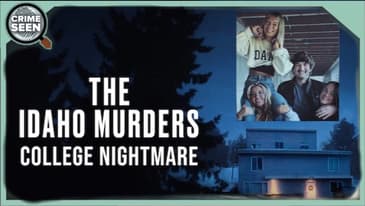
Crime Seen is the true crime review podcast that gets to the heart of how true crime stories are told. Join Mari Forth @maritalks2much.bsky.social and Sarah Carradine @sarahcarradine.bsky.social as they put true crime properties under the magnifying glass. In this episode they examine The Idaho Murders: College Nightmare on Netflix. Joining them is Mel Barrett @inbetweenpod.bsky.social
First, a discussion about the Lindsay Clancy case from about 2.02 to about 16.22
Content warning for mental health, suicide, and the deaths of children
Discussion about The Idaho Murders: College Nightmare begins at about 16.22
How many magnifying glasses out of 5 will they rate the documentary? Listen to find out. Or jump to the ratings at about 46.50
Crime Seen live show Thursday August 27 at 1pm at RHAPCON. Live panel discussion Friday August 28 3pm.
Recommendations:
podcast: Defense Diaries
YouTube: Joleen Lunzer https://www.youtube.com/@JoleenLunzer
podcast: Scamfluencers
tv series: Unseen: Kids Who Took Down Killers
docu-series: The Case Against Adnan Syed
documentary: The Tower (Keith Maitland, 2016)
drama: I Will Find You (Netflix)
You can jump to the recommendations at about 56.47
Next time on Crime Seen: Aysha Welch @ayshalikeasia.bsky.social joins the pod to discuss Big Chicken: A Fast Food Conspiracy. Watch it on Netflix and send in your comments and questions.
Find Crime Seen merch at maricrafts2much.bigcartel.com/product/crime-seen-podcast-cup
Support the creators at buymeacoffee.com/crimeseenpod
Find Mel at:
Something's Off podcast: https://www.youtube.com/@SomethingsOffPod
Find Mari at:
Recap Kickback: https://recapkickback.com/ & youtube.com/@recapkickback
Big Brother recaps: https://robhasawebsite.com/shows/big-brother-podcast-rhap/
Find Sarah at:
Something's Off podcast: https://www.youtube.com/@SomethingsOffPod
These Are Their Stories…: https://www.lawandorderpodcast.com/
Babes In The Conclave - The Traitors Hungary season 3: https://www.youtube.com/@BabesintheConclave
Theme music by Will From America @willfromamerica.bsky.social
Logo by Tricky Rice @trickyrice.bsky.social
Subscribe to the feed at crimeseenpod.com to get your true crime on Tuesdays
You can follow the show @CrimeSeenPod on Bluesky, Instagram, Threads & Facebook, and @crime.seen on TikTok
Send us your feedback and recommendations for future episodes by email to CrimeSeenPod@gmail.com or by voice memo at speakpipe.com/CrimeSeenPod
Learn more about your ad choices. Visit megaphone.fm/adchoices
[00:00:24] Hello everyone, I'm Sarah Carradine, podcasting from unceded Gadigal land. Mari Forth And this is Crime Seen, the True Crime Review podcast, where we get to the heart of how true crime stories are told. As listeners know, we're going to be in Milwaukee at RehapCon, August 26th, 27th and 28th. We'll be recording an episode live on Thursday the 27th at 1pm. We're also doing a live panel on podcasting on Friday the 28th at 2pm.
[00:00:53] We'd love to see you there. And breaking news, there's also a potential meetup in Chicago with the wonderful Mel Barrett and Rebecca Lavoie from Something Soft podcast and Defense Diaries Bob and Ali Motta. So stay tuned for updates on that. And speaking of Mel Barrett, here's Mel Barrett. Hello. Welcome back, Mel. Thanks for having me, guys. I'm happy to be here. Of course. So, Mel, this is your sixth appearance. Is it?
[00:01:23] Rapidly climbing up towards that 10. I have no idea. We keep track so that people get their 10th appearance gift. Ah, you've already sent me a gift. Yeah. Yeah. Because you know I'm going to be here probably like four or five more times at least. Exactly. And I'm bringing in your powdered milk in Milwaukee. I can't wait. My New Zealand powdered milk. Very excited about it. Yes. Yes. Yes. I'm looking forward to going through customs in America with two kilos of white powder.
[00:01:53] We'll just see how that goes. Okay. It was fine. We did it when we came back from New Zealand. Everybody was fine about it. Yeah. Yeah. So, Mel, you and past and future guest Rebecca have a podcast and a YouTube channel called Something's Off, as I said before, where you break down crimes, trials, cover-ups, and weird vibes that make you say, hmm, something's off. Yep.
[00:02:20] So, I sat in for Rebecca last week for day six of your coverage of the Lindsay Clancy trial. I'm just wondering if you could let our listeners know a little bit about that case. And this, everyone, this is a content warning. The case involves the deaths of children. So, if that's not for you, you should skip forward a few minutes. Absolutely. And I would also add another trigger warning for mental health and postpartum psychosis and depression. If that's not something you can handle, obviously skip ahead.
[00:02:47] Lindsay Clancy is, was a young mother of three young children under the ages of six in Duxbury, Massachusetts. And after her third child was born, she started experiencing some very severe postpartum depression. She was a labor and delivery nurse herself. So, she was very, you know, in tune with her own mental health and, you know, what happens to you when you, after you have a baby.
[00:03:13] She, as soon as she started feeling off, she started talking to her practitioners. She started talking to her friends who were also nurses. People were giving her recommendations of who to talk to and support groups. And maybe she should think about medication. Eventually, she did meet with a prescriber who started her on anti-anxiety, anti-depression, sleeping meds.
[00:03:36] And that beginning dosage turned into 12 to 13 other prescriptions for a range of anxiety, depression, bipolar, psychosis, and sleep because she was not sleeping. She wasn't sleeping for 48 hours at a time. She was constantly worried about her children. She was talking about hurting herself. And eventually, she started talking about hurting the children.
[00:04:04] Her family and her husband were very supportive of her. They got her the help that she needed. But unfortunately, the prescribers in the Commonwealth of Massachusetts, well, they way over-prescribed her. And they were even giving her drugs that were interacting with each other in a very bad way. She was also undiagnosed postpartum psychosis as well as bipolar. So some of the drugs they were giving her interacted badly with the bipolar disorder.
[00:04:34] Eventually, she voluntarily went to an inpatient program where they then let her go a few days later because it was a holiday weekend and they didn't have a doctor to see her. And when they let her go, she got worse. And like I said, she wasn't sleeping. She wasn't eating. She was manic. She started to hear voices. On one evening in January of 2023, she asked her husband to go pick up dinner for her and
[00:05:03] the children and to stop by CVS for some medicine for one of the kids. And he was gone for approximately half an hour. And in that time, she unalived all three of her children and then attempted three separate different ways to unalive herself before choosing to jump out of a second story window where she received what they call like a diver's injury. And her husband found her lying in the backyard with a body temperature of 82 degrees.
[00:05:32] She was almost hypothermic and she was paralyzed from the waist down. And they obviously admitted her. She coded within 48 hours of being admitted. She had major spinal injury. And when she woke up in the hospital, she was handcuffed to a hospital bed with armed police officers outside of her door and she was being charged with murder. She is now on trial and has completely admitted to unaliving her children.
[00:06:02] She doesn't dispute that fact, but she says she was overprescribed and she had a moment of psychosis where she heard command voices speaking to her, telling her she had to unalive herself and the children. And she did. So there's the criminal case that's going on in Massachusetts where the prosecution is trying to prove beyond a reasonable doubt that she was sane at the moment she did this, which is a high burden for them. And she also has a civil case.
[00:06:29] Her ex-husband has been in complete support of her. Both families, both sides of the families are in complete support of her. Her husband is also suing for medical malpractice or her ex-husband, I should say. And so we're in the middle of this trial right now and it's horrific and it's hard to sit through, but it's incredibly important case that is about women's health and being overprescribed. So that's the case in a nutshell.
[00:06:55] You guys did a good job covering it last week, just like you do every week. But I had to stop in and support Sarah as your guest. But yeah, it's a rough story. But thank you for your coverage. I appreciate you saying that. It is hard to cover. I have made it a point to I do recaps instead of covering it live because the prosecution
[00:07:17] is very much set on drawing on the jury's emotions by focusing on every little detail of what happened to these poor children. And that's really not what this case is about. As I said, she has admitted to what she did and they the defense is actually stipulated to we agree with all the facts. We agree with all the experts about what happened to the kids. Let's focus on Lindsay and her sanity or insanity at the time because that's what this case is about. And the prosecution is choosing not to do that.
[00:07:47] So there are a lot of really difficult details that I kind of have to skip over and just sort of give, you know, paraphrase or give a Cliff Notes version of what the testimony was. And then, you know, I get into what the defense is doing. The defense is choosing not to cross-examine any of these witnesses who talk about the children. And I think it's very smart and I think it's kind. And I think it's really difficult to watch Lindsay sit in that courtroom and hear all
[00:08:12] these details of the horrific thing that she did when she wasn't in control of her own mind and body. Yeah. I mean, it seems like the prosecution is prosecuting as if she had said not guilty, as if she had said that she didn't do it. And that is not the case. And it's, to me, it was notable that on the first prosecution witness day one and day two, I think he was there for two days, was her ex-husband, Patrick, whereas he could have
[00:08:41] been a defense witness because even though they are separated and he has a new wife, he went through it with her. This is the person who unalived his children. And he is able to have the breadth of heart and understanding to be on her side. And he was the prosecution's first witness. So it's a strange misstep, I think. And it's a punishing step.
[00:09:09] And it seems like the public sentiment, correct me if I'm wrong, falls into two camps. Those who say, my God, she was suffering from postpartum psychosis. She asked for help. She got help from unqualified people like her husband and her friends. And the qualified people just over-medicated her and showed her out the door. And I said when I was on your show last week that, notably, and Mari, you confirmed this,
[00:09:37] the maternity leave is so short in America that people are back to work before their bodies have healed, let alone any mental or adjusting things. So there are those that understand how horrific the action was and the outcome, but are saying, why is she being prosecuted? Why isn't she in a mental health facility? She's in hell for the rest of her life, no matter what happens. She's in prison for the rest of her life. It's her body. In her mind.
[00:10:04] And then there are those who say, she didn't really try to unalive herself. And she was so controlling that she had to do this. And she's a murdering bitch. And, you know, women who kill children are not well seen in society without asking why? Why would a mother unalive her child? I would also say there's a third camp now, and I'm going to put them in the bucket of
[00:10:31] conspiracy theorists who have decided that Patrick, her husband, is the one who actually unalive the kids and is blaming it on her. They don't have any solid evidence of this. But part of this comes part of the reason is because of the way the prosecution is explaining this case and because so many of their witnesses should actually be defense witnesses. They are not helping the prosecution's case. But this camp of people, they want to search. They want to look at the DNA evidence.
[00:11:00] And the prosecution is trying to say that instead of launching herself out of a window, she actually leaned out the window and sort of Spider-Man crawled down the building to fake it. And so when you're introducing ridiculous theories like that from the prosecution, other people are going to pick up weird and ridiculous theories that don't have any place in a good faith conversation about this case. So, yeah, it's disgusting.
[00:11:25] I do have a question about this case, but I do want you guys because I was hearing you guys talk about the forensics lady and stuff like that. And I heard her part. I was confused as to because it seemed like people were mad at her. I was like, why are we? Why are we mad at her? Because they're mad because she comes from the Karen Reed case and because she botched some of the evidence in the Karen Reed case. So, for instance, very specifically, she testified that she found two pieces of broken glass on Karen Reed's bumper.
[00:11:55] And when the defense crossed her, they showed her the picture that she had taken of the glass on the bumper. She was counting two pieces of glass on the bumper. One of them was a reflection in the car and she didn't ever notice it. And it's so blatant. So that was one of the things that she did. And there were a couple of other things that they like the evidence in that case was really botched and it was really blamed on some of the scientists. But more than likely, it's because the police held on to the evidence for weeks before even
[00:12:24] giving it to the lab. And in Lindsay's case, they allowed the blood. It was cold out. They allowed the blood to coagulate and then they didn't give the blood samples to the lab for five months. This is the Commonwealth of Massachusetts people. Yeah. And then what everyone's the reason why everyone's saying they think Patrick did this is because I didn't go over this in depth, but they went they went over all of the DNA found on the exercise bands that were used on the kids.
[00:12:52] And this is five people who live in this house, three kids, two parents. All three of those kids have 50 50 DNA from their parents. Right. So when you find DNA on these exercise bands and you find five, you find mixed DNA from five people, you can't determine who is the main person who touched this thing. I mean, because because of the way it was presented by the prosecution, they literally are saying that Lindsay's DNA was eliminated from it.
[00:13:21] And that's not what they were saying. That's what people are hearing. That's what they want to hear. And so they're saying, wait, Patrick's DNA was on the on the exercise bands, but Lindsay's wasn't. Then Patrick did this. That's immediately what they jumped to. It's ludicrous. So it's also isn't it the case, Murray, that you can't tell which which DNA is later and which is earlier. So if you have three bits of DNA on something, yes, they're not layered in order. They're just are all present.
[00:13:49] But Murray, it was so great to have you last week when I was on because we were excoriating the forensics person. I think, Mel, you're right. It's a holdover from Karen Reed. We don't we don't like her and we don't trust her. And Murray in the chat was very firmly telling us she is doing everything exactly right. And her her in terms of her in terms of her testimony, you know, in terms of her testimony and how she is answering the question.
[00:14:18] Yeah, she didn't even get the samples for five months. That's where it goes wrong. I think I've got that is that's it. It was degraded. Yeah. And they even said it was degraded. We couldn't tell if if if I'm working in that lab and you come and you hand me and you like, oh, we need these samples for a case. It's been five months. I'm going to do exactly what I just did. I'm going to laugh in your face and be like, this is stupid. I just realized what I need you to come on the show to talk to me about. Do you know about the Edric Foss case? Oh, super.
[00:14:49] 25 year old DNA that was allegedly mislabeled and has been retested. And they convicted the guy after 25 years and he had nothing to do with this. And he is a black man in Georgia. And there is a really good alternative suspect who is the white boyfriend of the woman who was murdered. His DNA is everywhere.
[00:15:14] Edric's DNA, a speck of it was originally labeled a mouth swab. And when they retested it in 2025, it was re labeled as a vaginal swab because they use the Lugol iodine test, which is junk science. And he was convicted on it. It's insane. But I would love to talk to you about that case and see. And just to get your input about the forensics in that case, because the forensics are what did Edric in.
[00:15:43] Edric didn't know these people. He didn't live in the area. His DNA is not anywhere at the crime scene. Her boyfriend's DNA is on the murder weapon. It's all over the crime scene. Yes. Yes. But they use that one mislabeled or what they're calling mislabeled speck of DNA that was a mouth swab. And then they relabeled it a vaginal swab. They're saying that he sexually assaulted her and murdered her off of that one DNA sample. Okay. All right.
[00:16:12] I'll look into it and we'll have to. We'll have to. It's crazy. Okay. Interesting. But on to this case, on to this documentary. Last week, we watched a toxic love story with Sarah Kaleen. Sarah, what did we watch this week? We reluctantly watched the Idaho murders college nightmare on Netflix. We watched it for a number of reasons. One, we know our listeners want us to. Some of our listeners, let's say.
[00:16:41] And also it was directed by Skye Borgman. We've discussed so many of her documentaries on the show before. Evil Influencer, Unknown Number, Fit for TV, The Reality of the Biggest Loser, American Murder, Lacey Peterson, I Just Killed My Dad, Girl in the Picture and Abducted in Plain Sight. Some of which we've rated very highly. Others have been mid. We've never given her less than a three, but others. Some we haven't been so keen on. And some like Unknown Number and Abducted in Plain Sight, we gave fives to.
[00:17:09] So it's a bit of a mixed bag. And that's only a fraction of her work. So, of course, we did want to watch it for her. This is far from the only documentary or series on this case. Mel, the first time you joined us, your number one guest spot, we discussed hashtag Cyber Sleuths, The Idaho Murders. And that was made in 2024 and picked up by Paramount in June last year, which is when we covered it. Mari, you gave it 1.5 stars.
[00:17:38] Mel, you gave it 1.0 and I gave it a half. So do not watch that. Should you watch this one? Let's find out through our discussion. So to the crime, most of us are familiar with it, but in case you need a refresher or you haven't heard of it, you don't live in America. In November of 2022, four University of Idaho students, Madison Mogan, Kaylee Gonsalves,
[00:18:05] Zanaka Nodal and Ethan Chapin, were fatally stabbed in their off-campus house. In December, PhD candidate in criminology Brian Koberger was arrested and charged with four counts of first-degree murder and one of burglary. In July last year, Koberger agreed to a plea agreement with prosecutors. The terms were that he pled guilty to four counts of first-degree murder and one of felony burglary, and that he waived his right to appeal.
[00:18:34] In exchange, prosecutors withdrew the death penalty. He was sentenced to four consecutive life sentences without the possibility of parole, plus ten years for the burglary. Last month, July 2026, Koberger filed a petition for post-conviction relief seeking to withdraw his guilty plea. He is asserting his innocence and claiming that his former defence team coerced him into accepting the plea deal through misinformation and false promises.
[00:19:00] He is prepared to go to trial again with the death penalty back on the table. State officials and legal counsel representing the victim's families are ready to challenge that petition in court, not least because he waived his right to appeal. So, Mel, this three-part series, 44 minutes each, what were your overall thoughts on it before we dive a little deeper? It's just nothing new. I mean, we've seen this and I felt my immediate thought after the first episode was this is
[00:19:30] exploitative. I just am like, we are continuing to exploit these victims and their families because it would be one thing if we learned a bunch of new information about, you know, behind the scenes, what was happening. It was great to see. Well, it wasn't great, but it was interesting to see body cam footage. It was interesting to see all that stuff. But again, it's nothing new. This case has been covered in depth. And I was just like, it, I was kind of disappointed in Sky, I'll be honest with you.
[00:20:00] It didn't seem like her regular work. I mean, I just, I feel like this case is so, is getting repetitive. And the only thing that's new is that Kohlberger is saying he's innocent and he, you know, filed pro se to change his plea. That to me is interesting. I want to understand that more. I think it's, I think it probably has more to do with the fact that he is unhappy in prison, which, you know, that's what he should be.
[00:20:29] I would say that even the documentary that we watched that dealt with the social media aspect of this was more interesting than this. That's the way I felt about it. Yes. And the fact that he is seeking to withdraw his plea is not in the documentary. That's just the latest thing. Right. The latest bullshittery that's happened. And Mari, how about you? What were your overall thoughts on the docuseries? I'm going to completely disagree with Mel. Yeah. Yeah.
[00:20:53] Honestly, because for me, I think what this documentary suffers from, what this docuseries suffers from is it not being the first and only docuseries. Oh, sure. Because honestly, I think it is actually the perfect docuseries to encapsulate this case. If I knew absolutely nothing about this case, and this was the first thing I saw about it, I would come away from it completely knowing, feeling like I knew everything about it.
[00:21:21] I feel like this was, I watched, we watched the Cybersleuths thing. I've watched that chapter talk about it. I've, I watched, I think that one night in Idaho documentary. This one I thought was great. The most well put together when it came to process. I had always thought to myself with this case was, I never understood the layout of the house. I never understood the layout of the house when I was like, wait, so there's two roommates that were on the bottom and they were there all night.
[00:21:51] And they, I didn't understand it. Seeing the body cam footage of like the police responding and actually getting to see the layout of the house and seeing them walk the layout of the house and seeing honestly how crazy that layout of that house was. Really. I was like, now that makes sense. Cause I was like, how did the one girl who was there, whose room was in one section, she was there. She heard stuff. She closed her door.
[00:22:19] She didn't get killed, but then the others got killed. And then there was, and, and honestly, the funny thing is this was the first time that we had talked to those roommates. I believe. Right. They were, they were talking here. They were on body cam for sure. On body cam. Yeah. They weren't interviewed. They weren't interviewed. Yeah. They weren't interviewed. Sorry. Yes. I always thought I, I, we never, you know, they, they always kept them like hidden. And, and when it was like, they said it was Dylan and the other girl's name.
[00:22:47] I literally thought it was another guy in there. Like, anyways, that's not neither here nor there. Dylan and Bethany are the, are the surviving roommates. Exactly. Dylan and Bethany. But what I'm saying is I thought seeing the police procedure, seeing them immediately locked down the scene, seeing the reaction of the town, how the university sent out the communication before the police, before telling the police.
[00:23:14] So now the police are like having to respond to the university, basically being like, there was a homicide on King's road. And now all these people are like trying to come to the, the, where it was, um, hearing, um, Zanna's sister talk about her drive and her getting into her phone and all that stuff. I'm pretty sure we heard about that.
[00:23:35] I'm pretty sure that was, um, somewhere before too, but I actually thought, I actually thought, wow, if this was the only documentary I saw, I would have really, really appreciated it. And Mel, I went back and listened to our, um, our whole, uh, uh, podcast on Cyber Sleuths. Yeah. That is not better than this.
[00:23:56] The only reason I'm saying it's better is because I agree with you completely that if this were the only documentary, this would be perfect. Nothing else to do here. You don't have to watch anything else. But the problem is, is that we've been inundated with the facts of this case for years and years and years. And it's been in documentary format. It's been in TikToks. It's been, it's been social media. It's been all these things.
[00:24:22] So the only thing that stood out to me, because I knew about the drive with her sister. I knew, I, I knew about the layout of the house. I knew what the roommates said. I knew about the text exchange where she was like, there's someone in the house. And I think the other two girls, the survivors, one of them was like, come to my, come to my room right now. And then she said, run like that. I knew the one piece that stuck out to me that I didn't have any detail on. And I found it fascinating.
[00:24:49] It's the one bright spot for me was the coverage of Jack, the ex-boyfriend who walked up to the scene and was like, what's going on? My girlfriend of five years is in there. And they immediately made him a suspect. They immediately put him in the car. They immediately started questioning him. You got to hear the cops be like, you sort of got to see like how the sausage was made where you heard the cops being like, I don't know about this guy. He could have a motive basically is what he was saying.
[00:25:16] And we've heard so for so long that Jack was like a credible suspect. And then when I saw this like kid walk up and tell he was a baby and you could tell how worried he was about his ex-girlfriend. And I knew right off the bat that he wasn't the guy who did this because, you know, like, I mean, I would have known it. I knew it because of all the information that's come out and because Brian Colberg is in jail.
[00:25:40] But I think if I had seen this documentary as a standalone and knew nothing else, even in that moment, I wouldn't have thought that Jack should have been a suspect.
[00:26:16] So I thought that was really interesting. He didn't even know, you know, and that's horrible. It's horrible. But I don't know if we needed to relive that again. That's the other thing. I'm not sure we needed to go through it again. Anyway. And the TikToks. Yeah, we know from TikToks and stuff like that. But the TikToks of the kids, I hadn't seen. I don't remember seeing TikTok from the kids before.
[00:26:40] So it automatically, again, put me in a like, damn, like these kids were literally, like I said, 20. They had their whole lives in front of them. Yeah. Yeah. And I mean, and I get everything that you're saying. And I just think that from all of the stuff that I've seen, this is the best. This is the best one that I think. And that's even with knowing like the outcome and everything.
[00:27:06] I thought Sky did a very good job of like knowing what to stop down on and what not to. Like we got Hoodie Guy, but we didn't get it in a sense where it was like, ooh, could it have been him? Conspiracy theory. Yeah. Yeah. Yeah. It was, it was perfectly touched on, brought up, how he was cleared. Like this to me was so, so processy. And that's what I loved. And that was one of our main complaints about CyberSloops.
[00:27:35] We said there was nothing about the case, like for real in that documentary. So I think that's why I really liked this one a lot because it was basically the whole process. Sarah, how about you? Yeah. Yeah. Process is the word for me or process as I would, as I would pronounce it. I liked that the first episode is entirely the four victims and their families and the joy of their lives and the friends.
[00:28:04] We get a lot of very strong moustache action from these young men. And then we see that Santa Claus is actually the county prosecutor with a magnificent moustache and beard. So we get some very good face furniture, strong showing from the men. And I liked that, that although we knew that something had happened, we didn't even mention the perpetrator. It was, these are the girls and the boy. These are their friends. This is how young they are.
[00:28:32] I mean, their friends that were interviewed now still seemed very young to me. And this is several years later. I certainly think there was nothing that I didn't know. I'm just wondering and I'll interrogate that later. I think there was nothing I didn't know. But I did appreciate the process that certainly the first episode and through the second and third took me through. The last thing I want to be as sympathetic to police officers.
[00:29:03] However, we do, because we have the body cam, we don't see anything. So if you're squeamish, you see absolutely nothing. We're with them climbing the stairs. It's like a horror movie because we know what they're going to find. So we experienced them experiencing it. And one of the things that I thought was, oh, this is the first time we've all been here. This is the first time they've been here. They were effective. There was a chain of command.
[00:29:30] All the right things seemed to happen, including holding back information, which they should because they've got an investigation to come. Bringing in the state and FBI immediately. Yep. No jurisdictional fights. I mean, that is all fiction, people. When you see in scripted shows, it's our jurisdiction. They're taking it away. No, they want it. Please, please come in. Please come and help us. So I did like all of that.
[00:29:56] I suppose that one thing I didn't know was the press conference that the police call and expressly clear, without naming them, the two surviving roommates, the ex-boyfriend and hoodie guy and the ride share driver. So I didn't actually know that they'd done that. And more of that needs to happen. Because we all can name cases that someone who didn't do it 25 years later, everyone thinks they did it because the police have never expressly said that they're no longer a suspect.
[00:30:26] So I was very surprised by that. I do agree that if you know the case, you know the case. But I think it's not the – sometimes Sky Bogdan can be breathtaking. She can make you go, oh, just with the wonder of how was her brain deciding to give us that information in that order. Like unknown number. Very much that revelation of information.
[00:30:53] Going back to things that she showed us before that we thought meant one thing, but now she shows us mean another thing. And I like all of that. I like when she uses that perception and she makes our perceptions shift. But here her task is pretty impossible because we do know the case. So she is much more straightforward. She touches on the social media, but not for too long. I really liked the quite extensive passage about the identification of the car.
[00:31:22] Because when I heard on the news, oh, the car was identified. You go, okay, well, there was a bit of film of the car and they identified it. No, they had to get multiple angles. And the description of the – I mean, I don't recognize – I have car blindness along with Kimberly from A Date With Dateline. She always does find the cure. So my friends who I have known for years who have picked me up many times, I don't know what their cars look like. So there are people at the FBI who are specialist car identifiers.
[00:31:51] And we got the detail of what they look for. They look for – I'm sure other people know this, but it was new to me. They look for the shape of the side window. They look for how the lights are whatever. There's a whole lot of shape stuff that they're doing. And when we saw the material they were working from, you go, ah, it's as much an art as it is a science. Because there are no clear pictures of this car once it goes under a streetlight.
[00:32:16] And that was like the money shot for them because they could see the shape of the car more clearly. So I did like all of that. But the material about the perpetrator, I almost didn't want it, but then it's going to be incomplete without it. So, Mari, what did you think about that? Because quite a lot of time was spent on him and people that he was classmates with, which I don't know that I needed. I'm not sure what I needed there. I felt it was either too much or not enough or misplaced somehow.
[00:32:46] I believe that was mostly episode two, correct? Yes. Yeah. Yeah. Most of it into three. Yeah. It was just, we know who he was. So, I mean, we'll never know a motive. We know up until this day, we never know a motive. So it's like, you can't give us that. I knew about his schooling. So, you know, and that's the most fascinating thing, right?
[00:33:15] Is the whole, he's getting a PhD in criminology. He must have been trying to plan the perfect murder. Like, okay, cool. I think the thing about him that I didn't know, which I was kind of, I was like, did I know this? Was the visual snow thing? Did y'all know about it? I don't remember if I knew about that. And I thought that was fascinating. That I kind of wanted to know a little bit more. But in this documentary, they talk about how I think he wrote it down in a journal.
[00:33:43] He said he has visual snow, which they explained it as like, kind of like having like white light, like flakes in his eyesight the whole time. And he's had, they said he's had it since he was a kid. And that it's basically a neurological condition. And he says that it's kind of like because of the visual snow, it's kind of like what he's seeing isn't real.
[00:34:08] It's what it's what it sounded like to me, what it felt like to me was like, he never felt like in reality. Because it was like, yeah, because the visual snow kind of kept him a part of reality. And I thought that was fascinating. I would have loved for them to kind of follow up on that. Because that's how you're able to have a 10 foot view of something. If you're not engaged in reality, if you're not engaged with the people around you, if this visual snow is making it so you can't recognize faces, you can't do this, you can't do that.
[00:34:38] You just check out basically of reality. Yeah, it's easier to go in and kill people. So I thought that was interesting. But yeah, I mean, like nothing, you know, nothing was new. It was, it was cool to see the police, like you said, work on the car, like while they waited on the DNA.
[00:34:57] And it, and it just goes to show you how like, scary the thought is, is that if he had never left that knife sheath there, like, never left that, that the DNA, they had his DNA. And even then they had his DNA, and he wasn't in CODIS. So then they had to, then we had to go and do the genealogy of it all. And so it's just like, it was more of the process than him, you know, because we'll never get much from him unless they do this trial.
[00:35:24] But I mean, it felt enough to me, Sarah. It did. It just felt enough. I don't know. I, it felt enough. Yeah. Mel, what did you think a major aspect of episode three is the families reacting to the plea deal? They are not happy. They were not consulted. And giving their impact statement. So we do see this. We see one of the fathers turning the podium so he can look directly at the perpetrator.
[00:35:54] And the mother that we hear from, Christy, she says he only had to say yes. He didn't have to say anything else. Now, I thought, obviously I'm wrong, but I thought when you accept a plea deal, you have to allocute, if that's the right word, to what you did. We know that Rex Howerman had to say the names of the women. He had to say what he did to them in order to get his plea deal. What's your understanding here? Is that a state thing or what is that about? It must be a state thing. I've seen it done both ways.
[00:36:23] And, you know, it really depends on, I think, the evidence, too. I think that going back just for a second, if I could, one of the things that bothered me in the breakdown of Kohlberger's character, I could not understand why she was focusing on him being an overweight teenager and being body obsessed. Yes, that was odd.
[00:37:16] That I do not understand why we are not talking about and why a documentary isn't also being made about this subject matter as far as this case goes. When Brian Kohlberger went back to Pennsylvania with his father, at what point did his father know what had happened? That's A. And B, when they see their brother and their son running around town and everywhere he goes, he's covering his hair and wearing gloves so he's not putting his DNA on anything. When did they start questioning that? When did they know that he was guilty?
[00:37:45] How long did they protect him? And why are we not talking about it? Because I feel like if they knew earlier, they could be held criminally responsible as well. Not for murder or anything like that, but harboring a witness or harboring a suspect, something along those lines. His father looks incredibly nervous. He always has to me when they get pulled over by the cop on the way back to Pennsylvania.
[00:38:09] And then knowing that he's running around covering up everything that would spread his DNA and his family. He wears gloves, latex gloves, wherever he goes. Why is the family not questioning why he's all of a sudden back and in Pennsylvania and wearing gloves all the time? And then somebody died at the university? Like those questions should be answered at some point.
[00:38:33] And I would love to see a documentary on his family and to understand better where he came from and why this happened so that it doesn't happen again. It's like the questions around Brian Laundrie's parents. Yes. Questions that we'll never know the answer to, but I immediately was thinking of that. What did they know and when did they know it? I mean, in my opinion, you know, formed from things I saw on the internet.
[00:39:00] I think Brian Laundrie's parents knew and were harboring him and sheltering him. And helped, I think. Helped. Helped him go into the woods. Yeah. In my mind, they sent him off to finish his life knowingly because they didn't know what else to do with him. You know, loving him and knowing he was a murderer. What do you do? Yeah. And so the victims, Mel, what were your responses there to how Sky dealt with that?
[00:39:29] We're on first name basis. How Sky dealt with that in this talkie series? I thought she handled it well. I like that she allowed them to be angry on camera and express that sort of frustration with the justice system and with Brian Kohlberger. I am. I'm always torn on victim impact statements. Rebecca and I actually, this is one of the things that we actually agree on. I don't believe that victim impact statements should be a part of sentencing.
[00:39:59] I think that that is separate. You can allow victim impact statements, but it shouldn't be a part of the judge's decision in the sentencing because I believe that even the worst people in the world in this country deserve fair trials and deserve to be found guilty or not guilty based on evidence and facts and timelines. I don't believe I believe victim impact statements are an emotional thing that should happen, but not during the sentencing.
[00:40:26] So for me, I mean, I was cheering them on. I have been ever since I saw the first video of I can't remember what her name is, but the sister who was like calling him out for being, you know, for his bullshit. That's Olivia. And saying, yeah, Olivia. And then the dad, that's a dramatic move to turn the podium and make him look in his eyes. And I think there's a time and a place for that.
[00:40:52] My personal feelings, and this doesn't really have anything to do with the documentary, but my personal feelings are that victim impact statements shouldn't happen during sentencing. I thought it was a good bookend. I thought, I will say, one of the things I did love about this documentary was Skye's structure and the way it was shot. I'm a big fan of Berlinger's work. So I would say, you know, she started off with it started off with victim first victim first narrative. Like we were introduced to the victims really quickly.
[00:41:20] And then it went into the timeline and the investigation and the forensics. And then once we discovered who the suspect was, we went into the psychology to some extent of Brian Kohlberger. And then we had that resolution. So that was nice. So I don't really have anything. I mean, I don't have any I don't have any major thoughts about how they handled it. I thought it was a nice bookend and I thought it was maybe a period on the end of this case. Finally, I'm hoping so.
[00:41:50] But now, you know, knowing that he is filing, knowing that he's filing pro se. And I think he has an attorney now, but he filed he filed pro se the post conviction relief petition to change his plea. So I assume that this is now going to go on much like the Alec Murdoch case. And, you know, it's just like. Yes. I mean, this this also answers it doesn't answer a question.
[00:42:18] But if if listeners have in their minds, well, if it's for first degree murder charges, why are we charging burglary? And the 10 year sentence for that, like that seems extra. But the thing is, if if something gets overturned, same with Alec Murdoch in particular, why are we worrying about the financial crimes when he is a murderer? He's adjudicated that. I'm not even going to say allegedly because it's adjudicated.
[00:42:43] If something happens to those convictions, you can still have them in jail for the others while you sort out the the ludicrousness. I would just say that Christy, the mother that we talked to, she says that there's no justice because justice would be the kids still being here. And that's not possible. Then she says she wants the death penalty for justice. And I thought, Christy, that makes the death penalty vengeance and not justice, which is just my opinion.
[00:43:10] And I don't know if this is the place for a debate about the death penalty. That's something that your country has to reckon with, I think. And I don't know that it's resolved. No, it's definitely not. And but and I think it must be difficult to I deal with this a lot with the Pam Smart case. The folks who hate Pam Smart think she should be in prison for the rest of her life. And when you say, you know, this sentence, she's she's she's served her time.
[00:43:40] The immediate response is, well, as soon as Greg has a say in this, which is her husband, then Pam can have a say. And it's like the actual murderers are out, you guys. So the cognitive dissonance isn't working for me anymore. The death penalty. I am against the death penalty. I can't actually imagine a situation where I would think that the death penalty was OK, because, like you said, it is vengeance.
[00:44:10] And if you are going with this sort of eye for an eye thing, then you're you know, you're involving religion in our justice system. And we don't need that. And and and being in prison for life is is death like you. It's a very slow, torturous death. Ask Pam Smart. So that's what I say. I don't know how I feel about the death penalty, because nothing has happened to me in regards of wanting somebody to face the death penalty.
[00:44:39] So I just reserve judgment because I just I couldn't help but putting myself in the shoes of these parents while watching this. And, you know, I could not imagine what I would feel if I were to lose my kids in such a moment. So it's just one of those things that it's just like you don't know until it's happening.
[00:45:03] I can I can say that because of the number of wrongful convictions that have led to the death penalty in our country, I am not OK with the death penalty for anyone until we know. You have to be able to know for 100 percent that this person did the thing that they did in order to give them the death penalty. And and we've had so many people executed in this country who were wrongfully convicted and it's provable and they still executed them.
[00:45:31] And if it's just if it's point zero zero zero one percent that when they get it wrong, that's too much for me. That's the way I look at it. Yeah. I mean, if the justice system were perfect and only and only guilty people were convicted, then maybe we can say, OK, yeah. Yeah. Yeah. So, Mel, how many magnifying glasses are you going to rate the Idaho murders college nightmare out of a possible five?
[00:45:57] I'm in the middle. I'm going to go ahead and give it three stars because I am a Sky Borgman and a Joe Berlinger fan. I love the way it was shot. I like the structure of it. I love the way it was told when I stepped away from all the information that I already knew. The actual filmmaking and the storytelling was beautiful and I love it.
[00:46:17] I was a big fan of Paradise Lost, which was kind of nothing like this, but very grainy, very gritty, very much like involved in all of the people in the community, which is what I got from this. We finally, like, I think understood and got to know some of these people. So I'm going to say three only because it was hard for me to keep watching it because I already knew what was coming. And it's like, I don't know if I can watch this again, you know, but I did.
[00:46:45] I watched all three episodes and yeah, a three for me. And Mari, how about you? How many magnifying glasses will you give this docuseries? Um, I did really like it. I mean, it I think it's because some of the other properties that I had watched, I always still came away with a few questions. So I think this was the, the coup de grace. It was the end.
[00:47:15] I can't watch this. I need to not watch no more. So, uh, I was not looking forward to watching this. Like we, we, I was like, oh, this again, but maybe it's because my, the bar was so low that I was pleasantly surprised. So I'll give it a four. I actually did. I actually really did like it. Sarah, how about you? How many magnifying glasses are you going to read this docuseries?
[00:47:40] Well, yes, I would say that the docuseries quad docuseries is worth a four as far as I'm concerned, because it's very well made. The outlay of the information is beautifully paced. I love the, we start with the victims and that we spend an entire, almost an entire 44 minutes with them and that we see them through their own, yes, TikTok videos and social media. But nonetheless, that's part of the truth of their lives.
[00:48:09] And then the police process and then the very satisfying ending. Satisfying only in that, you know, justice was served as far as we know. That is taking it with us not knowing anything. But I don't think you can make a docuseries about something that everybody knows a lot about and not imagine that people come knowing stuff. So I'm wavering a little bit and I'm going to give it a 3.75, which feels a bit cowardly, but I'm fine with that.
[00:48:38] There are so many documentaries, episodes, series, podcasts, TikToks about this case. You can go a little crazy. Documentary Girl on Instagram, who we like very much, reckons that the best of them is One Night in Idaho on Prime. She thinks it's better than this one. Mari, you could speak to that. I was going to watch it for all of you and I went to switch it on and I thought, I can't. I literally can't watch another thing about this case.
[00:49:08] Yeah. Yeah, I'm pretty sure I watched that like when it came out, but I can't even, I don't even know. I can't remember. It's all bleeding together. Yeah. So I would say, you know, this one and we'll take Documentary Girl's word for it. One Night in Idaho are the ones to watch if you are going to watch a property about it. Dateline Season 33, Episode 28, The Terrible Night on King's Road, hosted by Keith Morrison, is very good in the way that Dateline episodes are good, very straightforward telling.
[00:49:36] And you get in and out in 45 minutes. So if you want a shorter primer, if you're not familiar with the case, if you're listening to this in 15 years, I don't know what your technology is. Are you from the future? And you don't know about this? Hit the Dateline if you are short on time. And then there's the Idaho College Murders on YouTube. There's On Trial, the Idaho College Killer on Tubi. The Idaho Murders, a College Town Nightmare on AMC, to name a few of the very, very many. Why are there so many, Mel?
[00:50:06] I think that because of the social media aspect of this case, all of the online sleuths, like the cyber sleuths, the documentary watched. Honestly, I think the reason why I'm saying that I thought that was better than this is because that at least was a telling of the case from a different perspective. And we may not have trusted all of those people and they may have done harm to this case. But it's a documentary.
[00:50:32] I don't need those people to make me feel good or anything like that. I need to understand the story. And this story, much like The Laundry Case, much like Karen Reed, much like O.J. Simpson, it's built in what the audience sees and what they talk about and how that information spreads. So this was just a very straightforward doc to me about this is what happened and these are the people involved and this is how they feel.
[00:50:59] Sometimes because I watch so many documentaries, I have to like that documentary Perfect Neighbor. I like I could not look away from it because it was so different from anything I'd seen before. It was entirely shot using body cam footage. And I just think sometimes I need something a little different. And this felt very run of the mill to me is what I would say. I would also say and we talked about it the last time we were here talking about this specific case.
[00:51:26] The reason why there's so many, so many coverage of this is it's the literal perfect storm for true crime. Right. It is for young kids. Beautiful. Dare I say blonde, white kids in the smallest college town imaginable. Idaho, y'all. Idaho. Like, you know what I'm saying? And just a horrific, horrific, very scary thing happening to them. I'm not gonna lie.
[00:51:53] After I watched it, I was kind of like, I was kind of like tucked into my bed a little bit tighter that night. Like, ooh, you know, and, and it just plays on your worst fears. And then the fact that they found the guy and all that, it's, it is sadly the perfect true crime story. And it is one of those things that we, like I said, we said, it's one of those cultural touch points. This, Gabby Petito, this is like their, the Gen Z true crime touch point.
[00:52:21] This is their John Benet, you know, this is their Chandra Levy. Like that's, that's what this is. And for them. And it is, it's just so scary. It's just so scary at the basic root and foundation of it. It's so scary because those kids were just minding their damn business. And this guy comes in and stops their lives for no discernible reason. So I understand the morbid fascination, but I do agree with Mel in a sense of like, this is just too much.
[00:52:51] It's just too much at this point. And, and that's what I'm saying. Like, this is it for me. No more. Do not expect us to cover anything else that comes out about the Idaho murders. We're, we're not going to do it. You know, I thought this was sufficient enough to get the story across, let the victims have their say, and then let the families have their say. And even if the murder trial, well, maybe, I don't know if Mel will cover the trial, if it goes to trial. He's not going to get a trial.
[00:53:19] I was actually never interested in this case to begin with. I was interested in what created Kohlberger. I'm always interested in that aspect of it. And the fact that there, like you said, we have no idea why he did this and we may never know. Mm-hmm. Yeah. And people, and even Skye Borgman, I feel like is trying to drum up a reason by showing him being a chunky kid. You know what I mean? And then showing him being this like, sort of like incel kind of loser online.
[00:53:50] That's what they're trying to make him into. But we don't know if that's real or not. We don't know what his motive was. Although the policeman said he never signed up for his membership of the incel group. And I thought, hmm, that's not quite how it works. But that's fine. I think also, I think you're absolutely right, Mari. And the absolute pinnacle of this perfect true crime story is the surviving roommates. It's because we all become that. We're all scared that we'll be the ones that get stabbed.
[00:54:18] But that seems very far from us. But what seems closer is that we're the ones in the room with the door locked hearing it and being frozen as we know they were. And being blamed. Can you imagine? I was glad that the family asked that question about like, they asked like if the kids had called 911 as soon as it was all happening, could they have saved them? And the coroner was like, no. There was like no chance. I thought that. Yeah, I thought that was perfectly. They were kids.
[00:54:48] They were terrified and they were kids. Of course, they like sat huddled in a room waiting nine hours. They've spent their entire lives doing shooting drills in school. That's what you do. You cower in a corner and you wait. And you wait for an adult. You wait for an adult to come and tell you it's all right. And the adults weren't coming, you know. So of course. Oh my God, that's such a great point. I never understood that when everybody was blaming those girls. And I'm like, of course they did. Of course they waited. They didn't want to make a sound.
[00:55:17] And of course they called their friends first. Yes. Before the police. Of course they called their friends to come over. Well, they'd already had the police activity too at that house. And of course they were probably scared. They were underage. They were drinking. There might have been like pot or something there. They did the thing that every, I mean, our kid would probably call us first, but those kids called their friends first. And they waited nine hours to call 911. I don't fault them for that. No, me neither. So something potentially more cheerful? Mel, what do you have to recommend to our listeners?
[00:55:47] I have a couple of things that I would love to recommend. Not this moth that just flew into my pod though. Two things. You're bedeviled. Positively bedeviled by insects. Lepidoptera. Oh my God, there's two of them. It's because the lights are on. Oh, get away. Get away. Bob Mata. Oh my God, they're all coming in. I'm being inundated. Okay. I'm going to get through this. Bob Mata and Allie, who we talked about at the beginning of the show with Defense Diaries. I would encourage everybody to go listen to Bob Mata's podcast.
[00:56:15] Not the YouTube channel, but it is the Defense Diaries podcast about, it's called the Gacy Tapes, I think. Not the documentary, but Bob's podcast about his ties to Gacy. His dad was Gacy's lawyer and he has the tapes from his father. A really good podcast. And then on a lighter note, if you are, I am not a Big Brother fan, but I know some of you are.
[00:56:44] But because I am a fan of this YouTube content creator, I watch a lot of her videos about Big Brother. And that's Jolene Lunzer. If you are not following Jolene Lunzer on YouTube, go watch Jolene Lunzer. She dips her toe into the Karen Reed verse. She's actually the reason why we have our merch that says Those Women, because she talked about Rebecca and I on the show one time. Her coverage of Big Brother is pretty great.
[00:57:13] She's really funny. She's a great comedian. She works really hard. So go watch her stuff. That's what I would say. Bob. Amari, what about you? What do you have to recommend? I was listening to an Audible podcast called Scamfluencers. It's good. It's an Audible original. I think it's also on like Wondery Plus. But it's very interesting. I just started, I had started listening to the most recent.
[00:57:40] I was just randomly like looking for something to listen to. I'm all caught up in everything. And they have 202 episodes about different scamfluencers and all that stuff. And they're talking to like the reporters and people who break the story. It's really good. So you can check that out if you have an Audible account. I also was watching on Prime Video. This is not a recommend. This is just a, huh.
[00:58:05] I was watching something on Prime Video called Unseen Kids Who Brought Down Killers. And it was an interesting concept. I just got through the first episode and a half. I think it's like eight to ten episodes. But it's different cases. It's kind of like your ID, like, you know, overall category, individual episodes. But it's basically about kids who helped police catch killers.
[00:58:35] But most of it is because like the kids were victims themselves or were there when their parents or somebody was being victimized and that type of thing. It's interesting. I don't know if I recommend it. It's kind of like a, somebody come look at this. Like, I don't know because a lot of it is just like, you can tell it's just footage grabbed from other stuff and compiled together type of thing.
[00:59:00] And it's like not much above a YouTube channel kind of just grabbing things from like a Dateline or a Court TV or something, something like that. And like slapping it together. And the very first episode was about this little boy who was there when these men came to, it was a really bad home invasion in Florida. And these men killed his adoptive father. And his adoptive mother was right there.
[00:59:27] And they had kind of like kidnapped him in front of it. And the kid was, they showed the, like, the footage of the police officers talking to the kid and stuff like that. And I believe it was the kid who called 911 or something like that. It was interesting, but the case didn't even hinge on, like, the kid. So I was kind of like, yeah, a little bit of a stretch, you know?
[00:59:54] So it was just, it was just something I was like, okay, prime video. Yeah, yeah, yeah. But so I don't know. Watch at your own caution. I was just like, maybe I, like I said, I'm probably going to jump around and see if some of the other cases are a little bit better. But the first few, I was like, nah, I'm good. Sarah, how about you? Do you have anything to recommend to our listeners? Yeah, I've got two things today.
[01:00:16] So last week, Mel, when I was on your shot, you mentioned a documentary from March 2019 called The Case Against Adnan Syed. It's on HBO. It's five episodes altogether, four from March 2019 and a fifth episode from September last year. And again, talk about a case that we know a lot about. But with distance, not only from the case, but also from the making of this series, I'm absolutely riveted.
[01:00:44] I haven't got through it all yet, but I am absolutely riveted by it. You got to the animation? Yes. Beautiful, right? So beautiful. So beautiful. You were talking about how you hated animation in certain documentaries, and that one sticks out to me because it was so beautiful. And I love the way they told it. I hate reenactments. Yeah. If they're not done well. And then we talked about how animation can elevate. As with The Tower, which is entirely animated, and Worst Blank ever, who also uses animation.
[01:01:14] But here the animation is very beautiful. And it's from Hayes' actual drawings. They use her drawings and then they turn that into her journal. Yeah. So that I would recommend. And if people do watch that, let me know what you think. The other is Harlan Coben. As you know, I'm a fan, fan of the books. The series that they're churning out are always exactly the same. They're neither better nor worse than others, although I do have my favorites.
[01:01:42] They're very satisfactorily made. They're not going to be as nourishing as other scripted shows. This one's called I Will Find You, and it's about number five on Netflix at the moment. It stars Australian Sam Worthington. Now, Sam Worthington, not a favorite of mine. I don't dislike him. But I always think, come on, Sam, give me nothing. He gives me nothing. I don't want him not to have a career. If he wants a career, he can have one. I don't have to engage in it by watching him, is my feeling.
[01:02:11] However, he is perfectly used in this. So Sam, okay, shout out. You're giving absolutely nothing. And it's the perfect thing for this character to have. So well done. And, of course, Britt Lauer is in it. And I absolutely passionately adore her. I would kiss her feet. She was helly R in Severance and other things that she has done. So she makes it for me. And then Sam doesn't annoy me.
[01:02:35] And, in fact, I'm thinking, oh, someone finally figured out how to use his blankness to the best extent. Eight episodes on Netflix. I loved that show as well. Ah, great. Yeah. And it's intriguing. He didn't bother me as much as he bothered you guys. I think he's cute. You just love those Australians. That's true. That must be it. At Crime Scene, we're eager to hear your feedback and suggestions for future episodes.
[01:03:02] You can subscribe by going to CrimeScenePod.com or search Crime Seen. That's S-E-E-N. Be sure you spell it correctly wherever you get your podcasts. You can follow Crime Scene everywhere at CrimeScenePod or email us at CrimeScenePod at gmail.com. You can support us at BuyMeACoffee.com slash CrimeScenePod. Sling us a couple bucks or join our monthly membership. Members receive episodes early and free as well as other exclusive bonus content. You can also support us by buying our merch.
[01:03:32] Yes, we have Crime Scene Tumblers available. They're at Mari's shop. Go to MariCraftsTooMuch.BigCartel.com. The link, of course, will be in the show notes. Or come and find us at RHAPCon where we will have them for sale. You can also support us for free by rating and reviewing Crime Scenes so that others can find us. Five stars only. Five stars. Your support makes a huge difference. Mel, what have you got going on and where can the people find you?
[01:04:01] Right now, you can usually find me about five hours a day streaming on YouTube on the Something's Off Pod channel. I'm also – I'm on hiatus right now from the In Between podcast, but I am working on another season that's a little bit heavy that I'm having a tough time getting through. But right now, we're covering the Lindsay Clancy trial on Something's Off Pod as well as the Karen Reid drama-filled universe of civil cases that she has going on.
[01:04:31] And, you know, other little small cases that pop up, we try to cover those too. And we try to do it with a little bit of humor so it's not so hard to stomach. But Something's Off Pod at YouTube is the best place to find me right now. Mari, what have you got going on and where can the people find you? The people can find me over on Blue Sky at MariTalksTooMuch. That's who like the number two. Over there, I am talking all things Big Brother, of course.
[01:04:58] Me and Chappelle just sadly wrapped up our coverage of House of the Dragon. It is over, over on Recap Kickback. You can go to RecapKickback.com to hear our coverage on it. We've been having so much fun. We're talking about maybe doing some like post-season coverage. Maybe just talking about the season as a whole, talking about what we expect for the final season. So stick with us. We might have some more House of the Dragon coverage.
[01:05:24] But definitely support us by subscribing or to by going to YouTube.com slash at Recap Kickback. I've been guesting on lots of Big Brother coverage over on RHAP. So if you want to know what I've been doing over there, just make sure you follow me on Blue Sky. And I normally tweet out when I am going to be on the RHAP podcast. Sarah, what about you? Where can the people find you?
[01:05:51] The people can find me on Blue Sky also at Sarah Carradine if they'd like to do that. I'm covering non-English language seasons of The Traitors with Annabelle Fidler over on Babes in the Conclave. We're just at the end game of Hungary season three. Then we'll take a short break while I go to America. And then when I come back, we're going to do Denmark civilian season two. My people at last. Last week, I was a guest over on These Are Their Stories, the Law & Order podcast with Rebecca Lavoie and Kevin Flynn.
[01:06:19] It was a great episode of what they call Original Recipe, which means the original Law & Order series. And go and watch me on Something's Off YouTube. If you don't know what I look like, it's a way to see my beautiful face at six in the morning. That's youtube.com slash at somethingsoffpod. Or the audio will be in the podcatcher of your choice, I imagine. Mari, what are we watching next week?
[01:06:46] Next time on Crime Scene, we're covering Big Chicken, a fast food conspiracy with Asia Welch from the Perfect Match podcast. Watch it on Netflix and send us your comments and questions. We were so sick of murder. I guess chickens get murdered, but no people? Question mark. We haven't watched it yet, so maybe not. Thanks to Mel Barrett for joining us. We're from America for the theme music and the wonderful true crime commentary community that we are very lucky to be part of. Thank you.
[01:07:14] Until next time, case closed.